







Empire Bronze Figures
Empire bronze figures bring neoclassical weight and mythological drama into a room through cast metal and stone.
Empire Bronze Figures
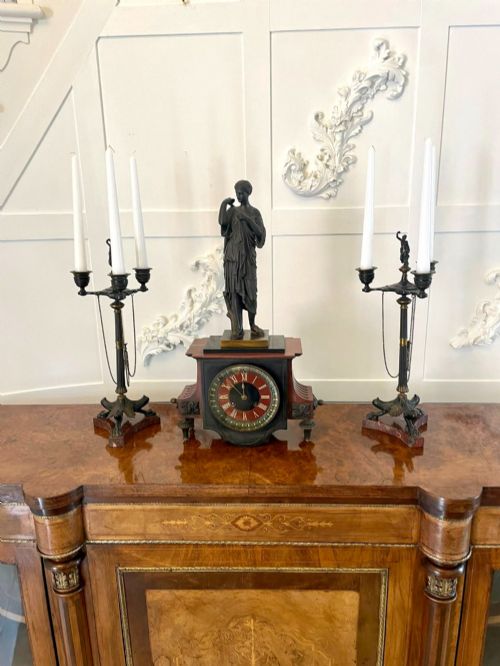
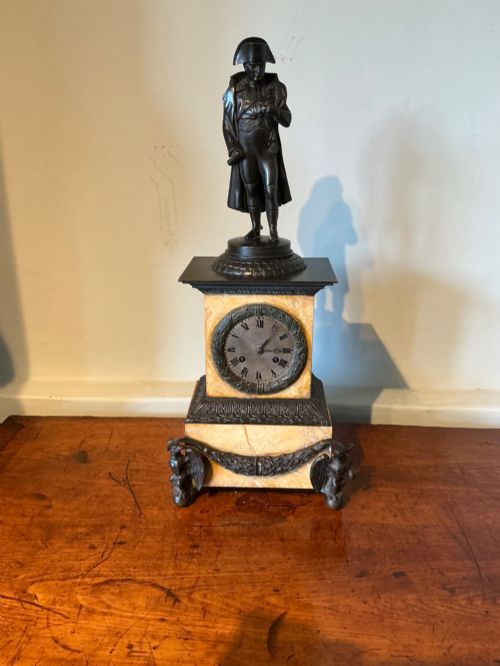
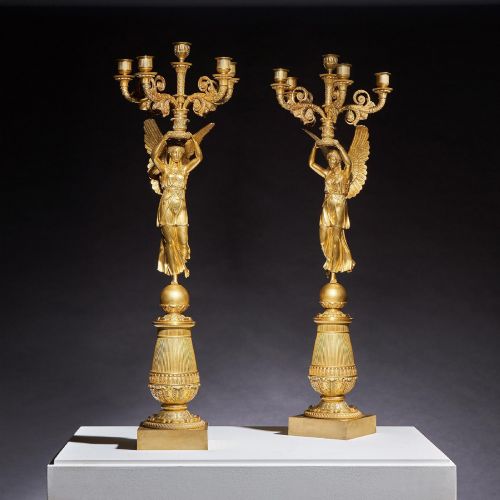
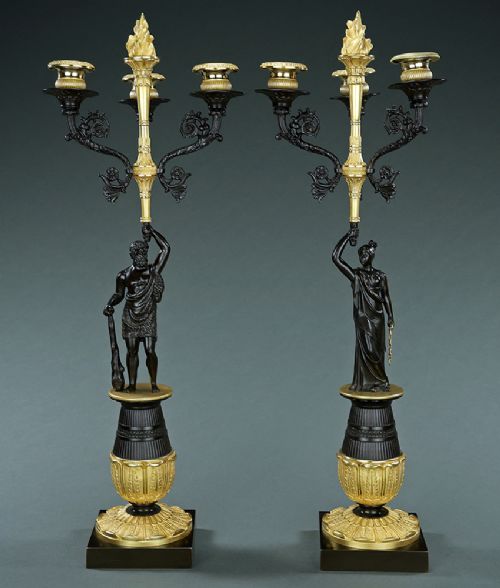
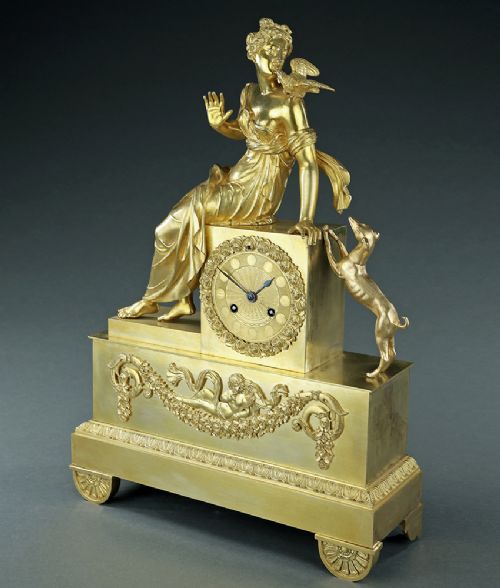
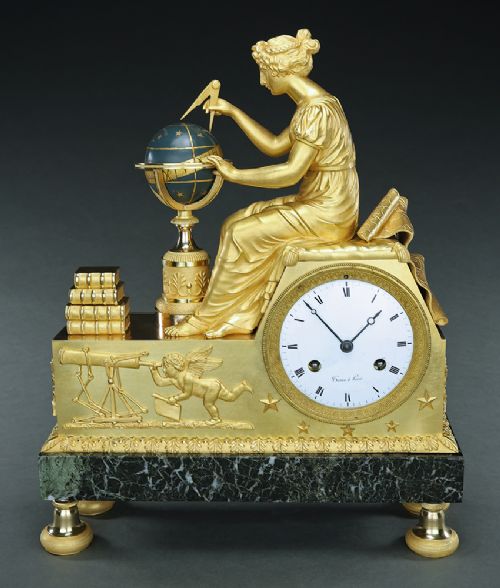
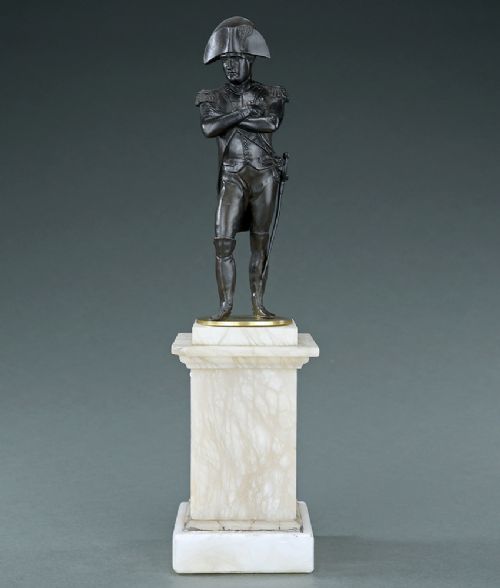
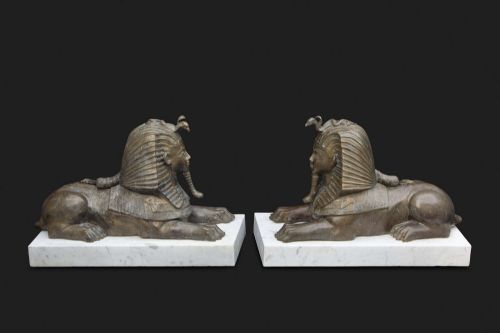
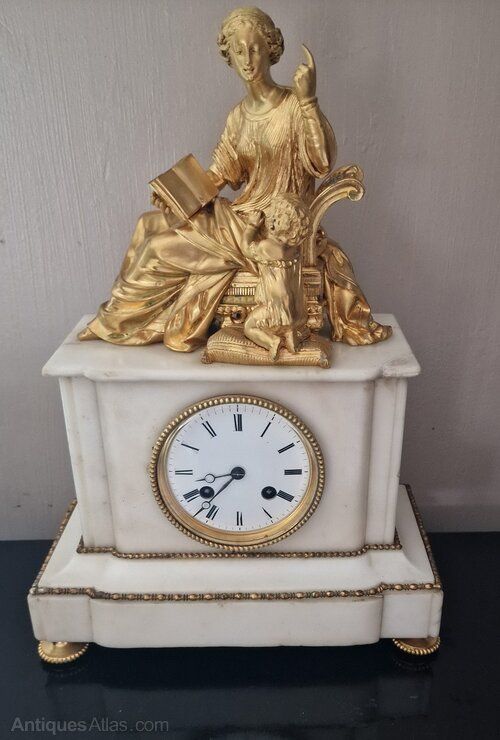
When you search for empire bronze figures, you encounter monumental mantel clocks, figural candelabra, and sculptural bronzes that draw heavily on French design and the classical world. The pieces available range from early nineteenth century French and Regency works to later Victorian interpretations of Napoleon, mythological figures, and classical deities.
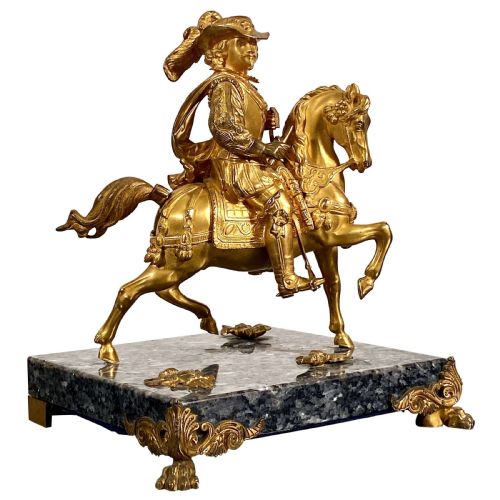
The objects frequently combine patinated or gilt bronze with marble, onyx, or slate plinths, often functioning as garniture sets or standalone centerpieces. Subjects span from Napoleon on horseback and historical figures to allegorical representations like Love and Fidelity, Atlas, and winged putti.
Makers and designers referenced in these pieces include Pierre Philippe Thomire, Reiche, Emile Guillemin, Lerolle Fres, Charpentier Paris, James Pradier, and Victor Paillard. Their creations reflect the enduring appeal of Neoclassical, Second Empire, and Neo-Grec styles across the nineteenth century.
How they were made
The creation of these works relies on the combination of cast bronze, which could be patinated to a dark finish or given a bright layer of gilt or ormolu. Artisans chased the metal surfaces by hand to sharpen details in hair, drapery, and architectural ornaments before mounting the bronze components onto solid bases of marble, onyx, or slate.
Many items incorporate mixed media, pairing cast metal figures with enamel clock dials, glass elements, brass fittings, and occasional porcelain or biscuit porcelain shafts. These varied materials were secured with threaded rods and pins, demanding precise metalworking and stone-cutting skills from the workshops.
Empire Bronze Figures Retail Price Guide 2026
Typical asking prices for empire bronze figures among the pieces listed under this phrase on Sellingantiques today, from the lower quarter to the upper quarter. They describe what is for sale here now, not the wider market.
Listings feature works spanning the nineteenth century, utilising materials such as ormolu, patinated bronze, Carrara marble, and onyx across various sculptural forms.
What varies in quality
The distinction between standard production and top tier examples lies in the crispness of the metal chasing and the depth of the gilding. Superior castings retain intricate facial expressions and sharp drapery folds without soft edges or smoothing from worn moulds.
The selection of supporting stone also dictates the grade of the piece, with dense, unblemished Carrara marble or rich onyx plinths elevating the presence of the bronze work above simpler slate bases.
Pierre Philippe Thomire·Emile Guillemin·Charpentier Paris·James Pradier·Victor Paillard
The Empire Bronze Figures Glossary
- Ormolu
- Gilded bronze, where a finely ground gold-mercury amalgam is applied to a bronze base and heated to leave a golden coating. This technique creates the bright metallic finish seen on many clock mounts and candelabra.
- Garniture
- A set of matching decorative objects, typically a clock flanked by a pair of candelabra or vases designed to sit together on a mantelpiece. These matched sets provide a balanced display.
- Patinated bronze
- Bronze that has been treated with chemical solutions to produce a darkened, greenish, or brownish surface finish. It contrasts sharply with bright ormolu sections.
- Candelabra
- Branched candlesticks designed to hold multiple candles, often incorporating figural shafts derived from classical mythology or neoclassical sculpture. They frequently form part of larger garniture sets.
- Neoclassical
- A style originating in the mid eighteenth century that draws inspiration from the art and culture of classical antiquity. It emphasises proportion, symmetry, and classical motifs like caryatids and putti.
Empire Bronze Figures: Frequently Asked Questions
What is an empire bronze figure?
These pieces are cast metal sculptures, clock garnitures, and candelabra produced in the nineteenth century under the influence of French neoclassical design. They frequently depict historical leaders, classical deities, and allegorical figures mounted on heavy stone plinths.
Buyers select them to anchor a mantelpiece or tabletop with nineteenth century presence and detailed metalwork.
How were empire bronze figures used?
Originally, these items served practical and decorative functions in formal nineteenth century interiors, combining timekeeping, lighting, and sculptural display. Candelabra provided illumination during evening gatherings while mantel clocks coordinated household schedules.
Today, they function primarily as decorative centerpieces and focal points in period rooms.
How do you style empire bronze figures at home?
Placing these works on a prominent mantelpiece, sideboard, or console table allows the bronze and marble details to catch ambient light. Pairing a clock with its matching side candelabra creates a balanced, symmetrical arrangement.
Keeping surrounding decor understated helps emphasise the heavy metal casting and stone bases of each piece.
How can you tell the period of a bronze figure?
Dating relies on examining the casting technique, the style of the mounts, and the type of marble or slate used for the base. Nineteenth century pieces often display hand chasing on the bronze and distinct neoclassical or second empire stylistic traits.
Maker signatures, foundry marks, and clock movement types also provide clear indicators of production date.