

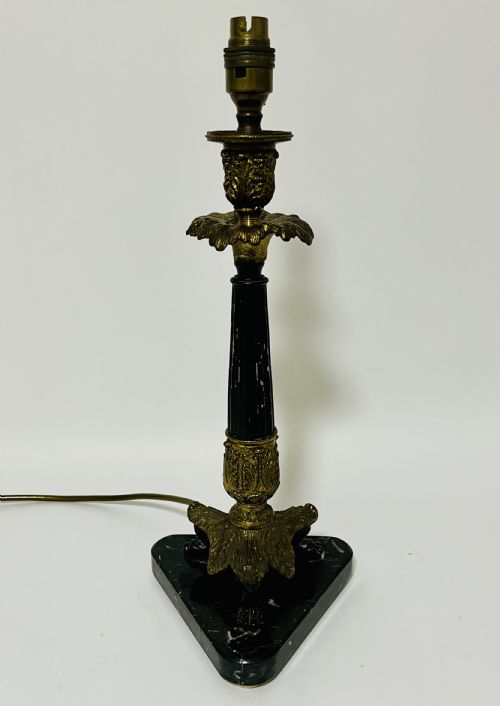
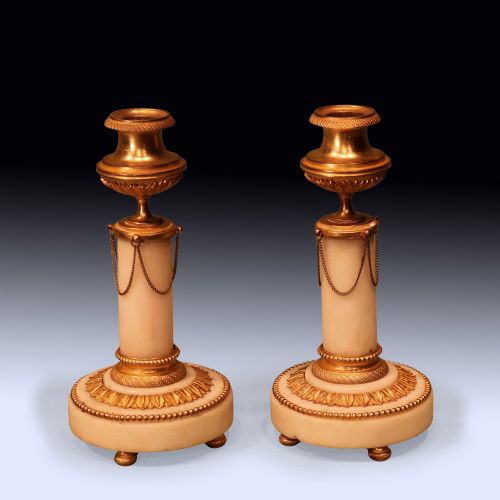


Empire Brass Candlestick
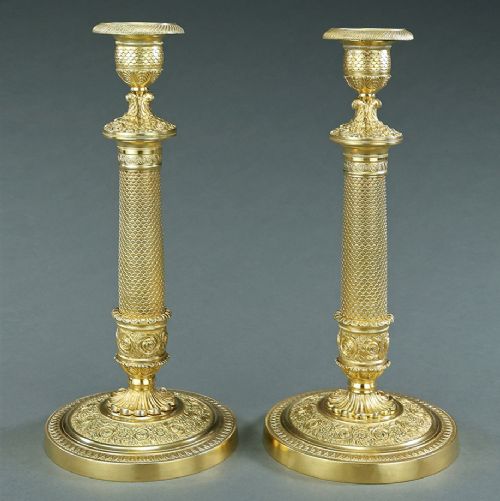
An empire brass candlestick brings classical proportions and golden metalwork to a room, drawing on French and Regency design.
Empire Brass Candlestick
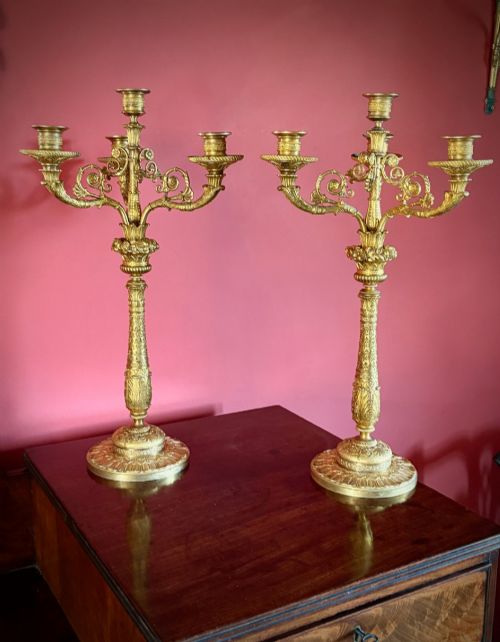
When searching for an empire brass candlestick, buyers encounter lighting forms rooted in the nineteenth century, including candelabra, desk lamps, and single sticks. The pieces span French Empire, Regency, and neoclassical styles, often incorporating patinated bronze alongside gilt metals.
Most examples originate from French workshops or English makers influenced by continental designs. Pairs dominate the selection, frequently featuring architectural columns, figural mounts, or classical bases.
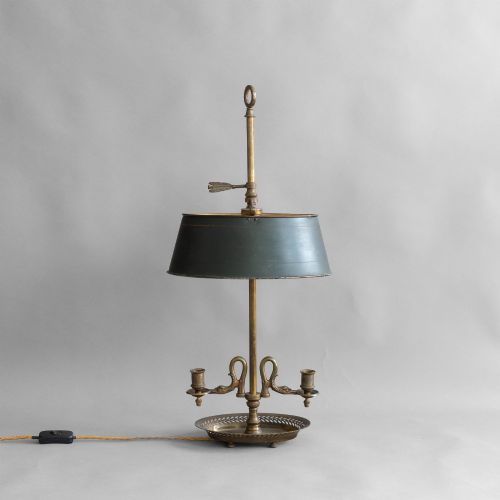
While many survive as original candlesticks, several have been converted into table lamps or fitted with toleware shades. The forms range from small chambersticks to grand multi-branch candelabra with marble plinths.
How they were made
Foundry workers cast brass, bronze, and ormolu in multiple sections before assembling them with threaded rods or pins. Ormolu components received a mercury gilding treatment that created a deep, warm metallic lustre.
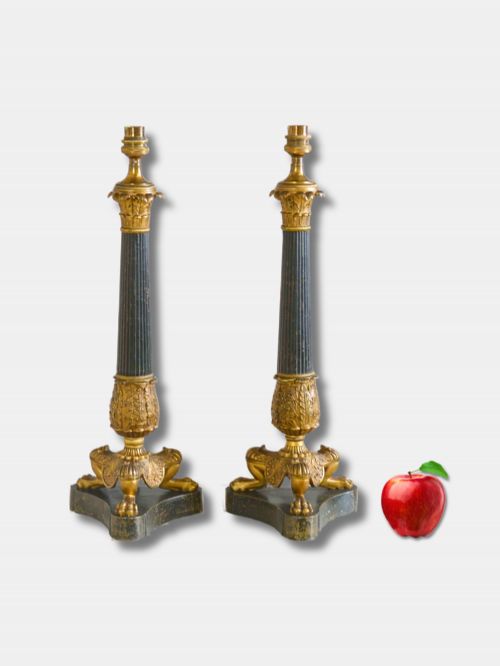
Casting details like rams' heads, acanthus leaves, and paw feet were chased by hand using small chisels to sharpen the definition. Bases often combined turned brass with white or green marble plinths to add visual weight.
Look closely for sculpted dolphins and mermen tucked into the bronze bases of nineteenth-century coastal designs.
What varies in quality
The quality of the gilding and the depth of the patination alter the visual impact of the metal. Heavier gauge brass and solid bronze components provide stability and substance compared to lighter pressed metal alternatives.
Jean-Démosthène Dugourc·Galle
The Empire Brass Candlestick Glossary
- Ormolu
- Gilded bronze produced through a mercury amalgamation technique. This finish gives the metal a distinctive golden warmth.
- Toleware
- Painted sheet metal used for lamp shades and canisters. It frequently appears in green paired with brass fittings.
- Patinated bronze
- Metal treated with chemical solutions to darken the surface. This creates contrast against bright gilt ormolu mounts.
- Bouillotte lamp
- An adjustable desk lamp with a central stem and a shade. These typically feature multiple candle arms.
- Chamberstick
- A low candlestick fitted with a handle and a drip pan. It was designed for carrying through a house at night.
Empire Brass Candlestick: Frequently Asked Questions
How do I clean an empire brass candlestick?
Dust the metal gently with a soft dry cloth to protect the surface finish. Avoid abrasive polishes that can wear away ormolu gilding and ruin patination.
Keep moisture away from any marble bases or fabric components. Professional conservation cleaning is recommended if the metal shows heavy tarnishing.
Were these originally electrified?
Original pieces were manufactured to hold wax candles or oil. Many surviving examples were converted to electricity during the twentieth century.
Conversions often involve drilling through the base or stem to run internal wiring. Some pieces retain their original socket fittings if they escaped alteration.
How can I tell French Empire from Regency?
French Empire pieces lean heavily into Napoleonic symbolism and strict classical motifs like sphinxes, swans, and military trophies. Regency items produced in England share similar classical roots but often incorporate lighter local interpretations.
Both styles frequently utilise ormolu and bronze together on marble plinths. Maker marks or regional casting techniques help confirm the place of origin.
Where should I place a candelabra?
A multi-branch candelabra works well as a centrepiece on a dining table or sideboard. Smaller desk candlesticks suit side tables or mantelpieces.
Ensure the surface is stable and keep the piece away from drafts if burning candles. Position them where the metallic surfaces can catch natural light.