
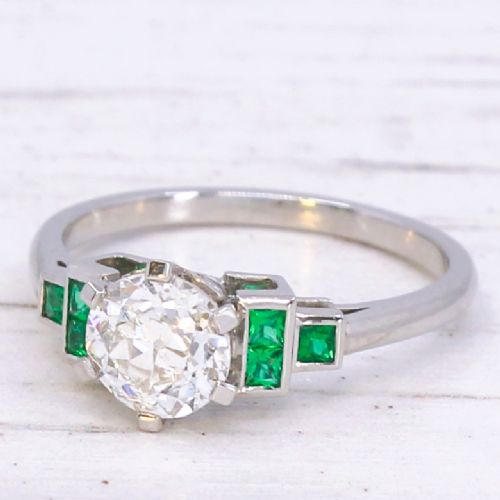

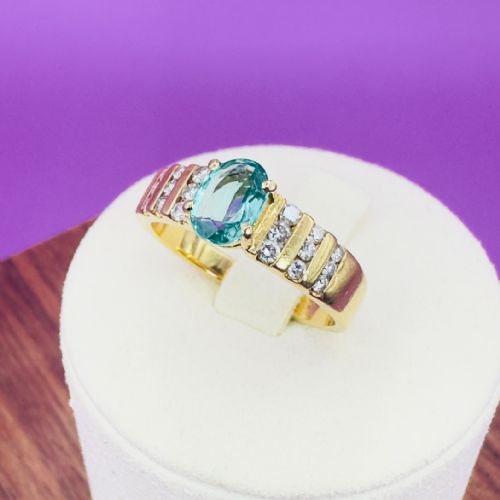

Emerald Gemstone Ring
An emerald gemstone ring brings together deep green beryl and bright diamonds in settings spanning the Edwardian era through the mid-twentieth century.
Emerald Gemstone Ring
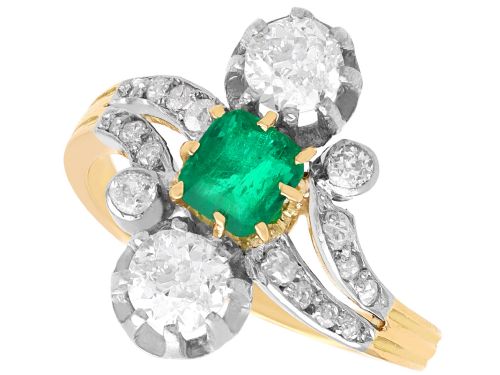
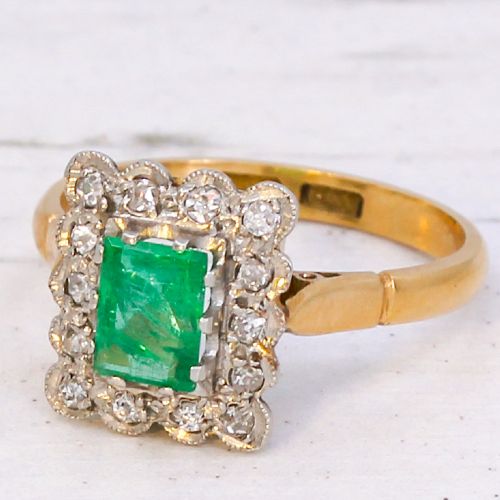
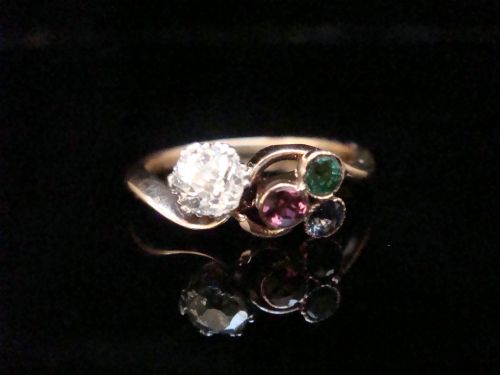
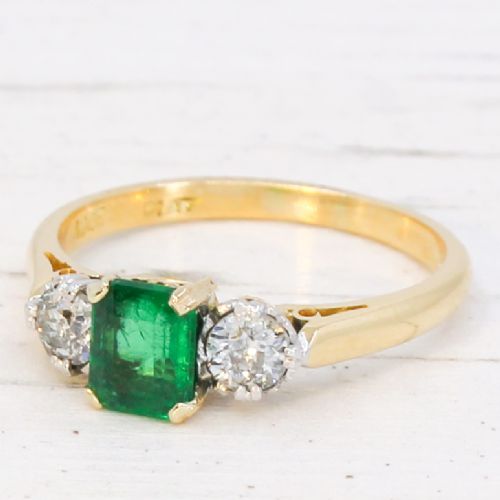
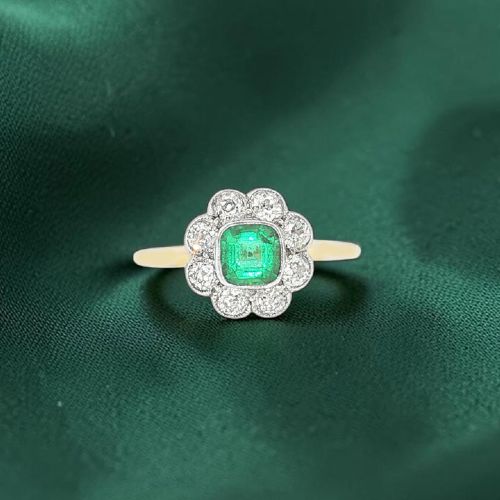
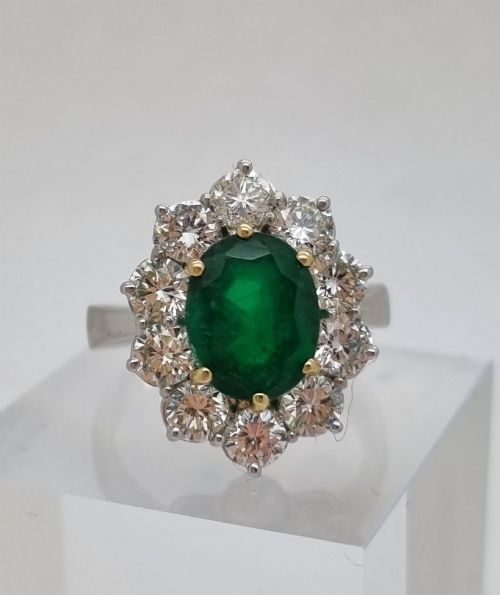
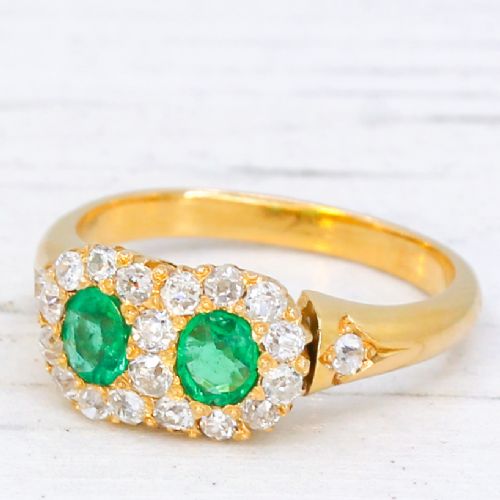
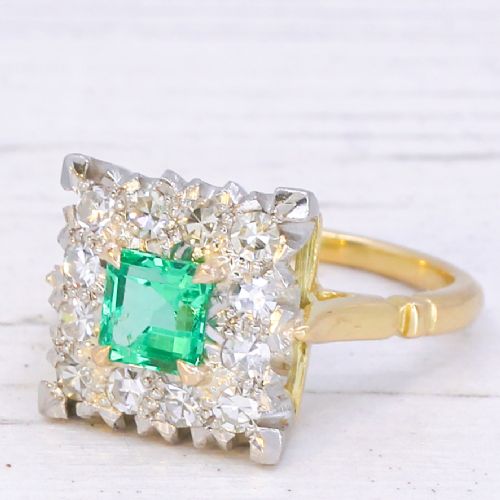
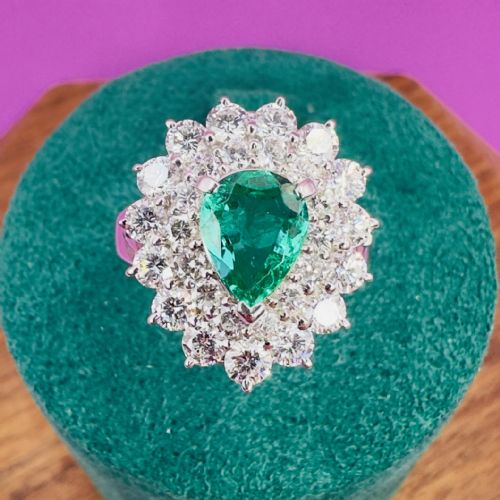
An emerald gemstone ring centres on a green beryl stone, frequently paired with diamonds in cluster, halo, or multi-stone arrangements. These pieces emerge from periods including Edwardian, Art Deco, Retro Modern, and mid-century decades.
Cluster and cocktail configurations dominate the selection, often pairing the central green stone with old-cut or brilliant-cut diamonds. Metal choices range from platinum and white gold to traditional yellow gold and 9ct or 18ct alloys.
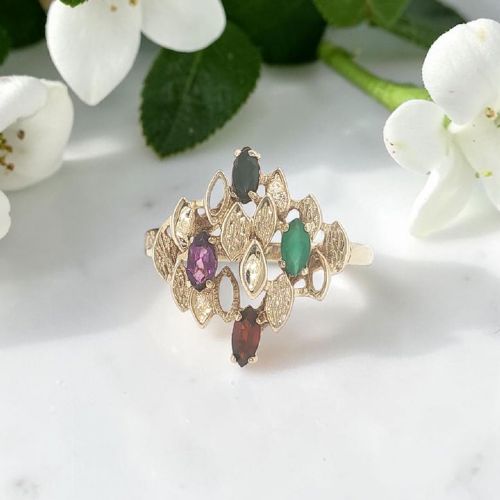
The selection encompasses antique Georgian and Victorian survivals alongside twentieth-century designs, offering varied gemstone cuts like oval, pear, marquis, and emerald cut.
How they were made
Goldsmiths utilised platinum and various grades of gold, including 9ct, 14ct, 18ct, and yellow or white variations, to construct secure mounts for both emeralds and diamonds. Gemstones were shaped into distinct profiles, notably emerald cuts, oval cuts, marquis cuts, and old-cut diamonds.
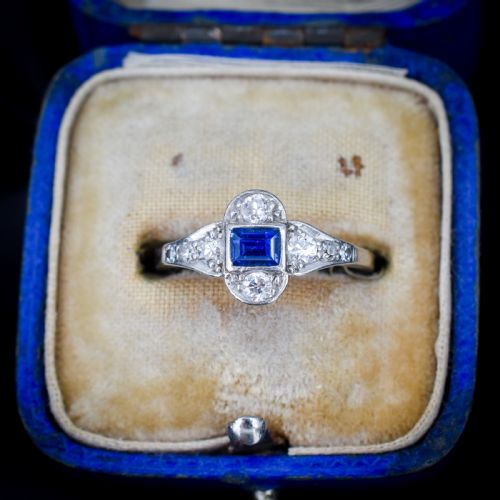
Techniques evolved from delicate Edwardian cluster work and Georgian collet settings to geometric Art Deco platinum mounting and bold mid-century cocktail ring construction.
Materials recorded across the selection include platinum, 9ct gold, 14ct gold, 18ct yellow and white gold, alongside diamonds and emeralds.
What varies in quality
Distinctions in quality arise from the origin and treatment documentation of the emerald, such as negligible or minor oil certifications for Colombian stones, alongside the weight and cut quality of accompanying diamonds. The precision of the metalwork, whether intricate platinum Art Deco piercing or solid 18ct gold casting, defines the execution of the piece.
The visual harmony between the central green beryl and surrounding stones, coupled with the overall structural integrity of the setting, separates standard production from finer examples.
The Emerald Gemstone Ring Glossary
- Cluster ring
- A ring featuring a central gemstone surrounded by a group of smaller stones, typically diamonds. This arrangement maximises overall sparkle and presence on the hand.
- Old cut
- A diamond cutting style prevalent in antique and Edwardian jewellery, characterised by a smaller table, higher crown, and deep culet. These stones display a distinctive candlelit luminescence.
- Platinum
- A dense, durable white metal utilised extensively in Edwardian and Art Deco jewellery making. Its strength permits delicate wirework and secure claw settings without adding excessive weight.
- Emerald cut
- A rectangular or square step-cut gemstone shape with cropped corners. This facet arrangement highlights the natural clarity and deep colour of beryl.
- Halo cluster ring
- A ring design where a central gemstone is encircled by a continuous ring of smaller pavé or claw-set stones. This framing enhances the visual scale of the primary gem.
Emerald Gemstone Ring: Frequently Asked Questions
How do I care for an antique emerald ring?
Emeralds are a softer gemstone compared to diamonds and require gentle cleaning using warm water and a soft cloth, avoiding ultrasonic cleaners. Regular inspection of the claws helps ensure the stone remains secure in its setting.
Store the ring separately from harder jewellery pieces to prevent scratching the central beryl or wearing down delicate gold and platinum mounting details.
What periods do these rings come from?
The available selection spans from Georgian and Victorian eras through Edwardian, Art Deco, and mid-century twentieth-century decades. Each era brings distinct metal choices and gemstone cutting styles.
Twentieth-century pieces range from 1920s geometric platinum mountings to 1960s dress rings and cluster configurations.
Are certification documents common for these emeralds?
Certification papers accompany specific pieces, particularly those noting origin details such as Colombian or Zambian provenances, alongside oil treatment assessments. These documents provide scientific verification of the gemstone's natural properties.
Not all vintage rings include laboratory reports, making visual examination and period characteristics key points of reference for buyers.
Can I resize an antique ring safely?
Many gold and platinum rings can be adjusted by a skilled jeweller, though intricate Art Deco shank designs or full-band gemstone settings require careful evaluation. Adjustable shanks also appear in certain twentieth-century pieces.
Consulting a specialist ensures the structural integrity and any surrounding metalwork remain undisturbed during the alteration process.