
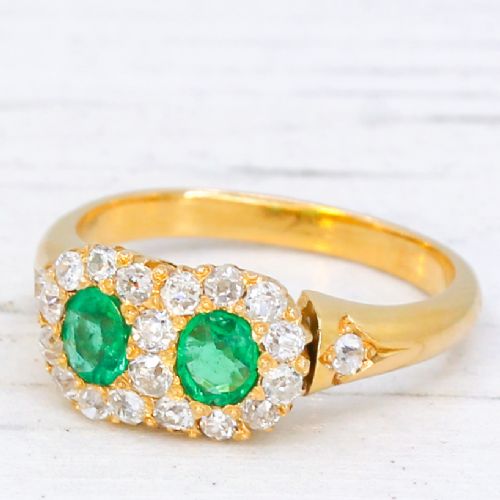
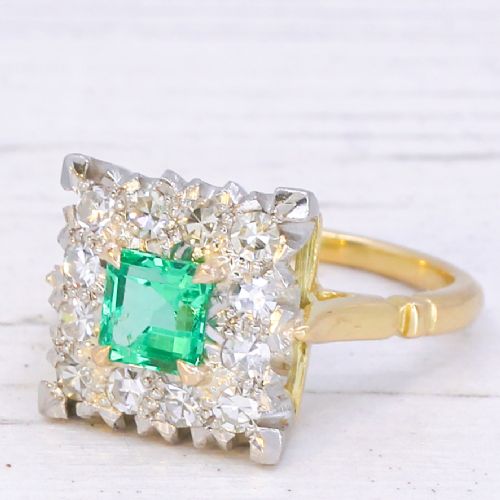
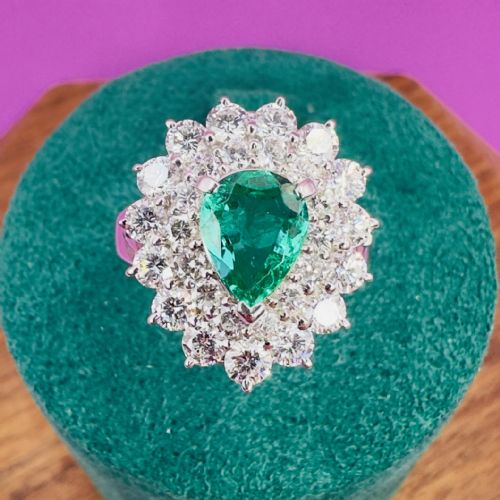
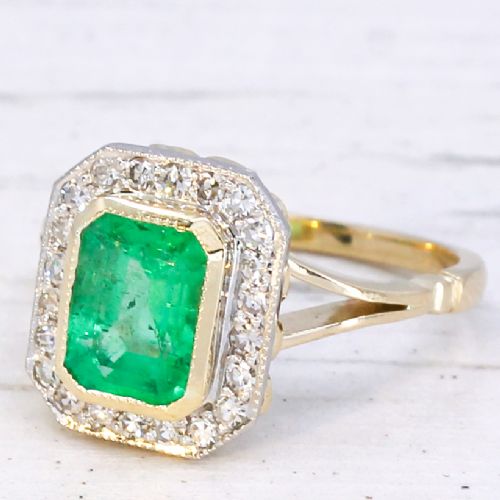
Emerald Diamond Cluster
An emerald diamond cluster unites green beryl and sparkling carbon in a timeless geometric arrangement designed to catch the eye.
Emerald Diamond Cluster
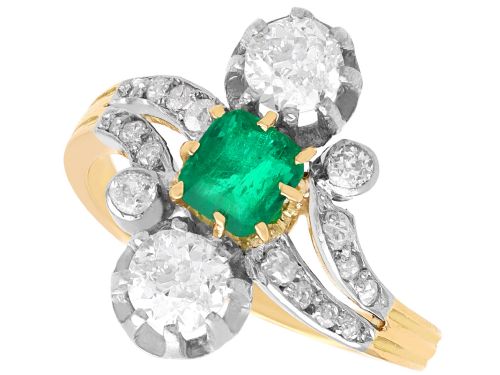
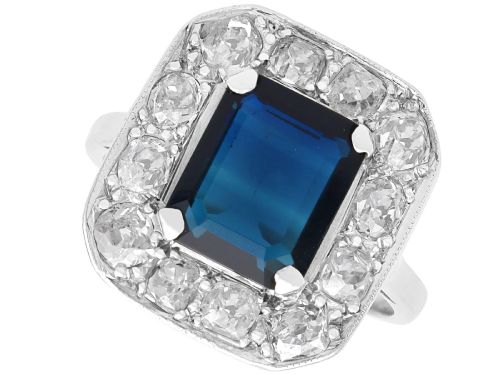
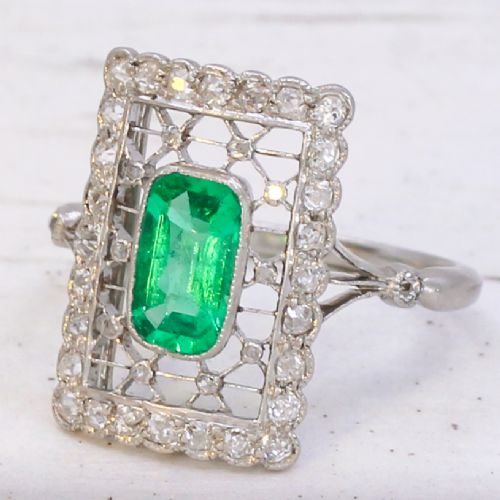
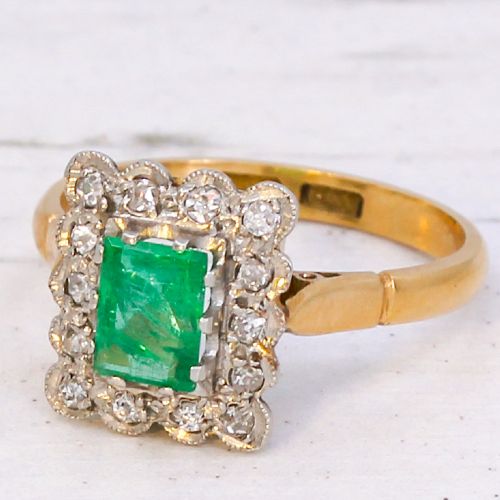
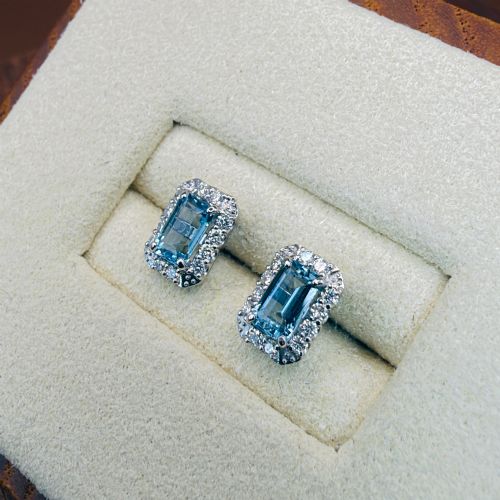
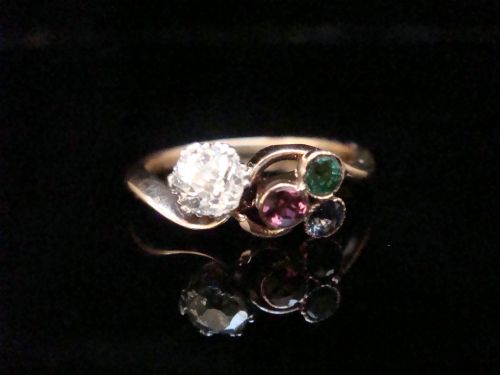
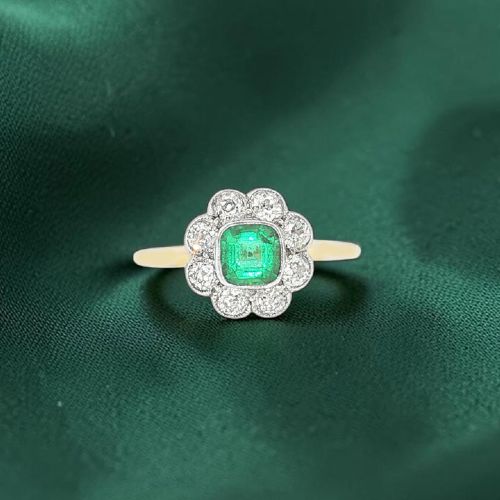
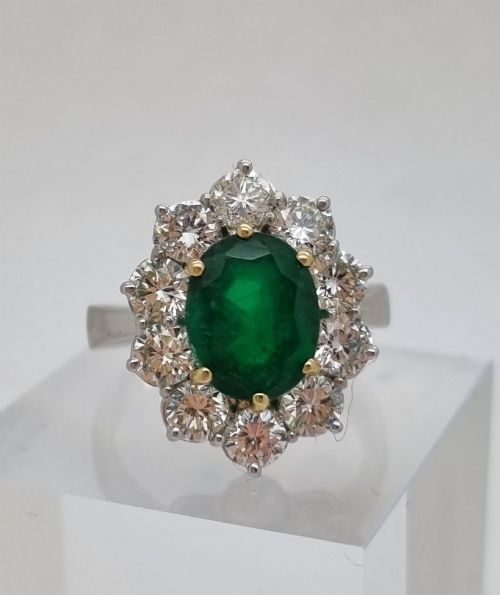
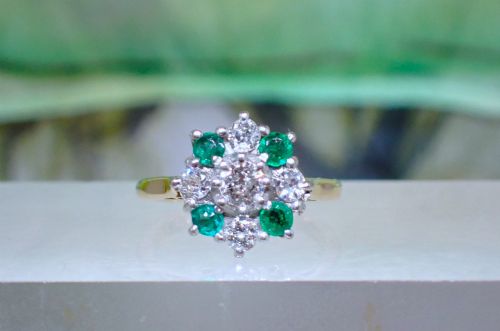
An emerald diamond cluster typically takes the form of a ring, earring or brooch featuring a central green beryl surrounded by a border of smaller stones. These pieces appear frequently from the Victorian, Edwardian and Art Deco periods, alongside mid-century and later designs.
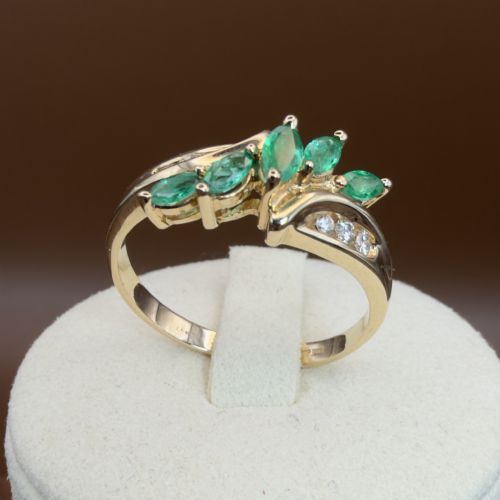
The layout most often centres on a solitary emerald framed by brilliant, old cut or rose cut diamonds in circular, oval or navette configurations. Buyers seeking this aesthetic will encounter options ranging from delicate Edwardian dress rings to substantial cocktail pieces.
Materials and Techniques
Makers set emeralds and diamonds into durable mountings of platinum or yellow, white and rose gold in various carats, including 18ct and 9ct. These metals provide the structural strength needed to hold intricate multi-stone arrangements securely.
Goldsmiths utilised traditional claw, bezel and pavé techniques to secure the central beryl and its surrounding diamond border. Master jewellers often incorporated open-back settings to allow light to pass through the emerald and diamond facets.
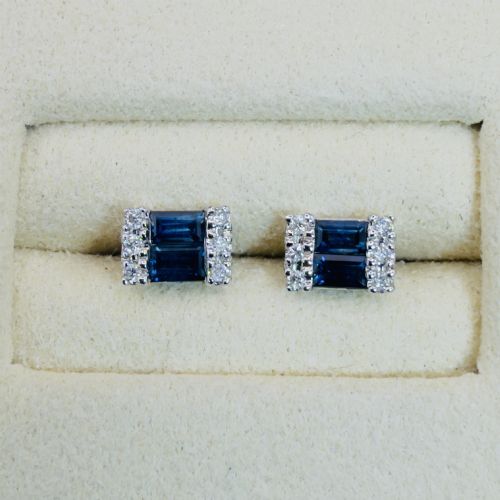
The inventory records multiple object forms, including cocktail rings, drop pendants, dress rings, brooches and matching earring suites.
Variations in Quality
Quality in an emerald diamond cluster rests upon the natural origin, clarity and colour saturation of the central beryl, alongside the cut and brilliance of the accompanying diamonds. Stones accompanied by independent laboratory certification detailing minor or negligible oil treatments command particular attention from collectors.
The standard of metalwork and prong setting integrity distinguishes ordinary production from finer workshop output, particularly in intricate Edwardian and Art Deco pieces. Heavier platinum mountings and precise, symmetrical stone placement indicate superior craftsmanship.
The Emerald Diamond Cluster Glossary
- Cluster ring
- A ring featuring a central gemstone encircled by a group of smaller stones. This arrangement maximises visual impact and perceived size.
- Navette
- A boat-shaped or marquise setting that tapers to points at either end. It elongates the appearance of the finger on the hand.
- Old cut
- A hand-faceted diamond cut prevalent before the standardisation of the modern brilliant cut in the early twentieth century. These stones exhibit smaller tables and higher crowns.
- Colombian emerald
- Beryl sourced from specific South American mines renowned for producing vivid green hues. These stones represent a standard of geographic origin among fine examples.
- Platinum
- A dense, white precious metal utilised in fine jewellery for its exceptional strength and durability. It allows for delicate settings without risking stone loss.
Emerald Diamond Cluster: Frequently Asked Questions
How do I care for my cluster ring?
Clean emerald diamond clusters gently using warm soapy water and a soft brush, avoiding harsh ultrasonic cleaners. Emeralds are softer than diamonds and require careful handling.
Store pieces individually in padded boxes to prevent the harder diamonds from scratching the softer beryl and surrounding metalwork.
What is an old cut diamond?
Old cut diamonds are historically shaped stones hand-faceted by candlelight or early machinery. They feature distinctive open culets and smaller tabletops.
These diamonds produce a softer, candlelight sparkle that differs significantly from the sharp brilliance of modern cut stones found in later rings.
Are these emeralds treated?
Many natural emeralds undergo traditional clarity enhancement using oil or resin to fill microscopic surface-fissures. Certification documents typically specify the degree of treatment present.
Stones with negligible or minor oil enhancement are scarcer and hold higher standing among collectors of vintage fine jewellery.
How can I date my piece?
Dating relies on examining the metal types, mounting styles, gemstone cuts and any workshop hallmarks stamped inside the band. Edwardian and Art Deco pieces display distinct geometric motifs and millegrain edging.
Comparing construction techniques with known period examples helps narrow down the decade of manufacture, supported where available by official laboratory reports.