



Retro Flower Ring
A retro flower ring brings together mid-century gemstone clustering and precious metals to create wearable floral forms that collectors prize.
Retro Flower Ring
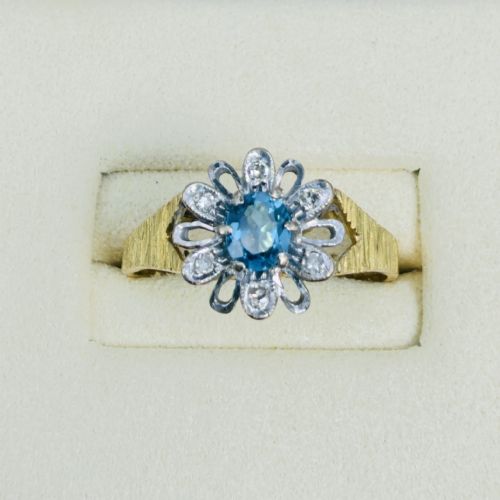
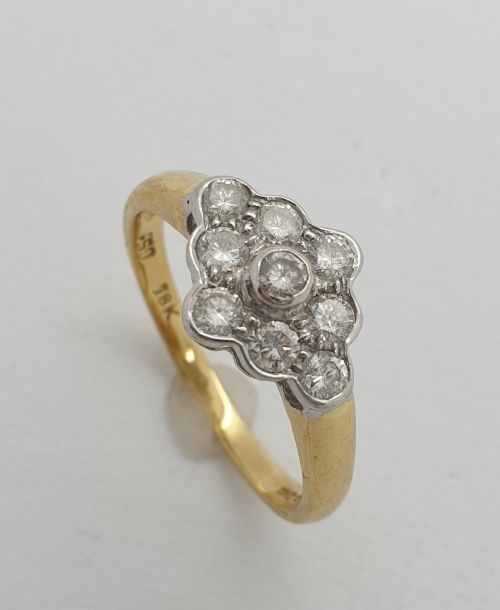
A retro flower ring presents a floral cluster formation using diamonds, sapphires, rubies, aquamarine, or turquoise set into gold or platinum. These pieces span periods from Edwardian and Art Deco through to the 1940s, 1950s, and 1960s, reflecting changing mid-century aesthetics.
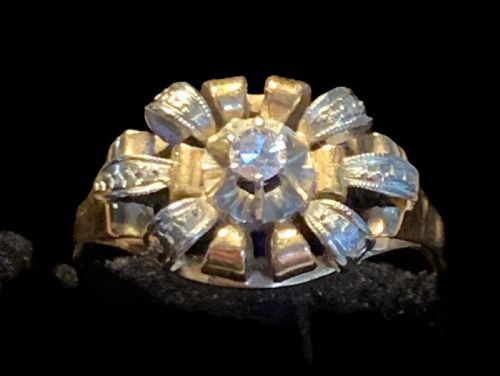
The most frequent examples on this page date from the mid-century decades, combining yellow gold, white gold, or platinum with central gemstone petals. Buyers encounter both traditional daisy cluster configurations and more elaborate Italian or French mid-century floral and fan-inspired designs.
Materials and construction
Craftsmen built these pieces primarily in 18ct yellow gold, 18ct white gold, 14ct gold, and platinum. Precious stones including old cut diamonds, sapphires, and aquamarine are secured in claw or cluster settings to form the petals and centres of each floral motif.
Makers utilised traditional setting techniques to group coloured stones around central diamonds, creating dimensional relief work characteristic of the 1940s retro and mid-century modern periods.
Listings feature pieces spanning the Edwardian period, Art Deco, 1940s, 1950s, and 1960s, constructed in platinum, 14ct gold, and 18ct yellow or white gold.
Distinguishing quality variations
Quality separates through the selection and carat weight of the central gemstones, such as larger old cut diamonds or high-grade sapphires. The precision of the cluster arrangement and the weight of the underlying gold or platinum structure also define the tier of the piece.
The refinement of the floral silhouette, whether an Edwardian daisy cluster or a substantial 1950s Italian cocktail ring, dictates the architectural integrity and overall presence of the jewellery.
The Retro Flower Ring Glossary
- Cluster ring
- A ring featuring a central gemstone surrounded by a group of smaller stones. This layout forms the primary structural basis for floral ring designs.
- Old cut diamond
- A diamond cut with distinctive facet proportions typical of earlier periods before modern brilliant cut standards emerged. These stones often appear in Edwardian and mid-century cluster settings.
- Platinum
- A dense, durable white precious metal utilised for fine jewellery settings. It provides secure prongs for holding intricate diamond clusters.
- Floral ring
- A piece of jewellery shaped to resemble a flower blossom. The design uses concentric circles of stones to mimic petals around a stamen centre.
Retro Flower Ring: Frequently Asked Questions
What periods do these rings come from?
The pieces span several distinct eras, including the Edwardian period, the 1920s Art Deco era, and the 1940s, 1950s, and 1960s retro and mid-century phases.
Each period imparts specific stylistic cues, from delicate early daisy clusters to bolder mid-century floral cocktail designs.
How do I wear a cluster ring daily?
Wearing a cluster ring safely involves considering the height of the floral setting and the durability of the central stones. Platinum and 18ct gold mountings provide robust daily support.
Pairs or suites may include matching earrings, allowing for coordinated wear across different occasions.
What materials are used in these pieces?
Makers constructed these rings using 18ct yellow gold, 18ct white gold, 14ct gold, and platinum. Gemstones include diamonds, sapphires, aquamarine, turquoise, and natural rubies.
These materials determine the colour palette and weight of each individual floral mounting.
How do I tell an Edwardian ring from a 1950s ring?
Edwardian rings often feature lighter, airier platinum or yellow gold work with traditional daisy cluster configurations. 1950s and 1960s examples typically present heavier gold structures and bolder mid-century floral motifs.
Examining the metal colour, stone cuts, and overall architectural volume helps clarify the decade of origin.