
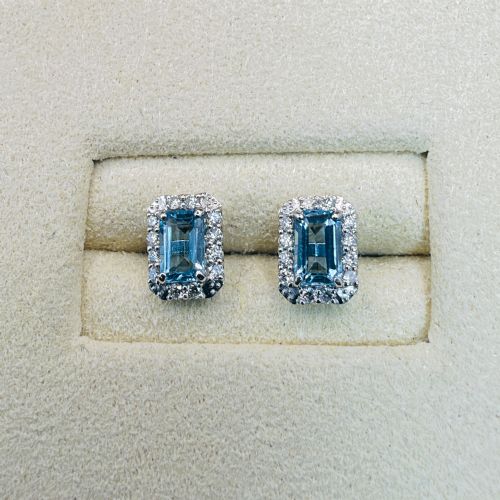


Emerald Cut Aquamarine
Emerald cut aquamarine jewellery offers crisp step-cut faceting in cool blue tones, combining geometric pendant necklaces and substantial cocktail rings from the mid-twentieth century.
Emerald Cut Aquamarine
When you search emerald cut aquamarine, you encounter distinct jewellery types from the 1930 and 1950 periods, spanning the Art Deco and Retro or Mid-Century styles. The items available include necklaces, pendants, dress rings, and cluster rings.
The most common form on this page is the platinum Art Deco ring featuring a central emerald cut aquamarine flanked by diamonds. These pieces often pair the pale blue beryl with platinum settings, though gold variations also appear.
How they were made
The materials recorded in these listings include aquamarine, platinum, diamond, ruby, 22ct yellow gold, gold, and 18ct yellow gold. Metal selection ranges from bright white platinum in the 1930 items to substantial yellow gold in the 1950 items.
Stones are set using traditional techniques suited to step-cut gems, with diamonds frequently positioned as shoulders or cluster accents around the primary aquamarine.
Emerald Cut Aquamarine Retail Price Guide 2026
Typical asking prices for emerald cut aquamarine among the pieces listed under this phrase on Sellingantiques today, from the lower quarter to the upper quarter. They describe what is for sale here now, not the wider market.
Some mid-century designs pair cool aquamarine directly with fiery red rubies in heavy yellow gold.
What varies in quality
Quality differences lie in the scale of the central aquamarine and the presence of supporting gemstones like diamonds or rubies. Pieces range from modest carat weights up to substantial dress rings exceeding thirty carats.
The integration of the metalwork, such as intricate platinum Art Deco detailing versus heavier gold mountings from the 1950 period, defines the upper tier of design execution.
The Emerald Cut Aquamarine Glossary
- Aquamarine
- A blue to light-blue variety of beryl that serves as the primary gemstone in these pieces. It belongs to the same mineral family as emerald.
- Platinum
- A dense, durable white metal widely utilised in 1930 jewellery settings to hold diamonds and aquamarines securely. Its strength allows for delicate prongs and fine millegrain edges.
- Art Deco
- A design style from the 1930 period characterised by geometric symmetry, clean lines, and strong architectural influences. It dominates the platinum rings and pendant necklaces in this selection.
- Trilogy ring
- A ring featuring three principal stones, often symbolising the past, present, and future. In these listings, an emerald cut aquamarine is typically flanked by two diamonds.
Emerald Cut Aquamarine: Frequently Asked Questions
How do I care for my aquamarine ring?
Clean your aquamarine jewellery using warm soapy water and a soft brush to remove everyday oils. Avoid harsh chemicals and ultrasonic cleaners if the piece contains softer secondary stones or fragile historical mountings.
Store separate from harder gemstones like diamonds to prevent surface scratching on the beryl table facets.
What is the difference between Art Deco and Mid-Century pieces?
Art Deco pieces from the 1930 period generally feature platinum settings with geometric precision and diamond accents. They focus on crisp lines and delicate structural framing.
Mid-Century and Retro items from the 1950 period often utilise yellow gold and feature much larger carat weights in bold dress ring formats.
Can I wear an aquamarine ring every day?
Aquamarine measures around 7.5 to 8 on the Mohs hardness scale, making it durable enough for regular wear. However, larger cocktail rings benefit from mindful removal during manual tasks to protect the setting.
Platinum and high-carat gold mountings provide sturdy housing, but the large surface area of an emerald cut stone requires care against sharp knocks.
Are these pieces original vintage items?
The inventory consists of authentic period pieces originating from the 1930 and 1950 eras. They reflect the genuine manufacturing techniques, metal alloys, and gemstone cuts of their respective decades.
Descriptions accurately reflect the materials and styles recorded at the time of manufacture without modern reproduction.