

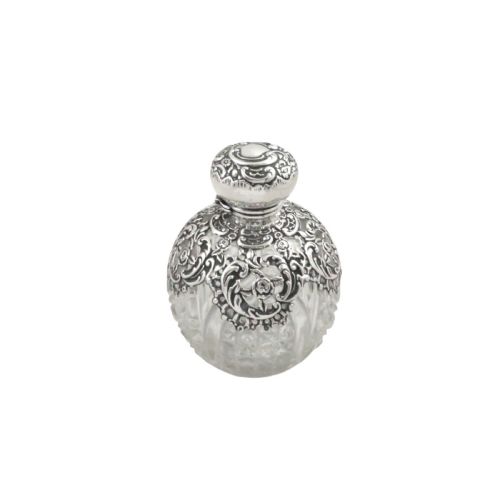

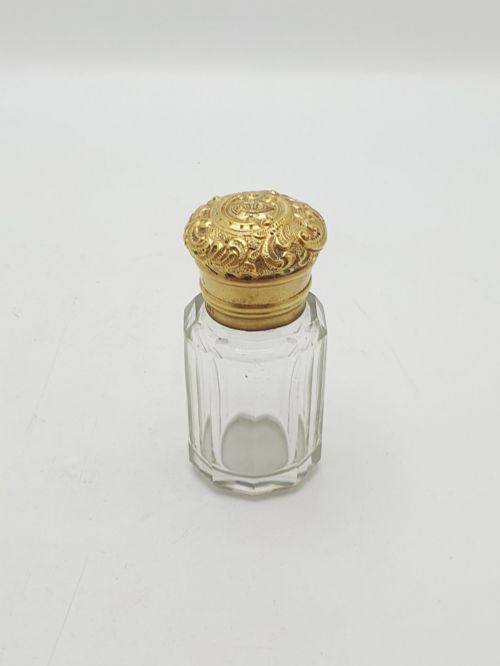
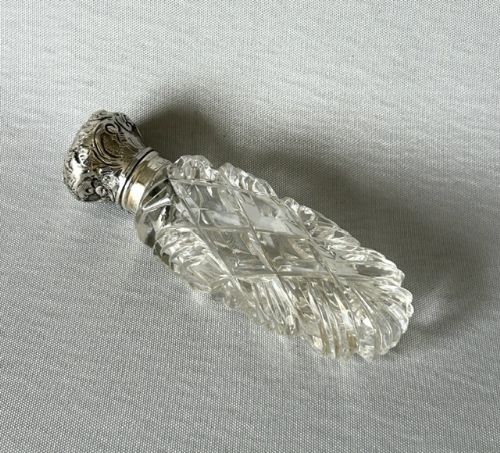


Embossed Silver Scent Bottle
These embossed silver scent bottle pieces are small Victorian and Edwardian containers holding perfume, combining chased metal mounts with colourful glass bodies.
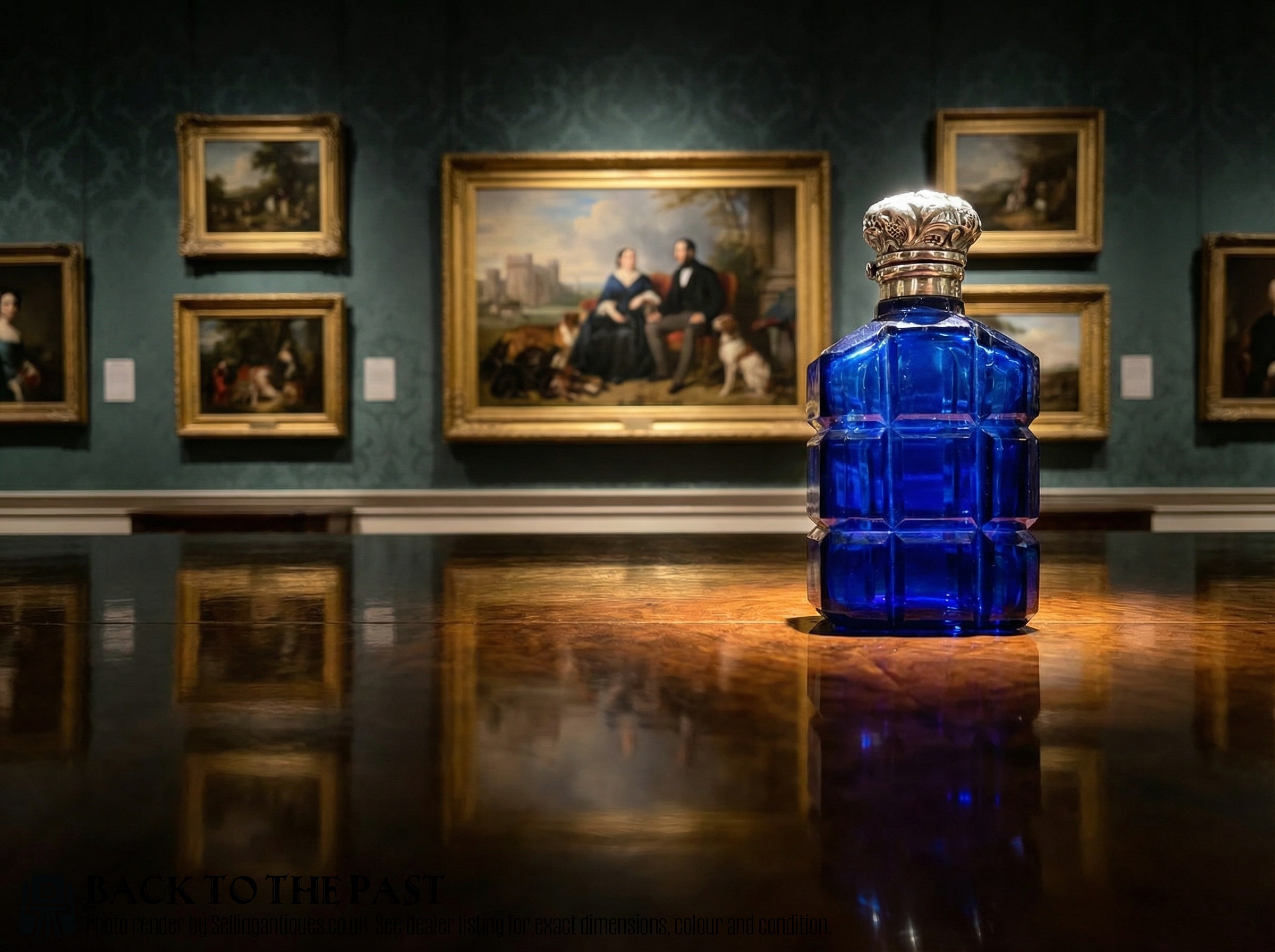
Embossed Silver Scent Bottle
An embossed silver scent bottle combines a chased metal top or casing with a glass body, designed to carry perfume in a pocket or purse. The Victorian period provides the majority of these examples, spanning decades from the 1870s to the close of the century.
Most items on this page pair sterling silver mounts with cut glass or coloured glass bodies such as amethyst, opaline, cobalt, and cranberry. Collectors frequently encounter single vessels alongside matched pairs, as well as double-ended designs.
Makers working within Victorian and Edwardian styles utilised floral, cherub, or scroll motifs pressed into the metal casings. French and Bohemian origins also appear among the glass bodies fitted with silverwork.
Materials and Technique
Silversmiths formed the outer casings and screw caps from sterling silver, impressing floral and figural designs into the metal using punches and dies. Hallmarks stamped onto the silver record the assay office, such as Birmingham, alongside the year of creation.
Glassmakers produced the inner reservoirs through techniques including lead glass cutting, overlay casing, and moulded opaline or cranberry glass. The silver mounts were then secured directly to the glass necks or fitted as complete protective cases.
Embossed Silver Scent Bottle Retail Price Guide 2026
Typical asking prices for embossed silver scent bottle among the pieces listed under this phrase on Sellingantiques today, from the lower quarter to the upper quarter. They describe what is for sale here now, not the wider market.
Several Victorian bottles feature chubby cherubs peering out from the embossed silver flowers, watching over your handbag.
Factors of Quality
The crispness of the embossed detail dictates the visual success of the metalwork, where deep, hand-chased relief surpasses shallow machine pressing. Crisp hallmarks and intact glass bodies without chips elevate the standing of a piece.
Unusual glass colours such as deep cranberry overlay or rich amethyst separate standard clear-cut glass examples from more desirable cabinet pieces. Matched pairs and double-ended configurations command greater attention from collectors.
George Unite
The Embossed Silver Scent Bottle Glossary
- Sterling silver
- A silver alloy containing 92.5 percent pure silver by mass, standard for British hallmarked items.
- Opaline glass
- An opaque or translucent glass developed in soft pastel shades, popular for Victorian ornamental wares.
- Double ended
- A scent bottle featuring two separate compartments and stoppers, allowing the owner to carry two different perfumes.
- Overlay glass
- Glass formed of two or more distinct layers of different colours, where the outer layer is cut away to reveal the contrasting colour beneath.
Embossed Silver Scent Bottle: Frequently Asked Questions
What are embossed silver scent bottles?
These are small personal containers made to hold liquid perfume, featuring decorative metal caps or casings worked in raised relief. They combine glass bodies with hallmarked sterling silver components.
Most surviving examples date from the Victorian and Edwardian eras, reflecting the domestic habits and dressing table accessories of the nineteenth and early twentieth centuries.
How were these bottles used?
Owners carried them in reticules, pockets, or travel cases to refresh personal fragrance throughout the day. The tight-fitting silver caps prevented evaporation and leakage.
Some double-ended variants held smelling salts in one compartment and perfume in the other, serving a practical medical function during moments of faintness.
How do I identify the date?
British pieces carry silver hallmarks that include a date letter indicating the exact year of assay. Hallmarks also show the city of origin, such as Birmingham.
Stylistic cues like cherub motifs or glass types such as cranberry overlay further help assign pieces to specific decades between 1870 and 1900.
How should I display them?
These bottles sit well grouped on mirrored trays or within glass-fronted cabinets where light can pass through the coloured glass bodies. Standing them upright protects the hinged lids and glass bases.
Keeping them away from direct sunlight preserves the original tones of amethyst, cranberry, and opaline glass.