


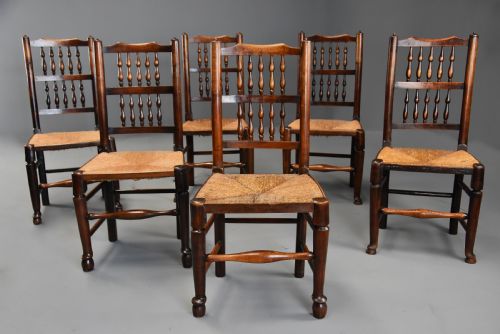
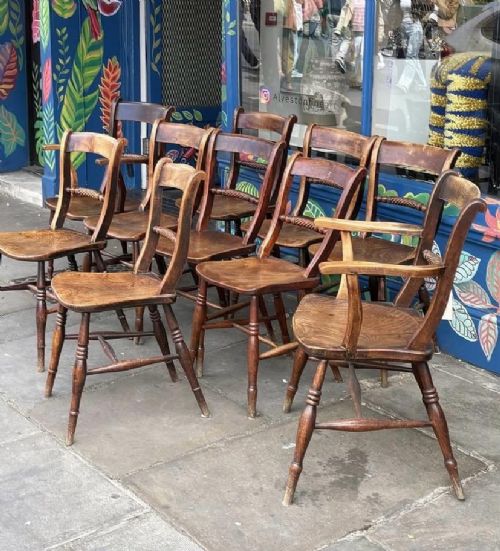
Elm Wood Seating
Elm wood seating brings tactile warmth and rugged vernacular character into a room through centuries of traditional craftsmanship.
Elm Wood Seating
Elm wood seating encompasses domestic and commercial utility furniture built primarily across the eighteenth, nineteenth, and early twentieth centuries. When searching for elm wood seating, buyers encounter robust forms rooted in English country, Victorian, and Georgian vernacular traditions.
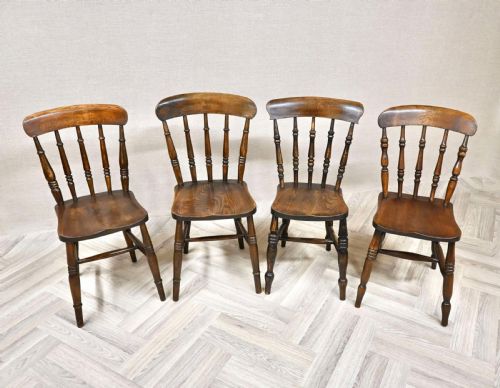
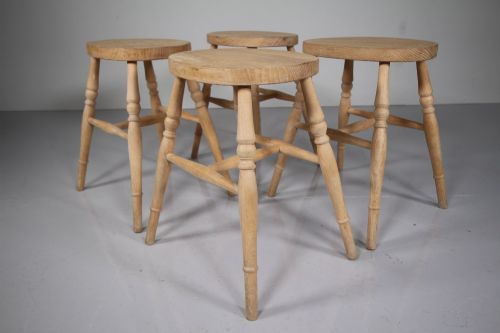
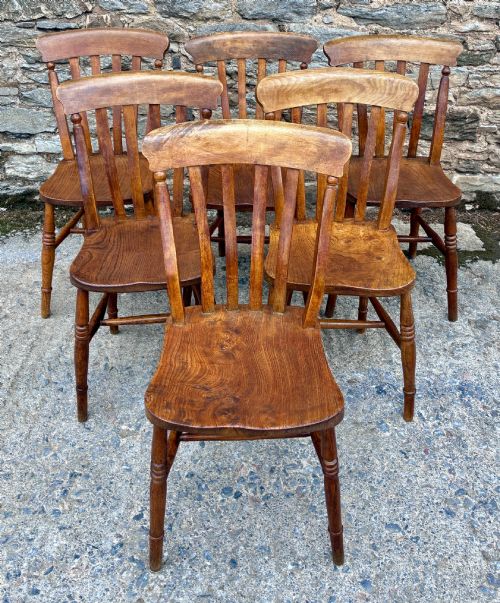
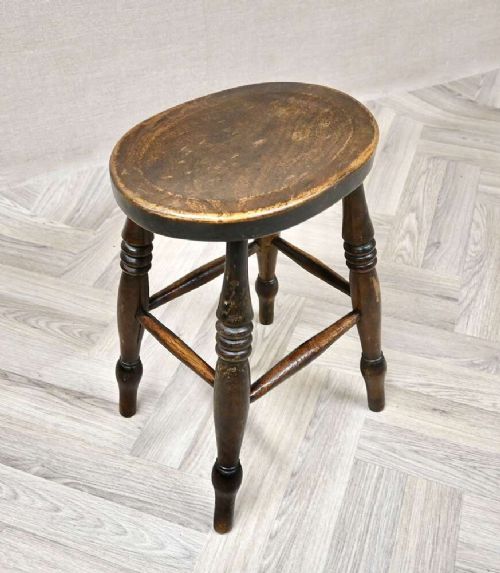
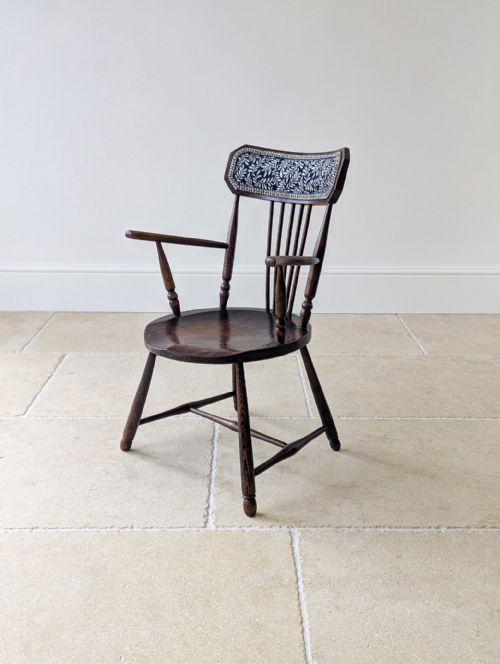
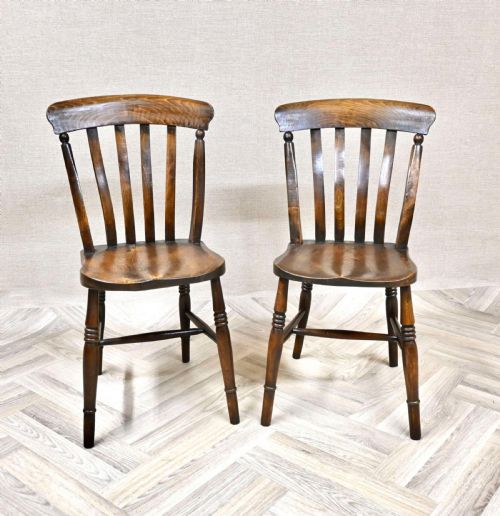
The category spans a diverse array of domestic seating, featuring armchairs, Windsor chairs, dining chairs, stools, benches, and settles. Many examples incorporate mixed timbers such as ash, beech, yew, and fruitwood alongside solid elm seats.
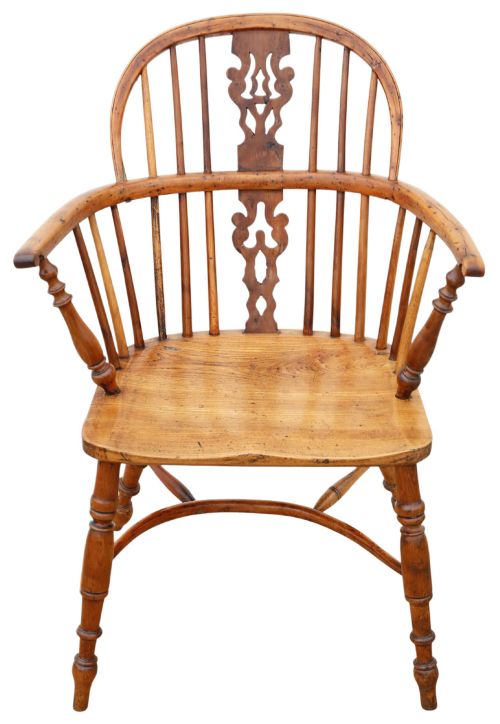
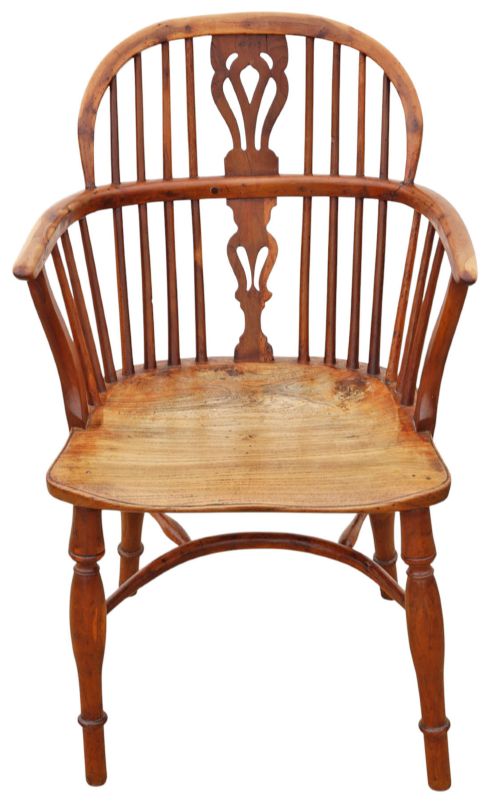
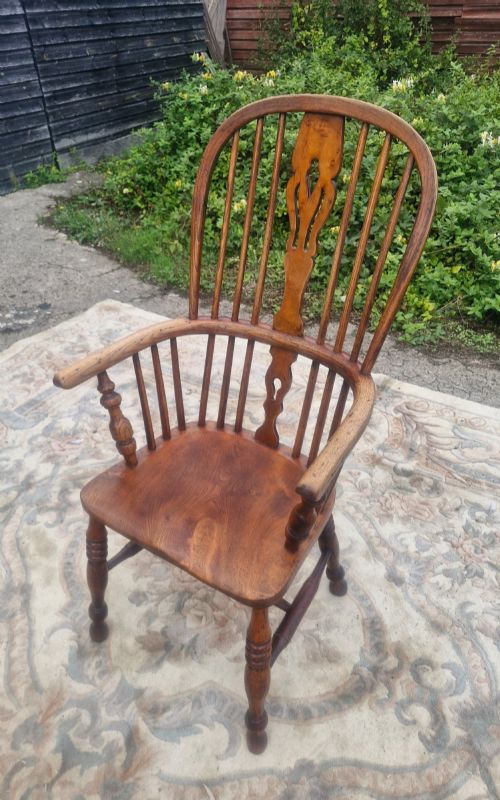
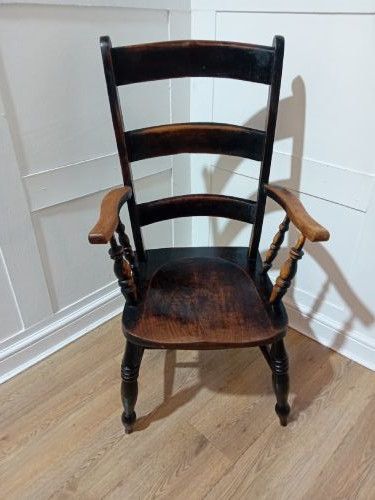
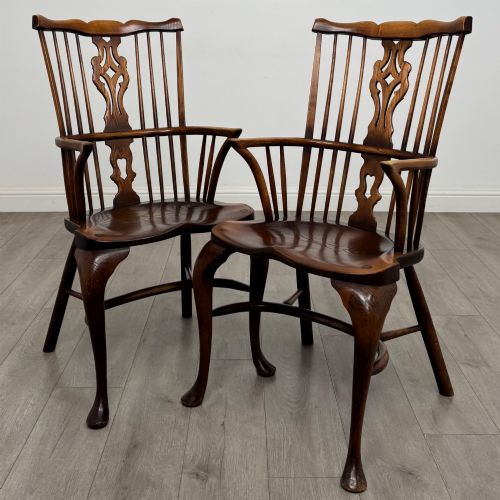
Armchairs and Windsor variations dominate the selection, frequently presenting high backs, spindle structures, or solid carved oval seats. Regional subsets range from Thames Valley and West Country designs to Lancashire rocking chairs and country kitchen seating.
Materials and construction methods
Makers utilised elm for its interlocking grain and resistance to splitting, making it the ideal timber for solid saddle-sculpted chair seats. This tough wood was typically paired with ash, beech, or yew for spindles, legs, and bow backs.
Traditional green woodworking techniques allowed craftsmen to shape unseasoned timber into steam-bent bows and turned components that tightened as the wood dried. Seats were frequently bored to receive pegged undercarriages and raked legs for stability.
Surfaces often display historic patination, original finishes, or traces of early red lacquer, achieved through decades of handling and simple waxing rather than heavy industrial processing.
Listings span multiple centuries from the Georgian era through the Victorian period, utilising elm alongside ash, beech, and yew.
Distinctions in quality
Quality rests upon the sculptural confidence of the seat carving and the balance of the overall proportions. Superior pieces exhibit deeply dished elm seats and well-balanced spindle turnings that maintain structural integrity without feeling heavy.
The integrity of the timber combination dictates long-term durability, where tight joints and minimal replacement parts elevate a piece. Master craftsmen selected contrasting woods such as yew and elm to highlight the visual interplay between arms, bows, and seats.
The Elm Wood Seating Glossary
- Windsor chair
- A chair built with a solid wooden seat into which the legs and back-bow are separately inserted. They often incorporate bentwood hoops and turned spindles.
- Comb back
- A Windsor chair variation where the top rail resembles the spine of a comb, receiving the upper ends of the vertical back spindles.
- Vernacular
- Everyday utilitarian furniture made by regional craftsmen using local materials rather than following strict high-style metropolitan designs.
- Patina
- The surface sheen and softening of colour developed on wood over long periods of use and natural ageing.
- Rush seat
- A seating platform woven from dried marsh plants, commonly found on traditional country chairs.
Elm Wood Seating: Frequently Asked Questions
What is a Windsor chair?
A Windsor chair is a seating form defined by a solid wooden seat that directly anchors the legs and back components. Unlike upholstered furniture, its construction relies on exposed joints and turned or bent wooden members.
These chairs evolved primarily as practical seating for kitchens, farmhouses, and taverns. Their sturdy build made them enduring staples of country homes.
Why is elm used for chair seats?
Elm possesses a twisted, interlocking grain structure that resists splitting under heavy downward pressure. This toughness allowed makers to hollow seats into comfortable saddle shapes without weakening the timber.
Because the wood holds fastenings securely, it became the traditional choice for solid wooden chair bases across centuries of rural furniture making.
How do I date an antique elm chair?
Dating relies on observing construction details, tool marks, timber combinations, and the style of the turnings. Georgian and eighteenth-century examples often feature different spindle arrangements and wear patterns compared to Victorian pieces.
Examine the underside of the seat for evidence of adze work or pit-saw marks. These manufacturing clues help place the piece within its historical period.
Are these chairs comfortable for daily use?
Many of these pieces were ergonomically shaped by hand long before modern seating standards existed. The dished wooden seats distribute weight naturally, though adding loose squabs or cushions provides extra comfort.
Their robust construction handles everyday dining and desk use well. Proper placement away from direct heat sources protects the historic wood.