

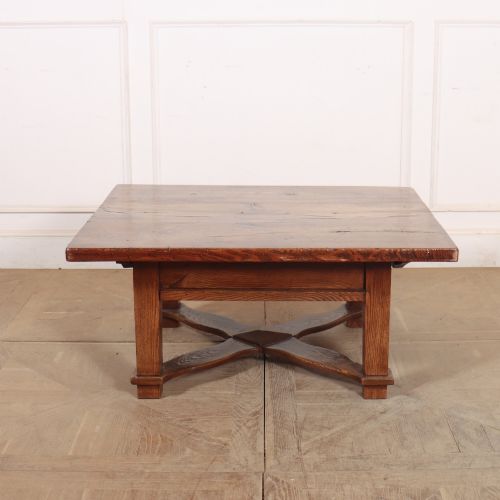


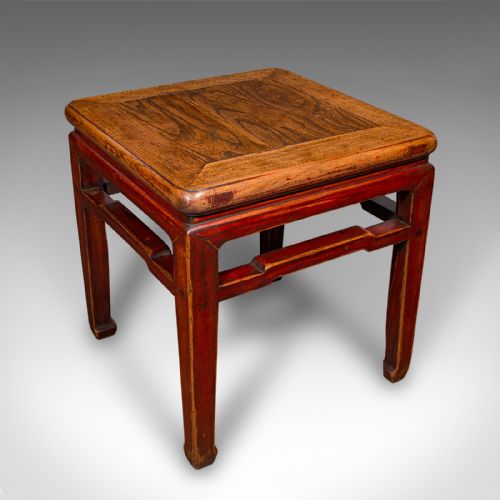
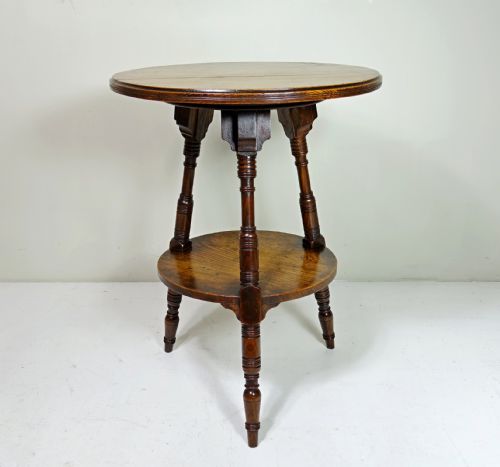

Elm Wood Coffee Table
An elm wood coffee table brings rich, distinctive grain and honest timber character directly into a sitting room.
Elm Wood Coffee Table
An elm wood coffee table draws on centuries of practical furniture making, taking domestic and regional forms and adapting them for low-level placement in contemporary rooms. Buyers searching for an elm wood coffee table encounter pieces ranging from nineteenth-century Chinese low tables and Japanese chabudai forms to European rustic farmhouse designs and Swedish Grace interpretations.
The selection on this page relies heavily on nineteenth-century examples, alongside select eighteenth-century items and twentieth-century revivals. Forms vary from low trestle tables and cricket tables to side tables repurposed for coffee placement, each displaying the warm tone characteristic of old timber.
How they were made
Makers utilised solid elm alongside burr elm, sycamore, and birch veneer, often pairing the dense domestic wood with secondary timbers or brass fittings. Surfaces received scrubbed finishes or lacquer to protect the highly figured grain while maintaining a tactile, natural texture.
Construction methods reflect the regional traditions of the makers, utilising sturdy joinery suitable for heavy daily use. Trestle supports, low kneeling frames, and simple four-legged designs demonstrate structural honesty without superfluous ornamentation.
Elm Wood Coffee Table Retail Price Guide 2026
Typical asking prices for elm wood coffee table among the pieces listed under this phrase on Sellingantiques today, from the lower quarter to the upper quarter. They describe what is for sale here now, not the wider market.
Listings feature elm alongside contrasting materials including sycamore, birch veneer, and brass fittings.
What varies in quality
Quality rests primarily in the visual impact of the timber figure, particularly where burr elm or select regional grain patterns catch the eye. The balance of the proportions and the crispness of the original joinery distinguish standard utilitarian items from finer examples.
Surface preservation dictates much of the appeal, with untouched scrubbed finishes and preserved patination holding greater visual integrity than heavy modern interventions. The integration of contrasting materials, such as birch or subtle brass accents, further elevates certain pieces above standard production.
The Elm Wood Coffee Table Glossary
- Burr elm
- A growth deformity in the tree that produces highly swirled, knotty grain patterns prized for decorative tabletops.
- Chabudai
- A traditional low table used in Japan for partaking in meals or tea while kneeling on tatami mats.
- Trestle table
- A board supported by two or more vertical frames or T-shaped structures rather than four independent legs.
- Cricket table
- A small, lightweight three-legged table traditionally used beside a hearth in British country houses.
- Patina
- The surface sheen and colour developed over decades of handling, exposure to light, and routine polishing.
Elm Wood Coffee Table: Frequently Asked Questions
How do I clean an elm wood coffee table?
Dust the surface regularly with a soft, dry cloth to prevent grit accumulation in the deep grain.
Avoid harsh chemical cleaners or excess water, applying a quality beeswax periodically to nourish the historic timber.
Can I place an elm wood coffee table near a radiator?
Sudden heat sources cause old timbers to dry out too quickly, leading to shrinkage splits in the solid top.
Keep tables away from direct heat and maintain consistent room humidity to preserve the stability of the wood.
What is the difference between Chinese and European elm tables?
Chinese examples often feature distinct low-profile joinery, recessed legs, or lacquer finishes intended for kneeling or platform use.
European pieces tend to follow rustic farmhouse, cricket, or trestle table traditions designed for standard seating heights.