

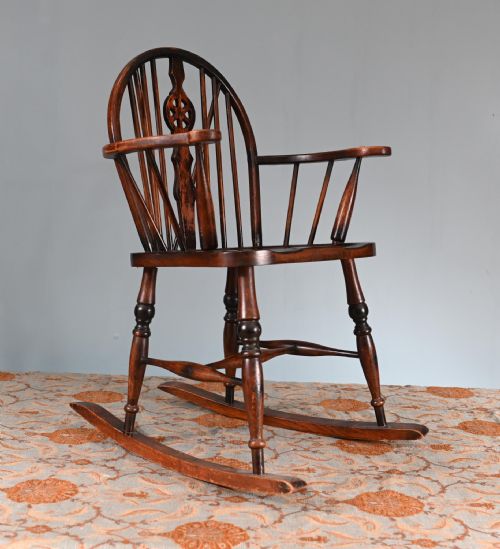


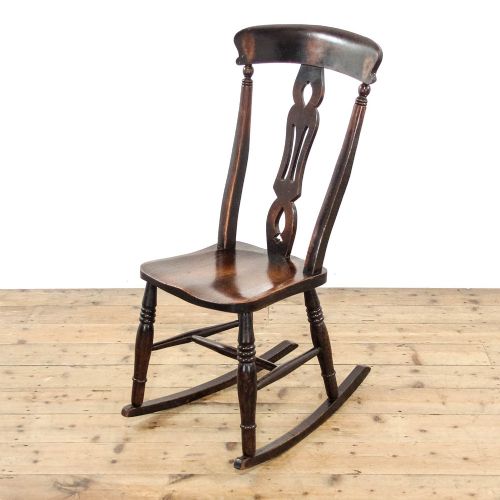


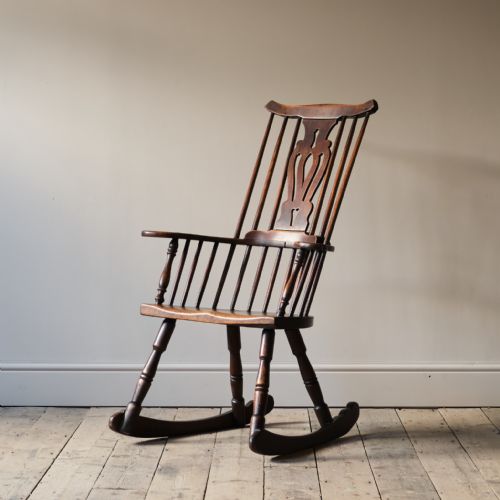
Elm Windsor Rocking Chair
An elm windsor rocking chair is a traditional fireside seat combining sturdy timber construction with a soothing curved rocker base.
Elm Windsor Rocking Chair
An elm windsor rocking chair brings traditional English country seating into domestic interiors through robust vernacular forms. These chairs appear in full-size armchair formats alongside smaller nursing, child and baby iterations.
The evidence shows examples spanning from the mid-eighteenth century through the Victorian era up to the nineteen-thirties. Buyers encounter various regional backs including wheelback, spindle back, splat back and lath back designs.
How they were made
Maker construction relies on mixing native timbers where elm typically forms the solid shaped seat plank. Ash and beech serve for turned spindles, legs and bow frameworks, while yew and pear wood appear occasionally.
Framing employs traditional stick-back joinery with components socketed directly into the heavy wooden seat. Steam-bending shapes the continuous arm bows and back rests characteristic of these vernacular seats.
Elm Windsor Rocking Chair Retail Price Guide 2026
Typical asking prices for elm windsor rocking chair among the pieces listed under this phrase on Sellingantiques today, from the lower quarter to the upper quarter. They describe what is for sale here now, not the wider market.
Baby and child sizes appear alongside full armchairs, proving that eighteenth-century toddlers took their rocking very seriously.
What varies in quality
Quality rests in the sculptural depth of the saddle seat and the graceful sweep of the stick-back architecture. Refined turning on the legs and stretchers separates standard workshop output from superior examples.
Timber figure and rich natural patina dictate visual presence, alongside structural integrity in the rocker shoes and undercarriage joints.
John Shadford Caistor Lincolnshire·High Wycombe
The Elm Windsor Rocking Chair Glossary
- Wheelback
- A wooden splat carved in the centre to resemble the spoked wheel of a cart. This decorative motif became popular during the nineteenth century.
- Crinoline stretcher
- A curved metal or wooden brace linking the legs beneath the seat for added stability. It adds both rigidity and visual detail to the underframe.
- Saddle seat
- A thick wooden seat base scooped out for comfort. Makers shaped these planks by hand using adzes and scorps.
- Lath back
- A backrest formed from horizontal wooden slats rather than vertical spindles. This configuration provides sturdy support in country seating.
Elm Windsor Rocking Chair: Frequently Asked Questions
How do I date an elm windsor rocking chair?
Dating relies on examining the timber selection, tool marks on the underside of the seat, and the profile of the turned spindles and legs. Earlier eighteenth-century pieces often display deeper seat depressions and simpler continuous bends.
Later Victorian and twentieth-century versions incorporate more standardised turnings and machine-sawn components while retaining traditional stick-back assembly methods.
Where were these rocking chairs made?
Production centred largely around English regional workshops, with notable hubs in the Thames Valley, Buckinghamshire, and Lincolnshire. Local craftsmen utilised whatever native hardwoods grew nearby.
Towns such as High Wycombe developed specialised chair-making industries that supplied both domestic and commercial markets across the country.
How do I care for an elm rocking chair?
Maintenance requires keeping the timber away from direct heat sources and sudden humidity changes that cause wood to dry and split. Regular dusting and occasional application of traditional wax help preserve the surface sheen.
Checking the rocker shoes and undercarriage stretchers periodically ensures the joints remain stable under daily motion.