




Elm Coffer Trunk
These elm coffer trunk pieces are practical storage chests shaped by centuries of country craftsmanship, offering robust utility and rich timber grain for modern interiors.
Elm Coffer Trunk
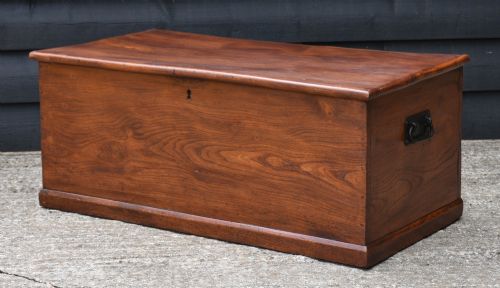
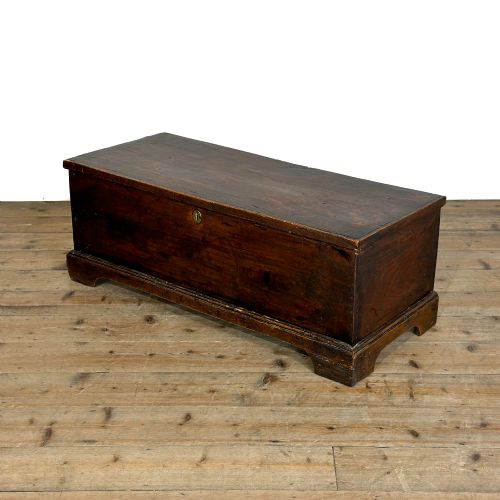
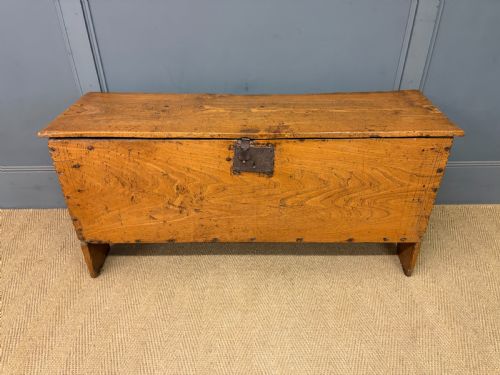
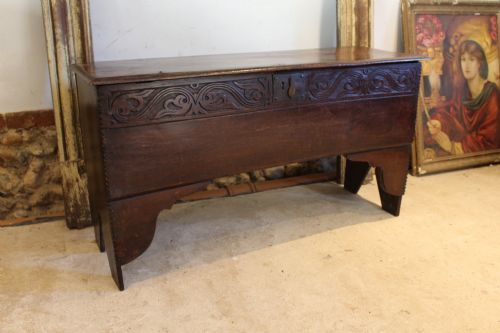
When you search for an elm coffer trunk, you enter a field dominated by rustic country items built for domestic storage. The pieces listed here span blanket boxes, mule chests, and six-plank constructions.
The most common examples you will meet on this page date from the eighteenth and nineteenth centuries, often showing regional vernacular styles such as Welsh or Georgian country work.
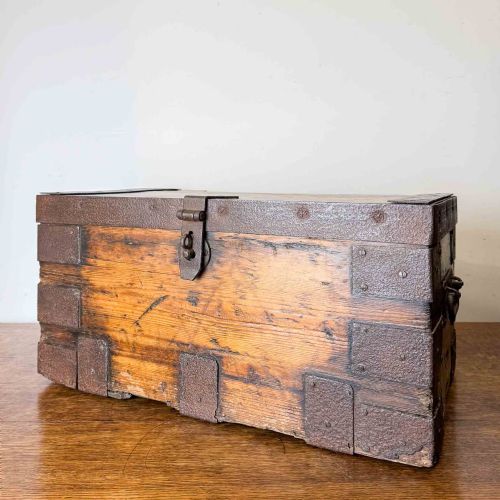
Alongside British items, the selection includes oak and elm combinations, iron-bound strongboxes, and occasional international pieces like Chinese and Korean chests.
Materials and construction
Makers relied primarily on solid elm, frequently paired with secondary timbers like pine or oak, and occasionally featuring decorative burr elm panels.
Structural reinforcement came from blacksmith-made iron bands, brass mounts, wrought iron hasps, and carrying hoops designed to secure heavy contents.
Construction techniques range from simple six-plank assemblies joined with pegged joints to sophisticated dovetailed toolbox and mule chest configurations.
Materials documented across the inventory include solid elm, burr elm, wrought iron, brass mounts, and pine linings.
Judging quality
Quality rests on the depth of the timber grain, the proportion of the box, and the originality of the brass or iron hardware. Solid, uncompromised elm boards with rich surface patination command greater attention.
The integrity of the construction - whether a basic six-plank build or a panelled mule chest with working locks - determines the piece's standing among surviving examples.
The Elm Coffer Trunk Glossary
- Six-plank coffer
- A primitive box construction formed from six individual boards joined at the edges, representing some of the earliest domestic storage forms.
- Mule chest
- A storage chest featuring one or more drawers beneath the main lifting lid, bridging the transition between a coffer and a chest of drawers.
- Strongbox
- A heavily reinforced trunk fitted with iron straps and secure locking mechanisms designed to protect valuable goods during travel or home storage.
- Vernacular country
- Domestic furniture built by regional craftsmen using local timber traditions rather than metropolitan academic designs.
- Burr elm
- Timber harvested from tree growths that produce swirling, highly decorative grain patterns highly prized for panel inserts.
Elm Coffer Trunk: Frequently Asked Questions
What is an elm coffer trunk used for?
These pieces served historically to store blankets, clothing, tools, and valuables securely within domestic and working environments. Today, they function effectively as coffee tables, blanket storage at the foot of a bed, or hallway seating.
Their robust timber construction allows them to handle daily household demands while providing deep, concealed storage space.
How do I date an antique elm chest?
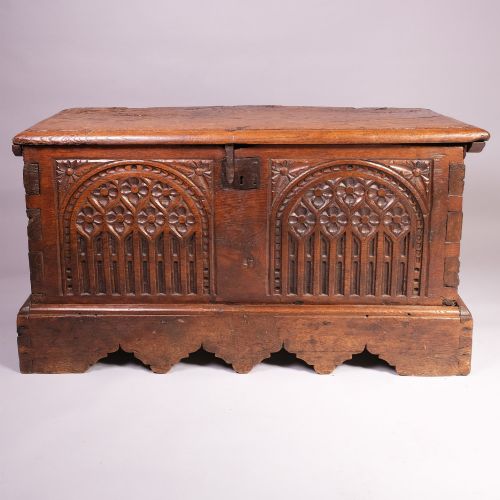
Dating relies on observing construction methods, tool marks, hinge types, and stylistic details such as Georgian bracket feet or Gothic panel carving. Six-plank variants without nails often point towards earlier centuries.
Examining the wear patterns on the timber base and the oxidation of iron or brass fixings provides further clues to the period of origin.
Are these trunks suitable for daily use?
Solid elm is a notoriously tough and interlocking timber, making these chests exceptionally durable for everyday home environments. Their original hinges and lids are built to withstand regular opening and closing.
Maintenance involves simple dusting and occasional application of wax to keep the timber nourished and protected against dry indoor atmospheres.
What distinguishes regional styles?
Regional pieces reflect the local joinery traditions and available materials of specific areas, such as the distinct framing seen in Welsh Gower peninsula items. Makers adapted construction methods to suit local needs and timber availability.
Comparing board thicknesses, joining pins, and hardware styles helps identify the geographical origin of unlabelled country pieces.