
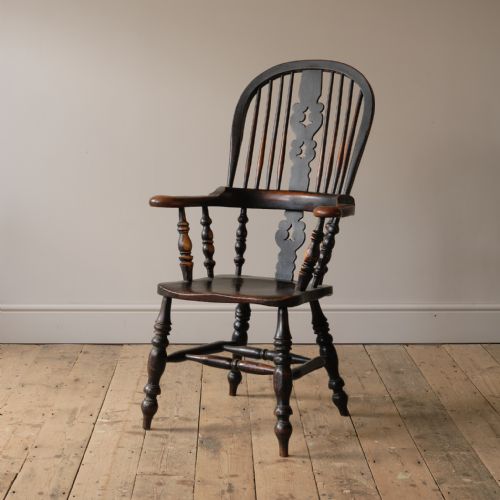
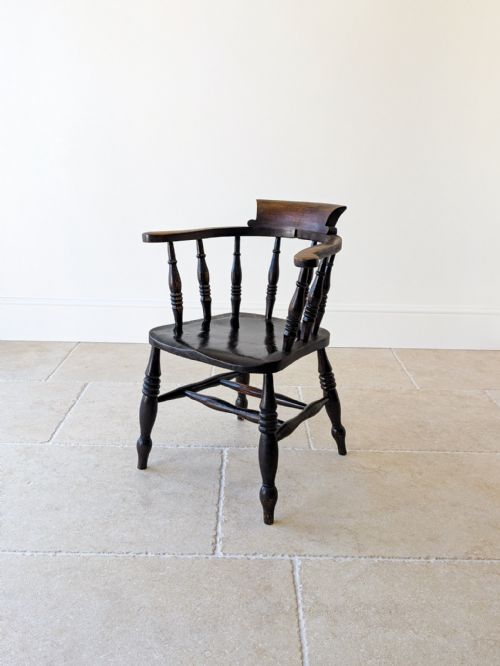

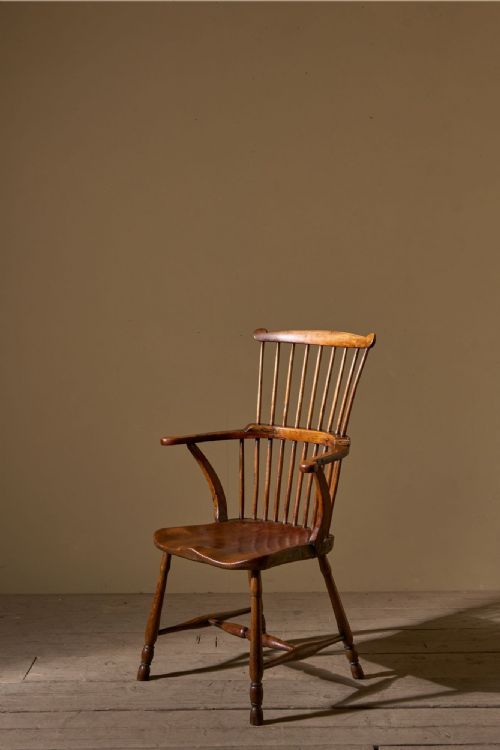
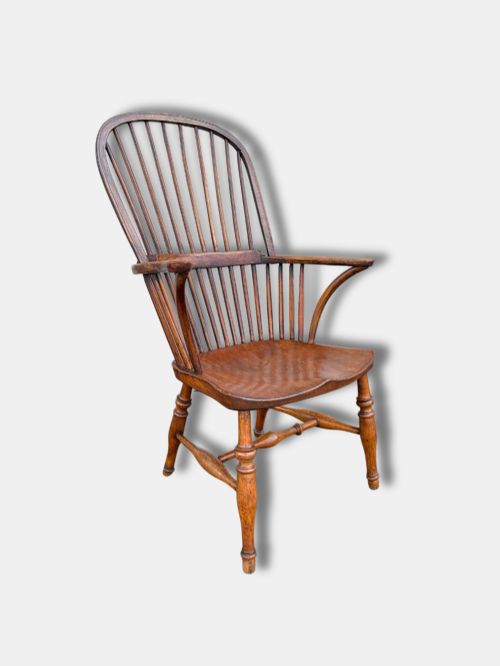
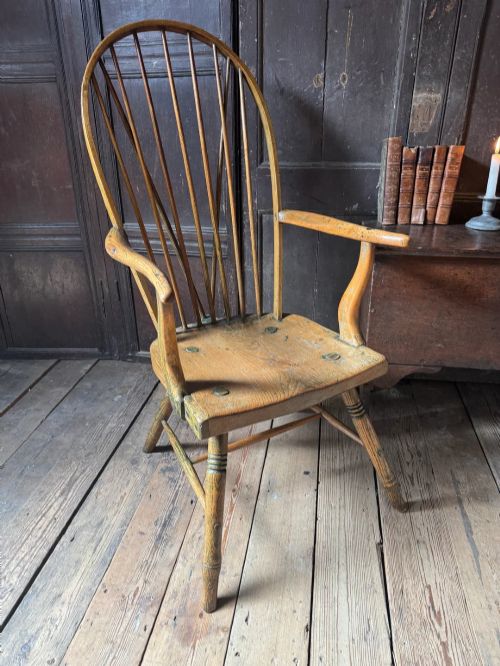
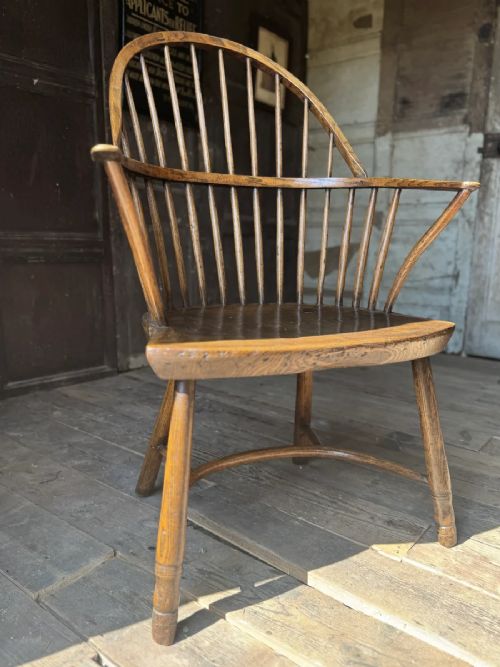
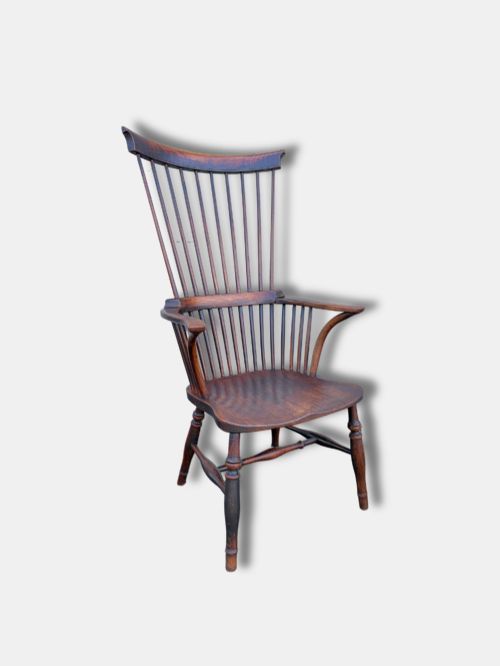
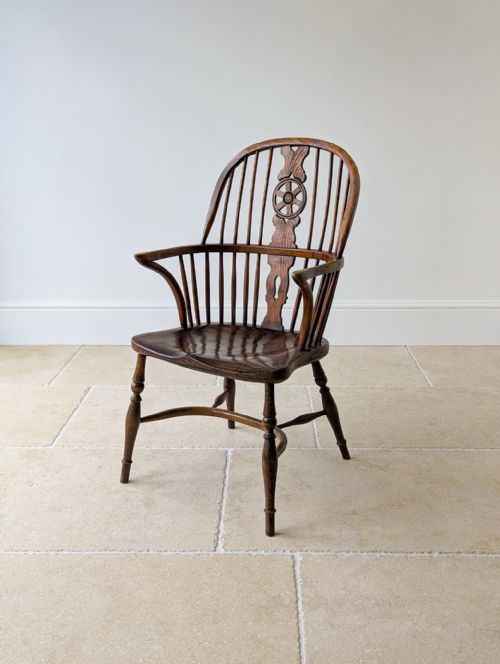
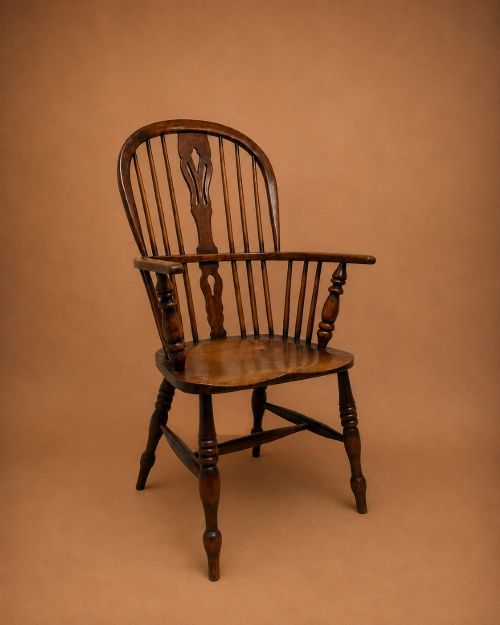
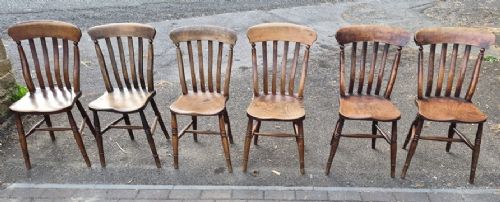
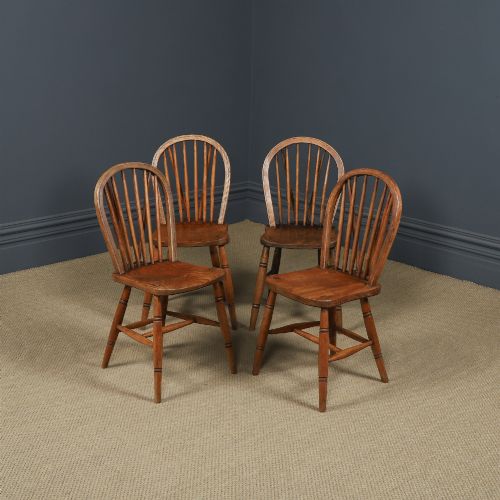
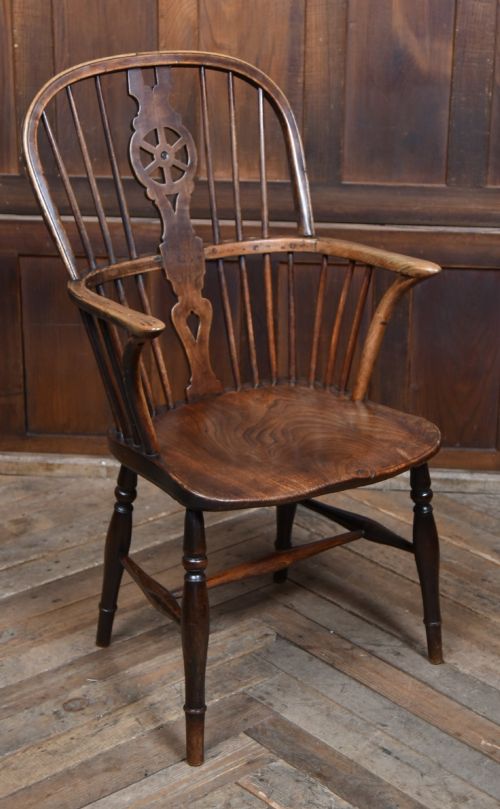
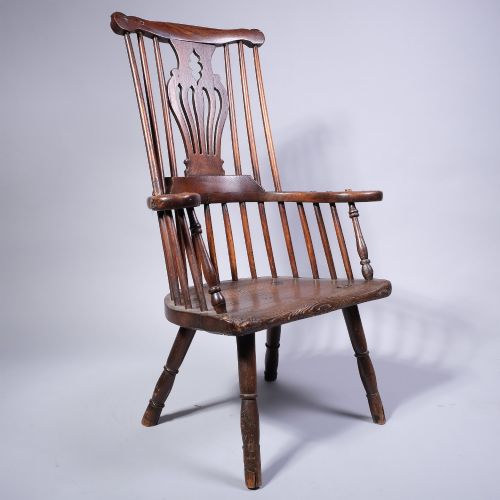
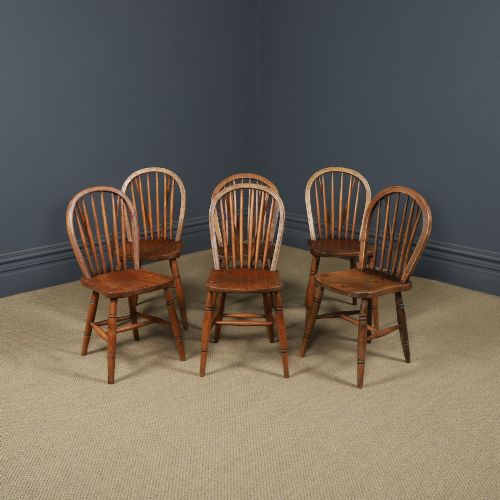
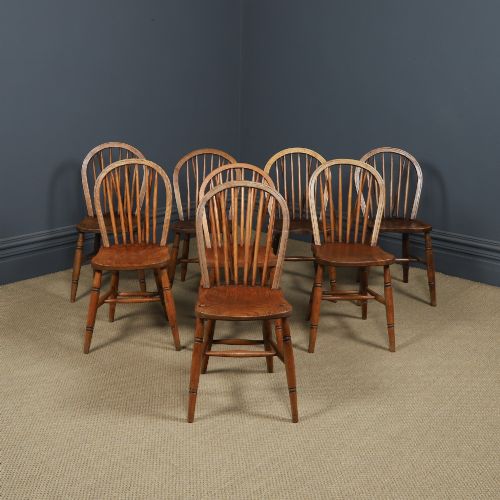
Elm and Ash Windsor Chair
An elm and ash Windsor chair combines country utility with structural grace, offering a sculptural seating form shaped by generations of regional English makers.
Elm and Ash Windsor Chair
When searching for an elm and ash Windsor chair, buyers encounter a traditional form of wooden seating designed around a sturdy plank seat into which the legs, back spindles and bow are independently wedged and jointed.
The most common examples on this page date from the nineteenth century and the Victorian period, originating from regional workshops in the Thames Valley and West Country.
Survivors range from low-back smokers bows and kitchen dining chairs to high hoop-backs, comb-backs and broad-arm library or desk armchairs.
How They Were Made
Craftsmen utilised a combination of native timbers, selecting solid elm for thick, contoured saddle seats because its interlocking grain resists splitting under pressure.
Ash was chosen for the steam-bent hoops, bows and slender spindles due to its exceptional flexibility and tensile strength.
Additional framing elements occasionally incorporate beech or yew, all secured using traditional wedged tenon joints.
Some nineteenth-century makers cleverly incorporated burr elm into seat slabs to give humble kitchen chairs a flash of dramatic grain.
What Varies in Quality
Quality rests upon the sculptural harmony of the turned undercarriage and the generosity of the elm seat plank thickness.
Finer iterations display well-defined comb backs, crisp spindle turnings and balanced proportions rather than utilitarian stiffness.
The depth of the natural patina and the preservation of original timber surfaces distinguish standard kitchen seating from master regional works.
Fred Walker Rockley·Nicholson of Rockley
The Elm and Ash Windsor Chair Glossary
- Saddle seat
- A thick wooden seat base scooped and carved into a concave contour for seating comfort. This central element anchors the entire framework of legs and upper spindles.
- Crinoline stretcher
- An arched undercarriage reinforcement connecting the legs in a curved hoop shape. It provides lateral stability to the chair legs.
- Comb back
- A Windsor chair back design where vertical spindles rise to support a horizontal headpiece resembling a traditional hair comb. This regional variant is often associated with eighteenth-century production.
- Wheelback
- A Windsor chair design featuring a central splat pierced and carved in the shape of a spoked cartwheel. This decorative motif gained popularity during the nineteenth century.
- Smokers bow
- A low-backed armchair featuring a continuous curved armrail resting on short spindles. These comfortable seats were commonly utilised in domestic parlours and commercial establishments.
Elm and Ash Windsor Chair: Frequently Asked Questions
How do I date an elm and ash Windsor chair?
Dating relies upon observing construction traits, tool marks, and stylistic shifts in the back design. Eighteenth-century models often feature comb backs and heavier country framing, while nineteenth-century versions frequently introduce wheel-back splats or steam-bent bows.
Secondary timbers also offer clues, as early vernacular pieces display different turning profiles on the undercarriage legs compared to later Victorian kitchen sets.
Were these chairs used at dining tables?
Many examples on this page, particularly stick-back and wheel-back variants, were produced as sets for domestic kitchens and farmhouse dining rooms. Lower-back versions slid easily beneath tables when not in use.
Armchairs served as head-of-table seating or fireside companions, while matched sets fulfilled everyday family dining requirements.
How should I care for an antique wooden seat?
Maintain the timber by keeping the chair away from direct heat sources and rapid humidity shifts, which can cause elm seats to check. Occasional application of suitable wax feeds the dry wood and preserves the surface sheen.
Avoid excessive moisture during cleaning, using only a soft dry cloth to remove dust from the spindles and carved saddle contours.
What is a Thames Valley Windsor chair?
Thames Valley pieces represent a distinct regional tradition known for refined execution, elegant comb or hoop backs, and sophisticated undercarriage turnings. Makers in this area often utilised yew wood alongside elm and ash.
These chairs generally display greater formal aspiration than rugged provincial furniture while retaining the core Windsor construction method.