

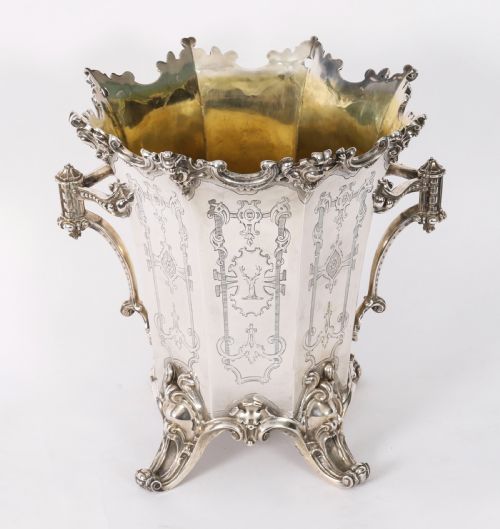


Elkington and Co Plate
Elkington and Co plate brings the unmatched polish of the Victorian dining room and the clean lines of Art Deco straight to your sideboard.
Elkington and Co Plate
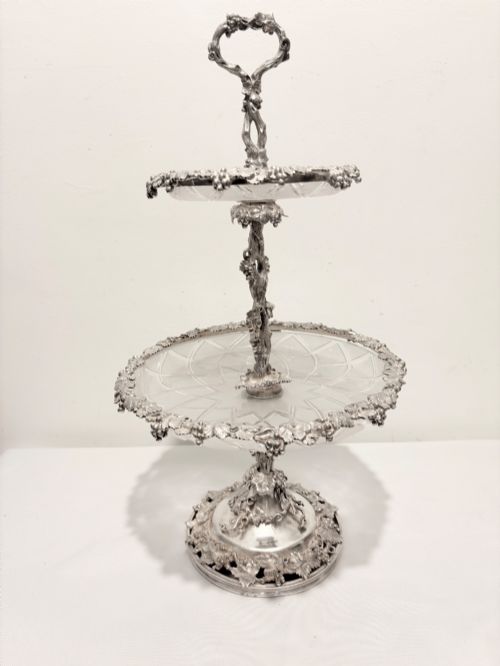
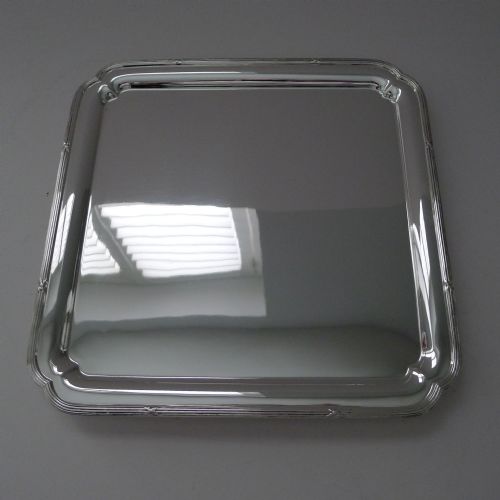
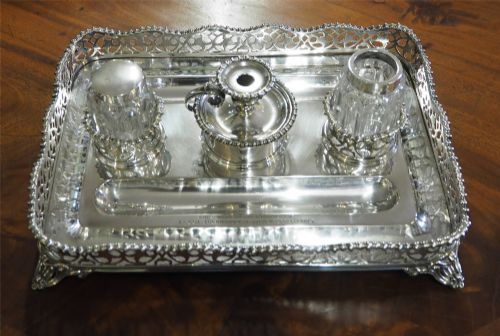
When you search for elkington and co plate, you encounter a remarkable lineage of British metalwork spanning the nineteenth and twentieth centuries. These pieces encompass everything from grand Victorian candelabra and wine coolers to practical desk sets, toast racks, and fitted cutlery canteens.
The objects on this page largely stem from the Victorian and Edwardian eras, alongside later Art Deco and Neo-Georgian forms. You will find functional table wares and display items that reflect the changing domestic habits of Britain across nearly a century of production.
How they were made
The foundational technique relies on electroplated nickel silver and standard silver plate over base metals, often enriched with gilt highlights, porcelain inserts, or cut glass components. Artisans utilised sophisticated electrotyping methods to deposit silver evenly across intricate relief work, creating deep channelling and crisp detailing.
Makers integrated various secondary materials, pairing silver plate with mahogany, brass, and heavy crystal glass for structural balance and visual contrast. This combination of durable base metals and meticulous surface plating allowed workshops to produce complex forms like cherub-adorned centrepieces and weighty wine coolers.
Elkington and Co Plate Retail Price Guide 2026
Typical asking prices for elkington and co plate among the pieces listed under this phrase on Sellingantiques today, from the lower quarter to the upper quarter. They describe what is for sale here now, not the wider market.
Several pieces preserve the energetic form of cast cherubs clinging to heavy nineteenth-century candelabra stems.
What varies in quality
Quality rests upon the crispness of the chasing, the depth of the original silver deposit, and the survival of the plating intact across high-relief ornamentation. Masterworks display sharp casting in motifs like Victorian Rococo Revival scrolls or Chippendale edges, whereas lesser examples show softening in the stamped details.
The integrity of the underlying metalwork and the harmony of composite materials, such as fitted glass liners or wooden console frames, determine the standing of a piece. Superior items retain their structural weight and balance without excessive wear to the exposed high points of the silver layer.
Elkington and Co·Elkington, Mason and Co
The Elkington and Co Plate Glossary
- Electroplated Nickel Silver
- A copper, nickel, and zinc alloy coated with a layer of pure silver through an electrolytic process. This method provided a durable, uniform base for heavy household silver.
- Electrotype
- A metal copy produced by electrodeposition into a mould, allowing makers to reproduce complex sculptural reliefs and detailed surface textures with precision.
- Salver
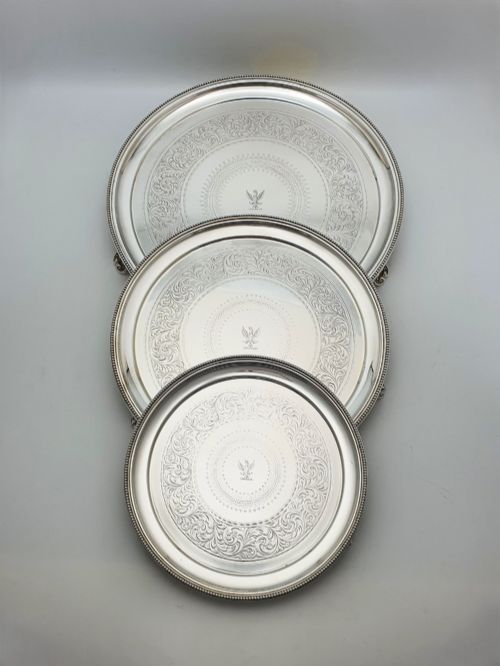
- A flat tray, typically circular and raised on feet, used for serving drinks or presenting letters. Victorian examples often carry heavy engraved ornamentation.
- Candelabra
- A branched candlestick holding multiple lights, frequently designed as centrepieces for dining tables. Elkington pieces often incorporate elaborate figural casting such as cherubs.
- Gilt
- A thin layer of gold applied to the surface of silver plate or base metal to provide contrasting warm tones. It is commonly found on the interior bowls of desk sets and wine coolers.
Elkington and Co Plate: Frequently Asked Questions
How do I date Elkington silver plate?
Examine the stamped date letters, registry marks, and maker's ciphers usually found on the underside or rim of the object. These punch marks correspond to specific years of production and assay office records.
Matching the stylistic clues, such as Victorian Rococo Revival curves or 1930s geometric forms, helps narrow down the decade when the documentation is faded.
What is electroplated nickel silver?
It is a strong base alloy composed of copper, nickel, and zinc that mimics the weight and colour of solid silver. This metal serves as the foundation for a bonded layer of pure silver applied via electrolysis.
The development of this technique allowed nineteenth-century workshops to produce sturdy domestic tableware that resisted bending and daily wear.
How were wine coolers used?
These vessels chilled wine and champagne bottles at the dining table, often filled with ice and water. Their heavy insulated walls kept beverages cold through lengthy multi-course meals.
Many examples double as decorative display pieces featuring sculptural handles, classical motifs, or naturalistic vine ornamentation.
What defines Chippendale style furniture?
This style draws inspiration from eighteenth-century cabinet-making designs, characterised by carved cabriole legs, claw-and-ball feet, and elaborate fretwork. Revivals in the twentieth century brought these classic proportions into dining room consoles and cutlery canteens.
The aesthetic values symmetry, rich mahogany grain, and restrained ornamentation that complements formal silver table settings.