

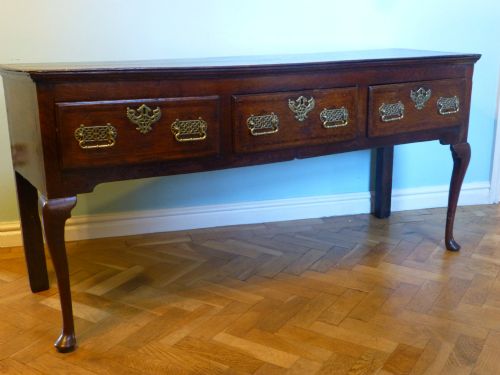


Eighteenth Century Server
An eighteenth century server brings timeless utility and timber warmth to a room, offering surface space and storage shaped by Georgian hands.
Eighteenth Century Server
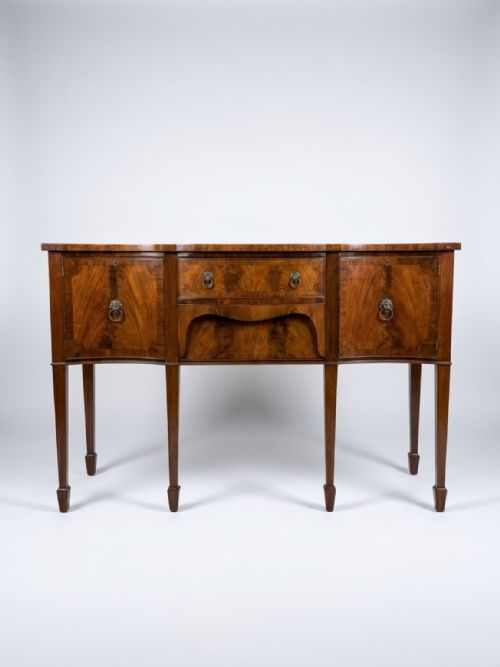
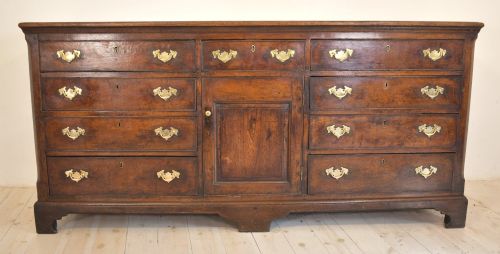
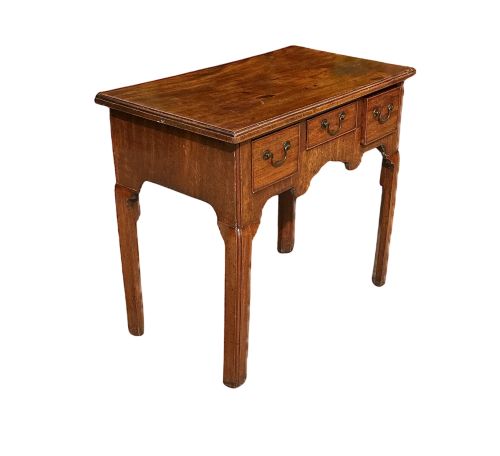
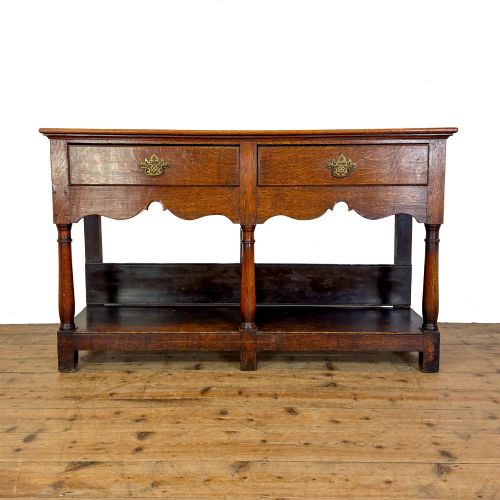
The term eighteenth century server encompasses a variety of timber furniture designed for serving food and drink, including sideboard forms, dresser bases, and side tables. These pieces originated to serve domestic needs in dining rooms and halls, providing surfaces for dishes and storage within drawers and cupboards.
Buyers browsing this selection will most frequently encounter mahogany and oak forms dating from the Georgian period, often featuring serpentine or bowfront shapes. Alongside substantial sideboards and dresser bases, the inventory includes smaller side tables, tiered dumbwaiters, and serving accessories like silver sugar tongs.
Regional variations appear across the collection, ranging from Welsh country oak pieces to refined George III mahogany designs and French provincial walnut side tables. This mix reflects both urban cabinet-making traditions and robust rural craftsmanship from the seventeen-hundreds and adjacent eras.
How these pieces were made
Cabinet-makers relied heavily on solid hardwoods like mahogany and oak, often applying flame mahogany veneer to prominent surfaces for visual depth. Details were frequently enhanced through decorative elements such as boxwood and satinwood inlay.
Construction techniques varied according to regional styles and local workshops, utilising cabriole legs on earlier country pieces and clean straight legs or tapering supports on later formal items. Iron and brass hardware provided structural reinforcement and operational fittings for drawers and drop-leaves.
Eighteenth Century Server Retail Price Guide 2026
Typical asking prices for eighteenth century server among the pieces listed under this phrase on Sellingantiques today, from the lower quarter to the upper quarter. They describe what is for sale here now, not the wider market.
The listings combine Georgian dining room servers and country oak dresser bases with smaller side tables and tiered dumbwaiters.
What varies in quality
Quality differences emerge in the selection of timber and the precision of the cabinet-making, distinguishing provincial utility pieces from metropolitan workshop output. The grain pattern of flame mahogany veneer and the delicacy of satinwood or boxwood inlay signal the level of craftsmanship invested in a sideboard or side table.
Proportion and structural integrity define the higher tiers of these serving pieces, where original brass fixtures, well-fitted drawers, and uncompromised timber surfaces remain intact. Lesser examples show heavier wear or timber replacement, while superior survivals retain their original architectural lines and patination.
The Eighteenth Century Server Glossary
- Serpentine sideboard
- A serving table featuring a front edge curved in a wave-like convex and concave pattern, popular in formal Georgian dining rooms.
- Dresser base
- A lower storage unit fitted with drawers and cupboards, traditionally used in country houses for storing and serving kitchen and dining ware.
- Dumbwaiter
- A multi-tiered freestanding serving stand with revolving or fixed circular trays, designed to hold dishes without requiring a servant present.
- Bowfront
- A convex curved furniture front that projects outward in a smooth arc, frequently seen on mahogany sideboards from the late eighteenth century.
- Flame mahogany veneer
- A thin slice of timber cut from where a branch meets the trunk, producing a fiery, feather-like grain pattern used on high-end cabinet fronts.
Eighteenth Century Server: Frequently Asked Questions
What is an eighteenth century server used for?
These pieces were built primarily to assist with dining and hospitality, providing sturdy timber surfaces for laying out food, drinks, and tableware during meals. Drawers and lower cupboards also offered convenient storage for linens, cutlery, and serving accessories.
Today, they function similarly in modern homes, often placed in dining rooms or entrance halls as sideboards, console surfaces, or display stands that bring period character to an interior.
How do I distinguish between oak and mahogany pieces?
Oak furniture typically displays a prominent, open grain with visible medullary rays, and it tends to carry a warm, lighter brown tone that suits country and earlier eighteenth-century designs. It is often found in Welsh and provincial English regional pieces.
Mahogany offers a denser, smoother grain with a richer reddish-brown colour that deepens with age, frequently utilised in formal Georgian urban pieces and enhanced by decorative veneers or inlay work.
What is the difference between a dresser base and a sideboard?
A dresser base is traditionally a heavier, country-made piece of furniture featuring drawers and sometimes lower cupboards, originally designed for utilitarian use in kitchens or rustic dining spaces. They often showcase sturdy oak construction and simpler lines.
A sideboard is generally a more formal dining room server developed later in the eighteenth century, characterised by refined timber veneers, serpentine or bowfront shapes, and sophisticated inlay.
How do tiered dumbwaiters function?
Tiered dumbwaiters consist of two or three graduated circular wooden trays mounted on a central column, allowing hosts to place multiple dishes, bottles, or glasses within easy reach on a single compact stand. Some examples include drop-leaves or revolving tiers for added convenience.
These stands were placed beside dining tables so diners could help themselves to courses or beverages without servants hovering in the room.