





Eighteenth Century Dial
An eighteenth century dial brings the steady mechanics of the Georgian era into a room through brass faces and painted timber.
Eighteenth Century Dial
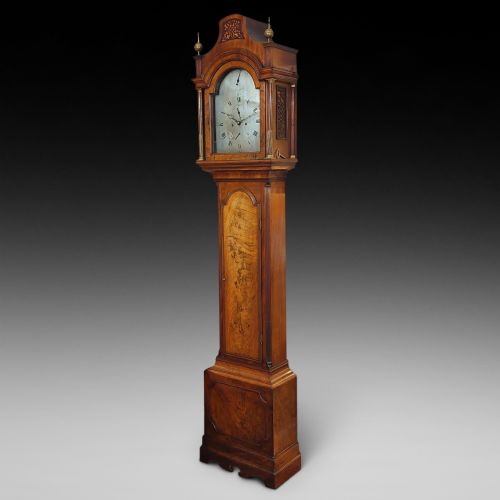
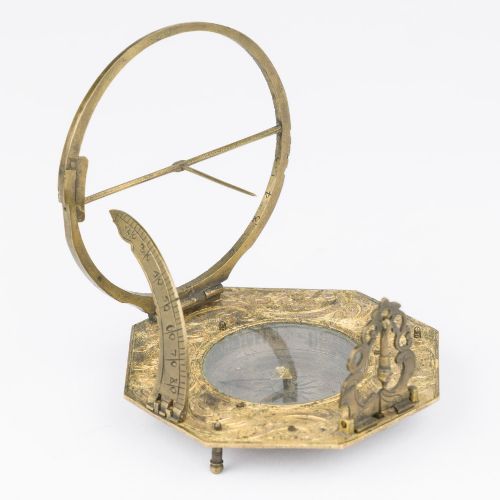
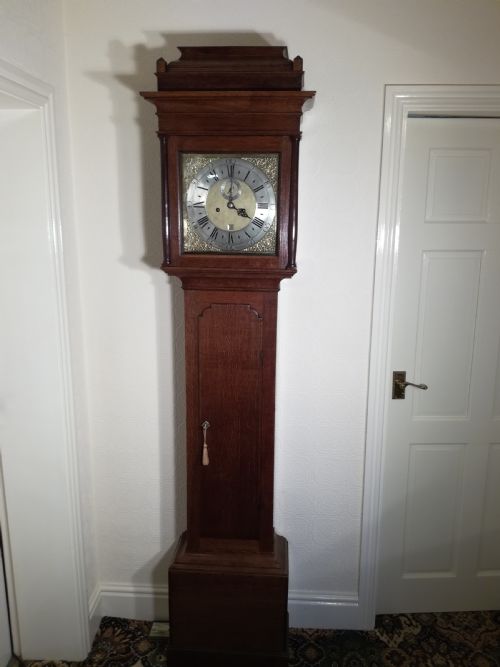
When you search for an eighteenth century dial, you encounter longcase clocks, wall clocks, and scientific instruments produced during the Georgian period. The listings on this page consist predominantly of tallcase grandfather clocks housed in mahogany or oak cases, alongside specialised instruments.
These items originate from various British and European workshops, spanning early Georgian, George II, and George III styles. The dials themselves range from simple brass plates to complex painted faces featuring phases of the moon and automata.
Materials and construction methods
Cabinetmakers constructed the tall cases using solid timbers such as mahogany and oak, occasionally applying ebonised finishes or dark green paint for chinoiserie decoration. Glass protected the delicate faces and moving parts from dust and damage.
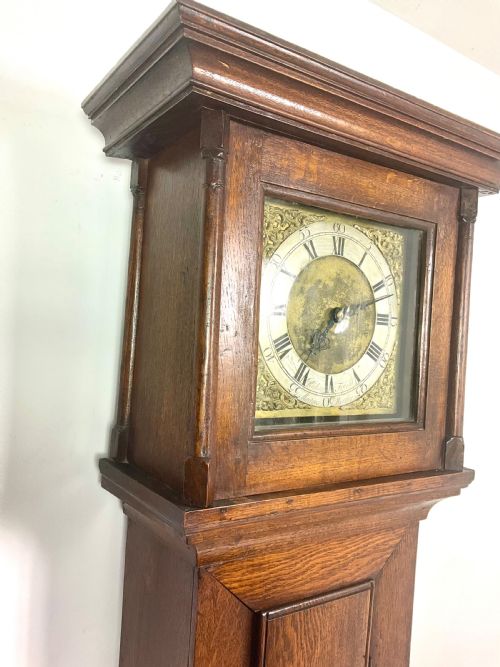
Clockmakers shaped brass and steel for the internal movements and chapter rings, while silvered details and painted pigments brought legibility and decoration to the dial face.
Eighteenth Century Dial Retail Price Guide 2026
Typical asking prices for eighteenth century dial among the pieces listed under this phrase on Sellingantiques today, from the lower quarter to the upper quarter. They describe what is for sale here now, not the wider market.
Some dials feature Father Time rocking back and forth, keeping an unblinking eye on your afternoon tea schedule.
Distinctions in quality
Quality rests upon the precision of the clockmaker's movement and the crispness of the engraved or painted details on the dial face. Finer examples display intricate automation, such as rocking ships or lunar phases, executed with mechanical exactness.
The choice of timber and the proportion of the cabinetry set the finer pieces apart from standard workshop output. Original painted surfaces and untouched timber patination elevate the standing of a piece considerably.
Andreas Vogler·John Witherston·Dwerrihouse and Carter·Francis Perigal·Archibald Collier
The Eighteenth Century Dial Glossary
- Dial
- The visible face of the clock that displays the time and often auxiliary indicators like calendar dates or moon phases. It serves as the primary canvas for the maker's signature.
- Longcase clock
- A tall freestanding weight-driven timepiece housed in a protective wooden case, commonly referred to as a grandfather clock. These towers protect the pendulum and weights while showcasing fine cabinetry.
- Chinoiserie
- A decorative style employing imitation of Chinese artistic motifs, often rendered in paint and lacquer upon wooden clock cases. This aesthetic was popular during the early part of the eighteenth century.
- Automata
- Mechanical figures or moving parts integrated into the dial, such as rocking ships or allegorical figures that animate as the clock operates. They demonstrate the mechanical ingenuity of the maker.
- Silvered dial
- A brass face treated with a silver solution to create a matte metallic finish for numerals and inscriptions. This technique enhances contrast and readability against the brass backing plate.
Eighteenth Century Dial: Frequently Asked Questions
How do I wind a longcase clock?
Winding requires using a specialised key to raise the weights inside the trunk slowly and steadily until they reach the top. Care must be taken not to overwind the mechanism.
Different movements require attention at weekly or daily intervals depending on the gear train. Consulting the specific mechanics of the individual clock ensures proper operation.
Where should I place an eighteenth century dial in my home?
These tall pieces require stable, dry environments away from direct sunlight and sudden temperature fluctuations. Hallways and living rooms provide suitable stable conditions.
Floor surfaces must be completely level to ensure the pendulum swings truly and the clock keeps accurate time. Wall-mounted dials need secure fixings into solid masonry or studwork.
How do I tell different periods apart?
Early Georgian pieces often feature square brass dials and simpler oak or walnut cabinetry. Later George III examples commonly introduce arched brass or painted white dials within mahogany cases.
Regency items display refined neoclassical proportions and distinct lettering styles on the dial face. Cabinet hardware and dial ornamentation evolve noticeably across these decades.
What is a rolling moon dial?
A rolling moon dial is a mechanical display featuring two painted lunar spheres that rotate behind an arched cutout to show the phases of the moon. It served both a practical calendar function and a decorative purpose.
Clockmakers calibrated these mechanisms to track the synodic month accurately. They represent a high degree of craftsmanship within Georgian horology.