


Eight Arm Brass Light
An eight arm brass light commands a room with substance, offering a balanced span of metal and illumination.
Eight Arm Brass Light
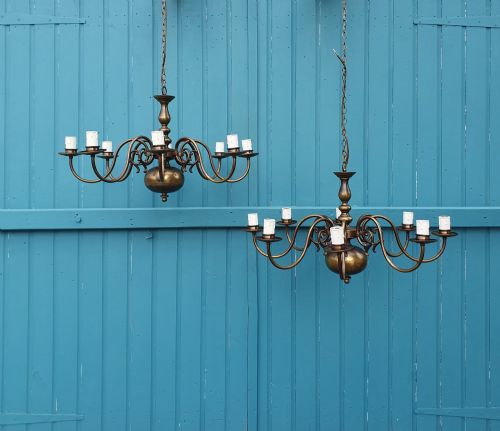
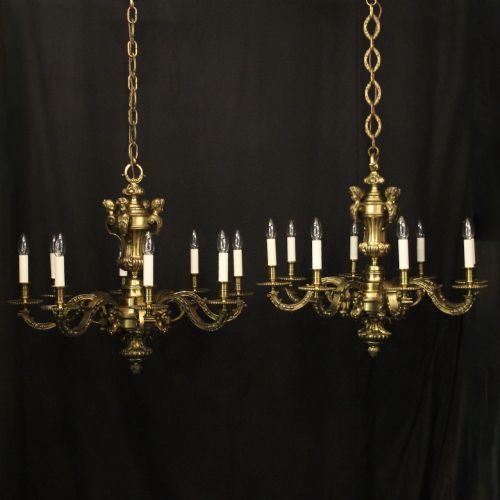
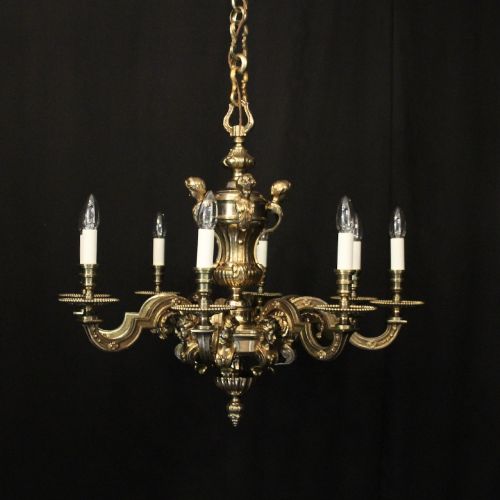
An eight arm brass light is a substantial ceiling fixture designed to illuminate large spaces with branching candle or bulb holders. When exploring this phrase, buyers encounter grand chandeliers spanning from the nineteenth century through the interwar decades, with French and Dutch designs appearing most frequently.
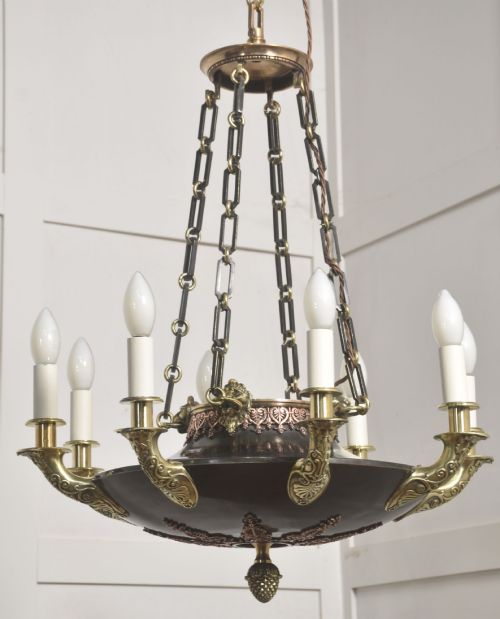
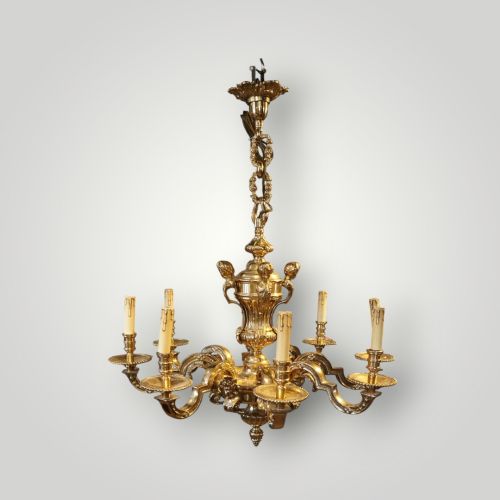
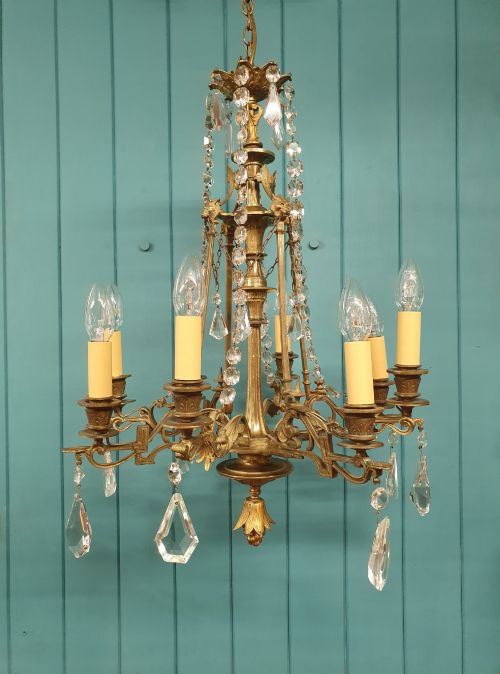
The objects take the form of formal chandeliers, anchored by a central column and radiating branches styled in revivalist traditions such as French Rococo, Empire, and neoclassical taste. Many examples incorporate cast mounts, scroll arms, and decorative elements like lion masks or acanthus leaves.
Makers and manufacturers of these fixtures drew upon heavy metalwork traditions, producing pieces suited to high ceilings and generous reception rooms. Surviving examples demonstrate a distinct preference for symmetry and structural presence across Edwardian and early twentieth-century interiors.
Markers of Distinction and Craft
Quality reveals itself in the crispness of the metal casting, where sharply defined acanthus leaves and clean scrollwork distinguish superior examples from softer, mass-produced alternatives. The weight of the metal and the precision of the joints determine the structural integrity of the fixture over time.
Surface treatments also set pieces apart, from deep hand-applied gilding to well-preserved bronze patination that ages gracefully. Integrated decorative details, such as cast lion masks or cut glass crystal elements, elevate the ambition of the design.
Materials represented across these listings include brass, bronze, gilded bronze, copper, nickel, crystal, and glass.
The Eight Arm Brass Light Glossary
- Brass
- An alloy of copper and zinc favoured for its warm tone and malleability in decorative casting. It forms the primary structural and visual base for these chandeliers.
- Gilded Bronze
- Bronze metal coated with a thin layer of gold leaf or applied gold wash. This technique provides a durable, lustrous surface finish associated with formal French interiors.
- Acanthus Leaf
- A classical ornamentation motif modelled on the foliage of the Mediterranean acanthus plant. It appears frequently as a cast mount or junction on chandelier arms.
- Scroll Arm
- A curved, spiralling metal branch extending from the central column to hold a light source. This profile defines the silhouette of many traditional chandeliers.
- Empire Revival
- An architectural and decorative style drawing inspiration from the early nineteenth-century Napoleonic era. It prioritises symmetry, classical motifs, and formal grandeur.
Eight Arm Brass Light: Frequently Asked Questions
How high should I hang my chandelier?
These eight-arm fixtures demand generous clearance to allow movement underneath while anchoring the room's vertical space. In a standard room, the bottom of the fixture typically rests at least seven feet above the floor.
Over a dining table, the distance between the tabletop and the lowest point of the chandelier usually measures around thirty inches. This placement ensures an unobstructed view across the table while providing focused illumination.
How do I identify a French versus Dutch style?
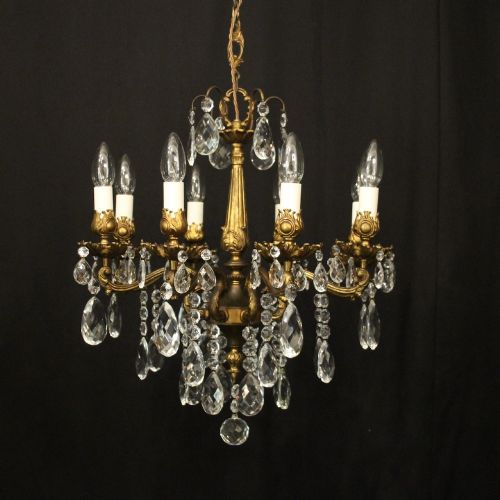
French examples often display refined neoclassical or Rococo influences, featuring bright gilded surfaces, crisp acanthus leaf mounts, and integrated crystal drops. Their overall aesthetic leans toward formal ornamentation and sculpted elegance.
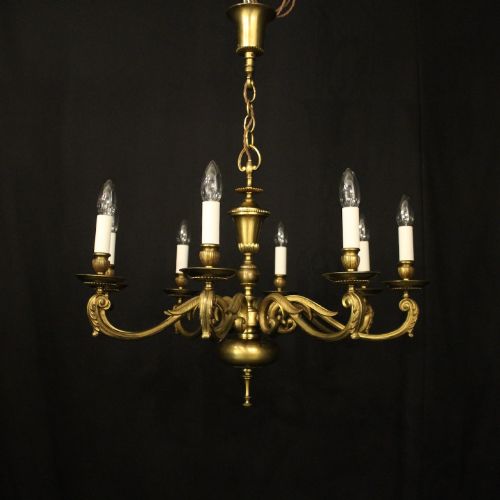
Dutch designs tend to emphasise robust brass construction with heavier scroll arms and simpler, utilitarian silhouettes. They reflect a tradition of sturdy domestic metalwork dating back to earlier revival periods.
Can these fixtures take modern electrical wiring?
Most antique chandeliers have been previously adapted for modern electricity to comply with contemporary safety standards. Rewiring allows them to integrate safely into domestic electrical circuits while retaining their historic appearance.
It is advisable to have a qualified electrician inspect the internal wiring and ceiling fixings prior to installation. They can also recommend appropriate bulb wattages to protect old sockets and decorative finishes.