


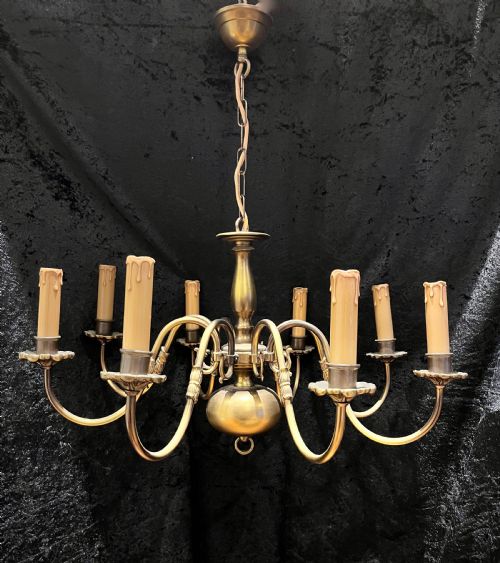
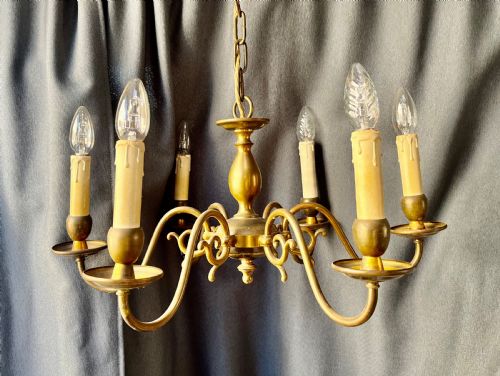
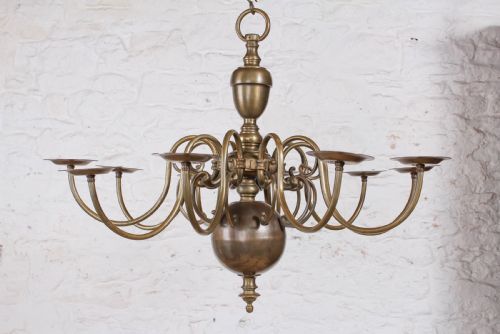


Flemish Style Brass Chandelier
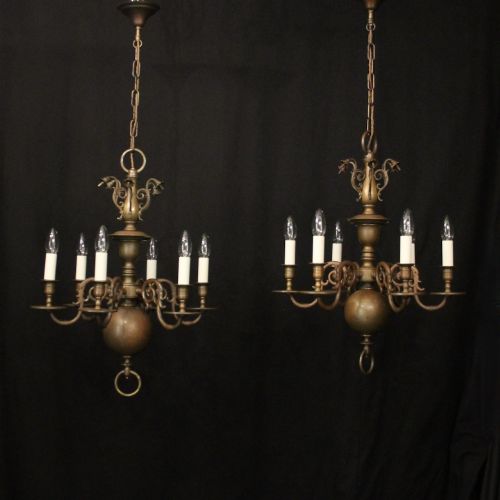
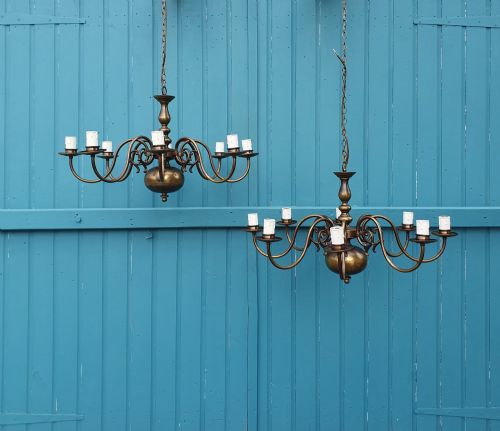
A flemish style brass chandelier brings weight, warmth and generous branch numbers to a high-ceilinged room.
Flemish Style Brass Chandelier
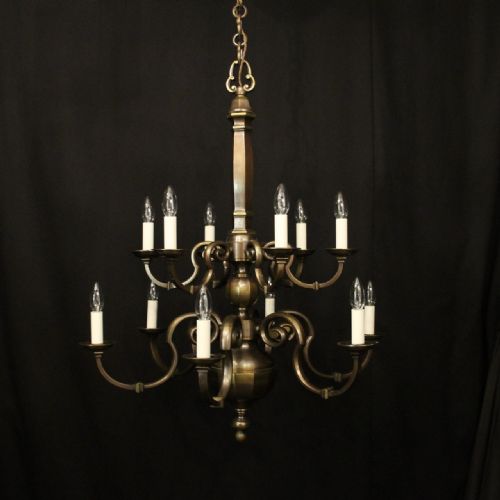
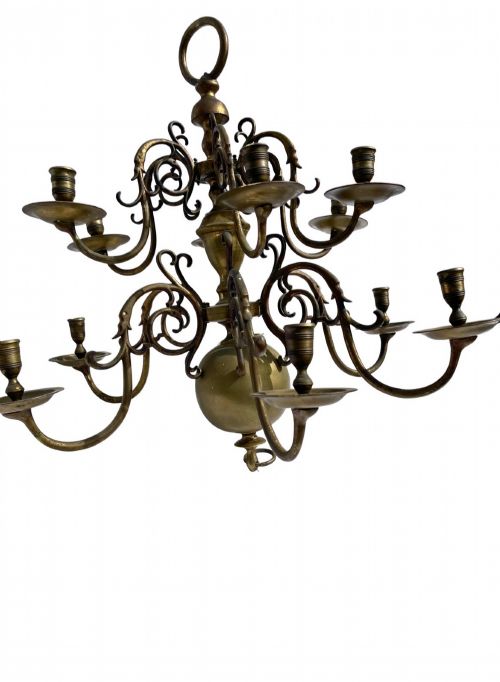
A flemish style brass chandelier draws on historical Dutch and Flemish lighting forms, typically featuring multiple scrolled arms branching from a central baluster stem. These fixtures range in scale from compact seventeen-inch examples to large two-tier assemblies carrying twelve branches or more.
Most pieces encountered on this page date from the nineteenth and early twentieth centuries, spanning the Edwardian era through the nineteen-thirties. Buyers frequently find eight-arm configurations alongside pairs of six-light fixtures and larger multi-tier designs.
Construction relies heavily on traditional brass and bronze, occasionally finished with silver plate. The aesthetic channels seventeenth-century baroque traditions through later revival periods such as the Victorian Flemish Revival and Dutch Baroque Revival.
How they were made
Makers cast components in solid brass and bronze, utilising traditional foundry methods to produce substantial stems and scrolled arms. Metal parts are then hand-finished and joined to create rigid multi-branch hanging structures.
Surface treatments vary from polished finishes to silver plating over a brass base. Heavier examples incorporate two-tier branch arrangements secured around turned central columns.
The current selection spans materials including solid brass, bronze, and silver plate, across periods from the eighteenth century to the nineteen-thirties.
What varies in quality
The distinction between standard and superior pieces rests on the weight of the metal and the crispness of the casting. Heavier solid brass and bronze assemblies with balanced proportions demonstrate greater structural integrity.
Branch count and tier complexity also separate ordinary examples from exceptional ones. Two-tier chandeliers carrying twelve branches require superior engineering in the central stem compared to single-tier eight-arm variants.
The Flemish Style Brass Chandelier Glossary
- Baluster stem
- The central vertical shaft of a chandelier, shaped with ornamental swelling contours. This structural column supports the radiating branches.
- Branch
- A curved arm extending outward from the central stem to hold a light source. Multi-tier models arrange these arms across multiple vertical levels.
- Silver plate
- A thin layer of silver applied over a base metal such as brass. This finish offers a brighter reflective surface than bare yellow metal.
- Dutch Baroque
- A seventeenth-century decorative style characterised by robust forms and exuberant curves. Later revivals borrow these heavy proportions for nineteenth-century interiors.
Flemish Style Brass Chandelier: Frequently Asked Questions
How do I hang a heavy brass chandelier safely?
These substantial fixtures require direct attachment to ceiling joists using a rated structural hook rather than standard plaster fixings. Professional electrical installation ensures the weight is adequately supported.
Working with a qualified electrician also allows for proper internal rewiring where antique brass tubes conceal modern flex.
What is the difference between Dutch and Flemish styles?
Dutch and Flemish lighting designs share common seventeenth-century baroque roots, featuring scrolled arms and central baluster stems. Distinctions often relate to regional revival interpretations from the Victorian and Edwardian periods.
Both traditions favour heavy brass or bronze construction designed to project light effectively across large rooms.
How should I clean antique brass?
Dusting with a dry microfibre cloth removes surface particles without disturbing the aged patina. Aggressive metal polishes strip away historical colour and should be avoided.
Preserving the natural oxidation maintains the visual depth developed over decades of exposure.
Can these chandeliers be converted for modern bulbs?
Most period chandeliers accept modern SES or EES candle bulbs once the internal wiring has been updated by an electrician. Candle tubes inside the drip pans can be adapted to suit contemporary electrical standards.
Such modifications leave the exterior brass structure entirely unaltered.