
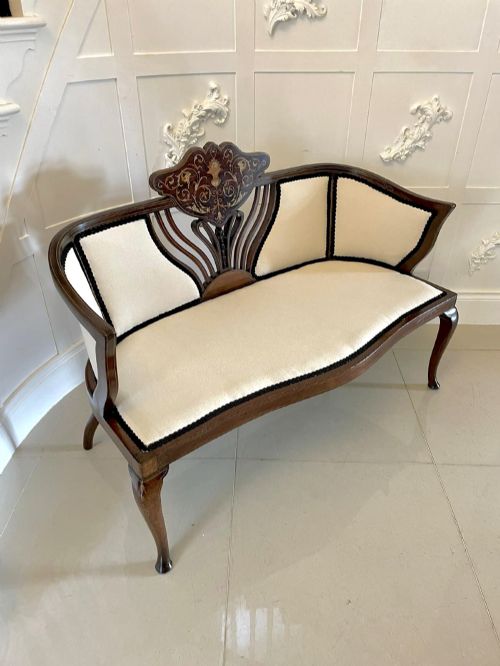


Edwardian Wooden Loveseat
An Edwardian wooden loveseat is a compact double seat designed for intimate conversation, combining delicate proportion with refined timber framing.
Edwardian Wooden Loveseat
The search phrase edwardian wooden loveseat brings up small settees, two-seater sofas, and salon benches spanning the late Victorian and Edwardian eras. Pieces on this page predominantly date from the period between 1800 and 1920, with significant representation from 1900 and 1910.
Makers and designers of these compact seats worked in various regional aesthetics, encompassing Edwardian, Art Nouveau, Louis XVI design, and Viennese bentwood. Forms range from upholstered salon settees to canework couches and bentwood benches.
Buyers encounter frames built primarily for two occupants, often described as salon settees, benches, or small sofas. These seating items served domestic drawing rooms and boudoirs where space demanded smaller proportions.
Judging quality and execution
Distinction between pieces rests on the precision of the timber inlay and the crispness of carved or turned details. Mahogany frames with intricate satinwood work represent the upper tier of execution.
Structural integrity of the wooden frame and the finesse of stylistic references, such as Louis XVI fluted legs or Art Nouveau sweeping lines, dictate the overall standard of the piece.
Some of these compact seats hide remarkably comfortable spring units beneath unassuming upholstery, ready to surprise an unsuspecting sitter.
The Edwardian Wooden Loveseat Glossary
- Settee
- A long upholstered seat with a back and arms, designed for more than one person. This form provides the structural basis for most pieces listed here.
- Marquetry Inlay
- Decorative woodwork where pieces of contrasting timber are inserted into a veneer to form geometric or floral patterns. This technique elevates the visual appeal of mahogany frames.
- Canework
- Woven rattan or cane material utilised for seat panels and backs. It offers a lightweight, breathable surface common on lighter salon couches.
- Bentwood
- Wood softened by steam and bent into curved structural shapes, notably utilised by makers like Thonet. This method creates continuous, flowing frames without traditional joinery.
- Satinwood
- A durable, yellow-toned timber prized for its lustrous grain and used extensively for contrasting inlay work. Cabinetmakers employed it to highlight specific panels and borders.
Edwardian Wooden Loveseat: Frequently Asked Questions
How do I identify an Edwardian settee?
Identification relies on examining the timber, decorative motifs, and overall proportions characteristic of the early twentieth century. Common indicators include satinwood inlay, light mahogany frames, and stylistic influences from Art Nouveau or Neoclassical revivals.
Makers working around 1900 to 1920 favored lighter, more graceful silhouettes compared to heavier Victorian predecessors. Checking construction methods helps confirm the era of manufacture.
Where were these small sofas used?
These compact seats were primarily placed in domestic drawing rooms, boudoirs, and private sitting spaces. Their modest dimensions allowed them to fit into smaller corners or against specific wall panels.
They functioned as comfortable seating for two people during social calls or quiet reading. Their decorative framing meant they also served as aesthetic focal points in reception rooms.
How do I care for antique wooden frames?
Maintaining wooden frames involves keeping them away from direct sunlight and extreme temperature fluctuations to prevent timber splitting. Regular dusting with a soft, dry cloth preserves the polished finish.
Avoid using harsh chemical polishes that can degrade historic varnishes and inlays. Professional waxing helps maintain the moisture balance of woods like mahogany and walnut.
Can these settees be re-upholstered?
Many antique settees feature drop-in seats or traditional webbing that accommodates fresh fabric without altering the wooden frame. This allows owners to update textiles while preserving the original structure.
Consulting a specialist ensures that period-appropriate techniques and materials are used during the process. Preserving the integrity of the frame remains the primary consideration.