




Edwardian Wooden Canterbury
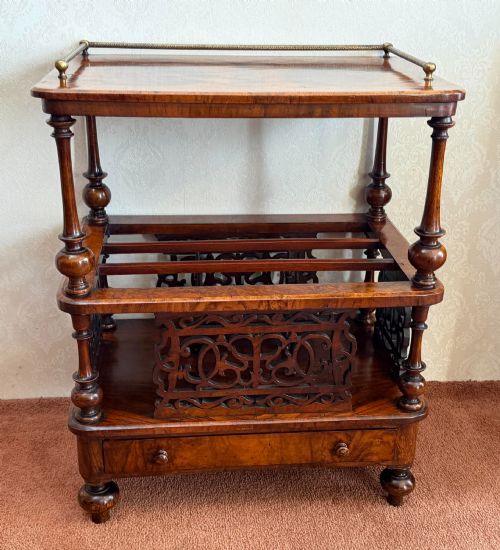
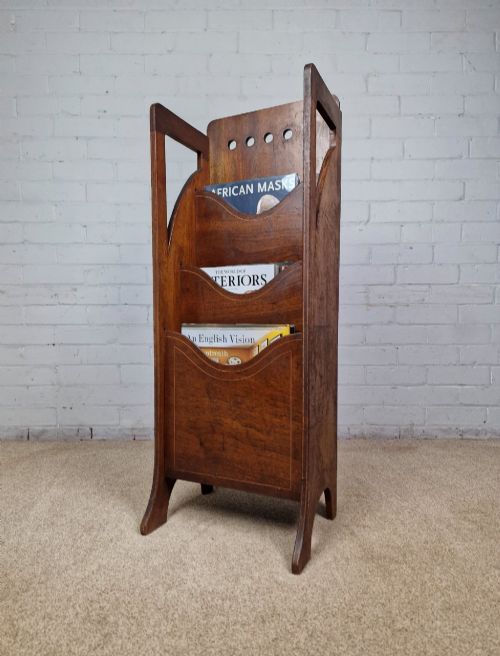
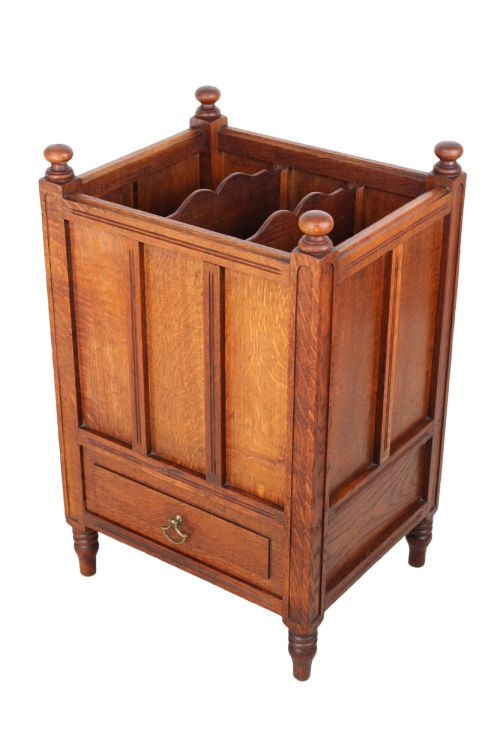
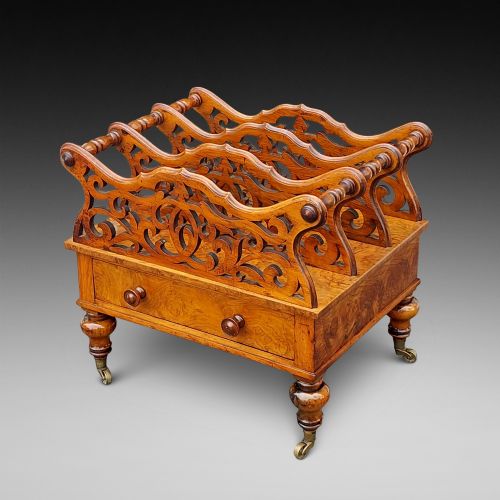
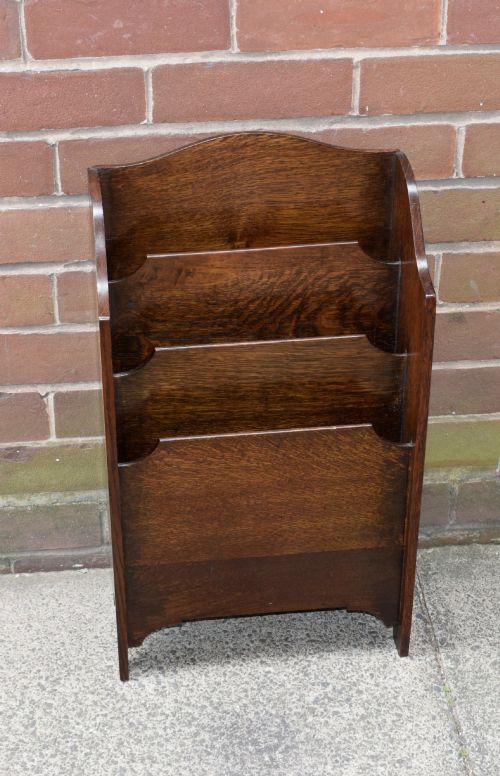
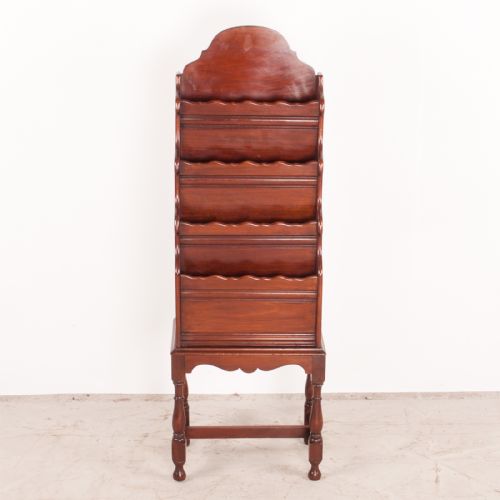
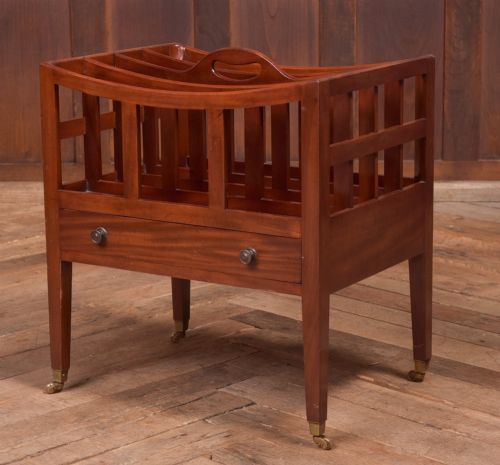
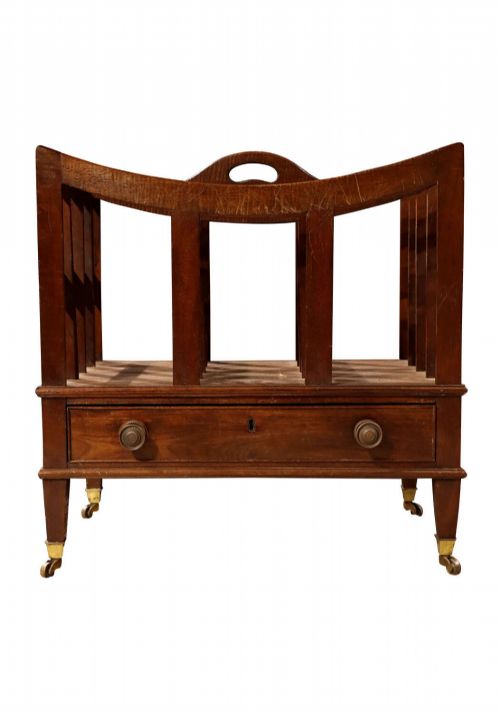
An Edwardian wooden canterbury brings refined utility to a room, holding papers and folios with upright slatted divisions.
Edwardian Wooden Canterbury
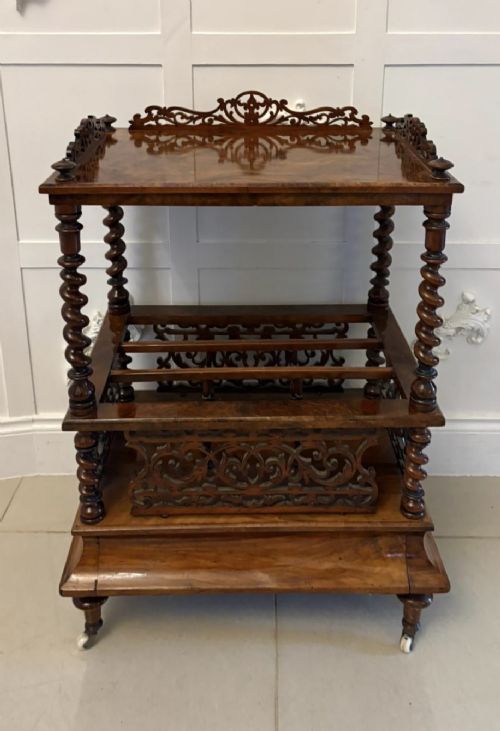
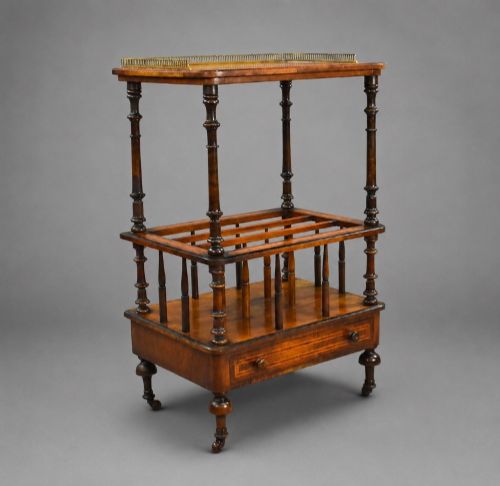
When searching for an edwardian wooden canterbury, buyers encounter pieces designed to organise sheet music, newspapers, and periodicals within domestic interiors. These furnishings combine partitioned vertical sections for paper storage with low profiles, often incorporating functional drawer bases or integrated castors.
The version most commonly met on this page is constructed from mahogany or oak, frequently featuring inlaid details typical of the Edwardian period. Alongside dedicated canterburys, related forms such as music cabinets, bookstands, and occasional magazine racks appear within the selection.
Originating primarily from the Edwardian era alongside surrounding 19th-century and 1920s examples, these items reflect both formal parlour traditions and later domestic needs. Their enduring appeal lies in compact compartmentalisation paired with polished timber surfaces.
How they were made
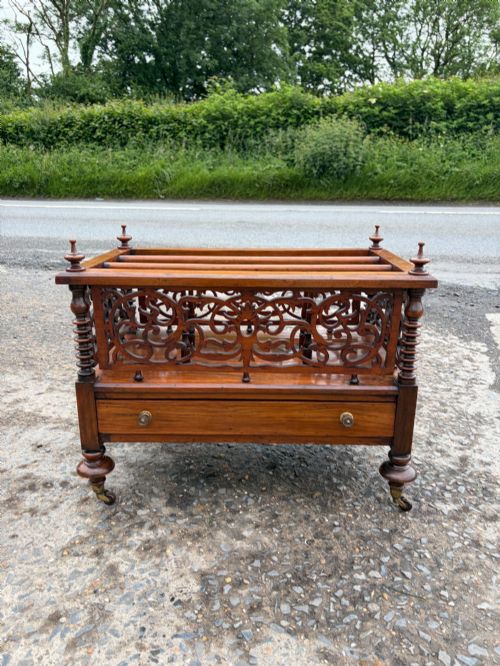
Makers utilised solid timbers including mahogany, walnut, burr walnut, and oak to construct the structural frames and slatted dividers of these pieces. Marquetry inlay and carved or pierced woodwork frequently embellished the exterior surfaces.
Metal components such as brass castors facilitated movement across carpets and floorboards, while ceramic elements occasionally appeared in related fittings. Joinery techniques ensured sturdy partitions capable of supporting heavy folios and volumes.
Edwardian Wooden Canterbury Retail Price Guide 2026
Typical asking prices for edwardian wooden canterbury among the pieces listed under this phrase on Sellingantiques today, from the lower quarter to the upper quarter. They describe what is for sale here now, not the wider market.
Listings feature mahogany, oak, walnut, and burr walnut timbers alongside brass and ceramic hardware.
What varies in quality
Distinction across the range rests upon the selection of timber figures, such as highly figured burr walnut or rich mahogany, coupled with the precision of marquetry inlay. Pieces featuring detailed carving, pierced woodwork, or integrated drawers demonstrate higher levels of craftsmanship.
Proportion and structural integrity also divide standard production items from more ambitious workshops. The inclusion of original turned legs, brass castors, and well-executed dividers elevates the overall standard of a piece.
Howard and Sons of London
The Edwardian Wooden Canterbury Glossary
- Canterbury
- A low stand fitted with upright divisions, originally designed for holding sheet music and later utilised for newspapers and magazines. This form often includes a low drawer beneath the main compartments.
- Burr walnut
- A highly prized timber veneer showing swirling, knotty grain patterns derived from the growth excrescences of walnut trees. It was frequently used on Victorian and Edwardian cabinet furniture.
- Marquetry
- The art of applying small pieces of wood veneer to a structure to form decorative patterns and pictures. Edwardian examples often display delicate floral or geometric motifs.
- Castor
- A small wheel mounted on a swivel assembly attached to the legs of furniture to ease relocation. Brass versions are typical on period pieces.
- Whatnot
- A piece of open shelving furniture with multiple tiers used for displaying ornaments or holding books and papers. These frequently share structural similarities with magazine stands.
Edwardian Wooden Canterbury: Frequently Asked Questions
What is an edwardian wooden canterbury used for?
These pieces served primarily to store sheet music, folios, newspapers, and periodicals within the home. The vertical partitions kept papers upright and sorted for easy access.
Today, they function effectively beside seating areas or desks to hold modern magazines, books, and writing materials while adding period character to a room.
How do I tell an Edwardian canterbury from a Victorian one?
Edwardian examples tend to show lighter timbers, simpler inlaid decoration, and refined Edwardian aesthetic lines. Victorian pieces often employ heavier burr walnut, darker rosewood, or denser marquetry.
Examining the overall proportions and secondary woods helps clarify the period of manufacture when style cues overlap.
Are music cabinets different from canterburys?
Music cabinets generally feature enclosed doors and internal drawers designed specifically for sheet music storage. Canterburys rely on open, slatted vertical partitions rather than enclosed cupboards.
Both forms served similar domestic musical functions in the parlour and appear alongside one another in period selections.
Can these stands support heavy books?
The slatted divisions are engineered to support paper folios, sheet music, and periodicals rather than heavy hardback volumes. Sturdier bookstands and cabinets within the selection handle heavier bindings.
Placing appropriately weighted items inside preserves the structural integrity of the internal wooden dividers.