

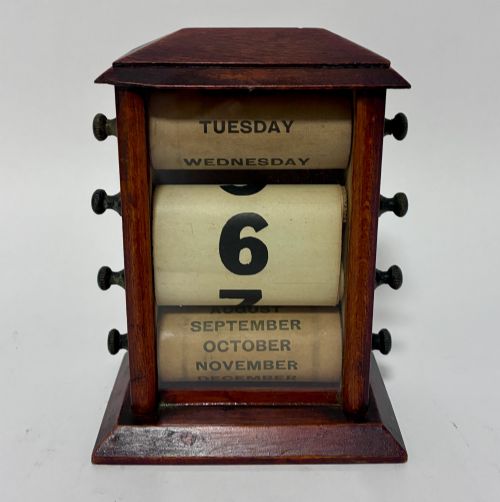
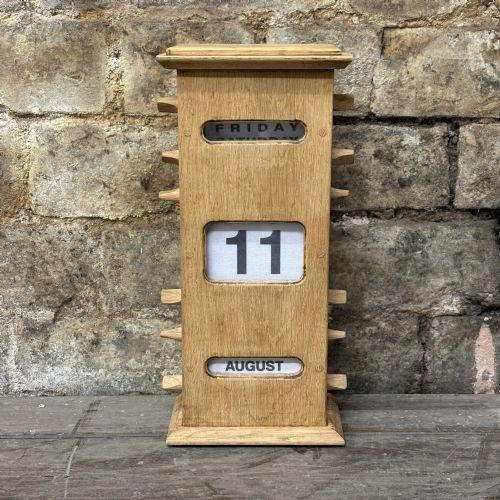


Edwardian Wooden Calendar
These edwardian wooden calendar pieces are practical desk and wall furniture designed to keep track of changing dates with traditional mechanical cards and rollers.
Edwardian Wooden Calendar
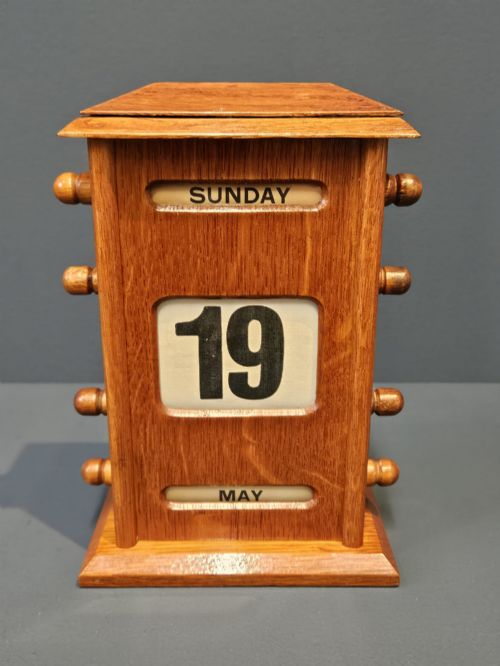
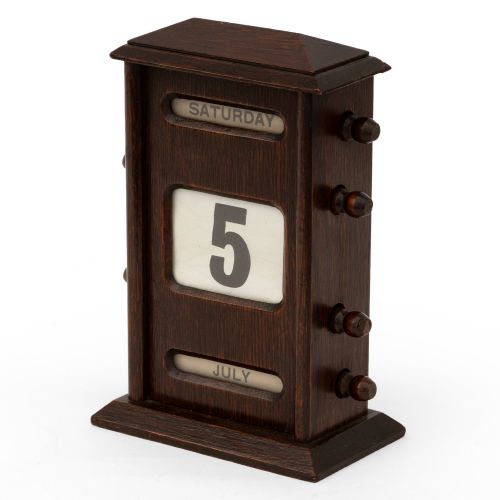
An edwardian wooden calendar takes the form of a perpetual desk accessory or a wall-mounted piece designed for daily use in a study or office. These items range from compact desk blocks to larger cabinets and wall boards that integrate compartments for stationery alongside date mechanisms.
How they were made
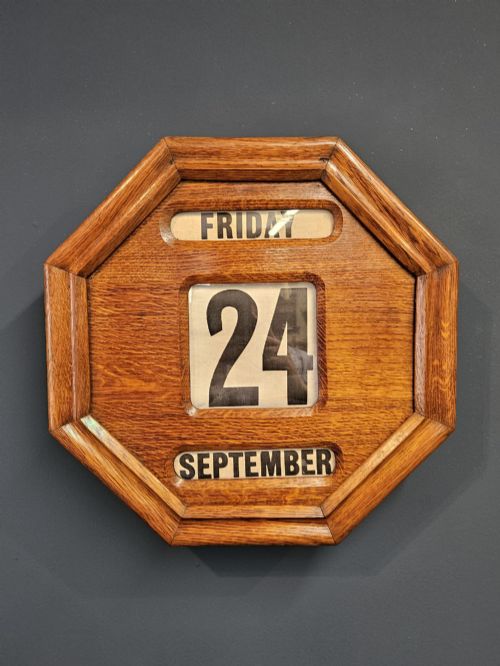
Cabinet makers utilised solid oak and mahogany for the primary housings, shaping the timber into desk blocks, octagonal wall frames, and stationery cabinets with moulded edges. These wooden carcasses house mechanical components and paper or card strips used to indicate the date.
Makers integrated brass fixtures, glass panels, and linen or paper elements to complete the functional dials and windows of each piece. Metal components such as gunmetal and brass provide hinges, bezels, and structural supports for the moving parts.
Edwardian Wooden Calendar Retail Price Guide 2026
Typical asking prices for edwardian wooden calendar among the pieces listed under this phrase on Sellingantiques today, from the lower quarter to the upper quarter. They describe what is for sale here now, not the wider market.
Listings feature items spanning from the late nineteenth century through the Edwardian era into the 1930s, constructed primarily in oak, mahogany, and walnut.
What varies in quality
The distinction between standard office utility items and finer pieces lies in the choice of timber figure and the complexity of the cabinet work. Pieces featuring quarter-sawn oak or rich mahogany veneers exhibit a superior visual weight compared to plain utility versions.
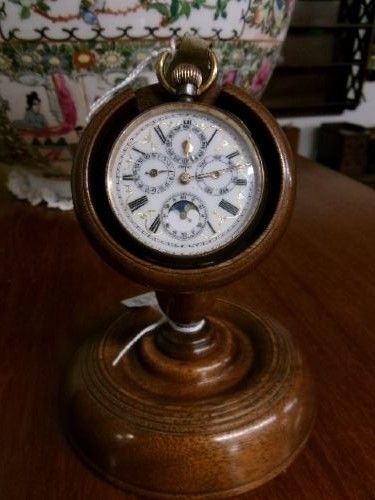
Integration of secondary functions, such as built-in stationery compartments or combined clock movements, separates simpler calendar blocks from more elaborate desk furniture. The crispness of the lettering on the date cards and the solidity of the wood framing determine the overall finish.
The Edwardian Wooden Calendar Glossary
- Perpetual calendar
- A mechanical date indicator designed to be adjusted daily rather than reset annually. These systems use rotating drums or sliding cards to show the day, date, and month.
- Golden oak
- A bright, warm finish applied to oak timber that highlights the medullary rays in the wood grain. This tone is typical of desk accessories from the period.
- Stationery cabinet
- A desk box featuring internal compartments and pigeonholes for paper, envelopes, and writing implements. These often incorporate calendar panels directly into the door or superstructure.
- Wall calendar
- A hanging date display featuring mounting brackets or suspension loops. These pieces allow perpetual date mechanisms to be viewed at eye level on a study or office wall.
Edwardian Wooden Calendar: Frequently Asked Questions
How do perpetual desk calendars work?
These pieces utilise rotating card strips or mechanical rollers displaying days, dates, and months. Operators turn small knobs or slide panels manually each day to advance the visible schedule.
Most designs rely on simple mechanical friction rather than complex clockwork gears to keep the paper or card strips in place during adjustment.
Where were these calendars placed?
Desk versions sat upon writing tables, partner desks, and library tables within studies and commercial offices. Wall-mounted variants hung near desks or in hallways where floor space was limited.
Many pieces were manufactured alongside stationery cabinets to form coordinated sets of office accessories.
How do I care for wooden calendar furniture?
Keep wooden pieces away from direct heat sources and strong sunlight to prevent the timber from drying out or warping. Dust regularly with a dry cloth and apply a traditional wax polish sparingly to maintain the finish.
Handle the internal mechanical card strips gently during daily adjustments to preserve the original paper and card components.