

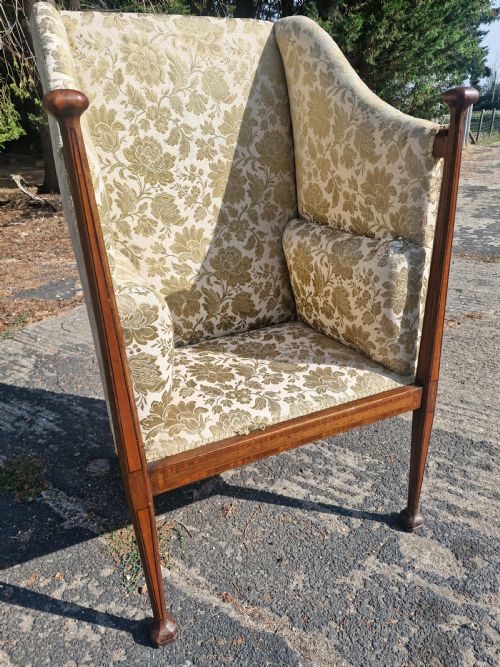
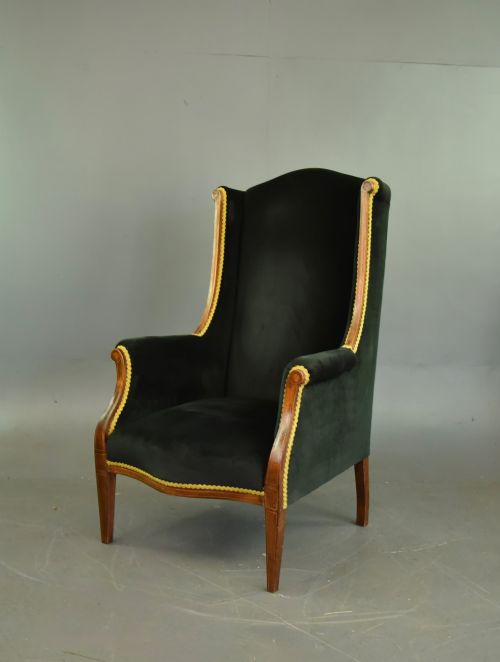

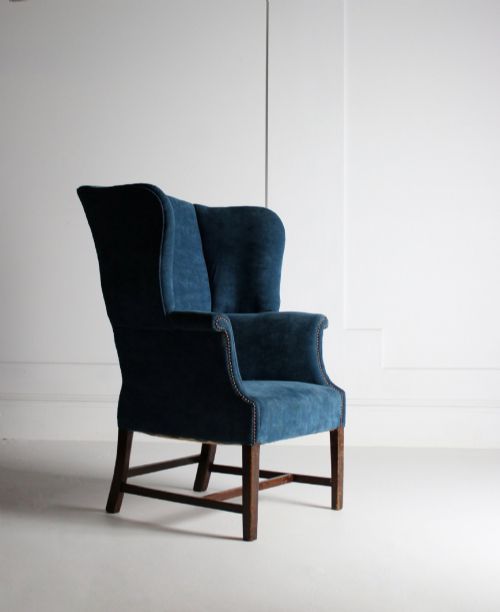
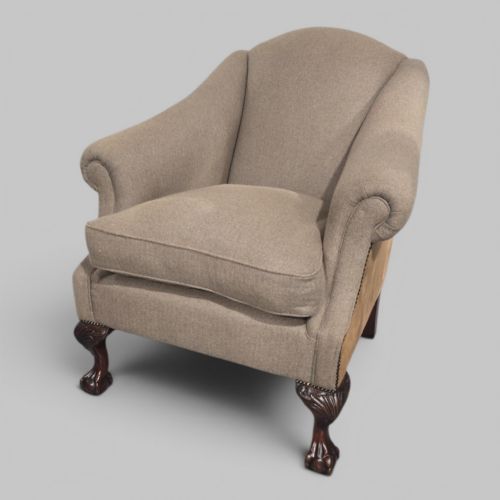



Edwardian Wing Back Armchairs
Edwardian wing back armchairs bring deep comfort and timeless proportion to a room, offering high sides and sturdy timber frames.
Edwardian Wing Back Armchairs
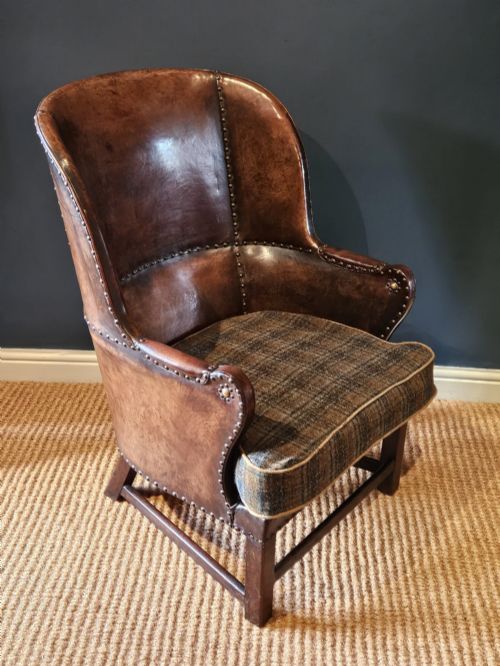
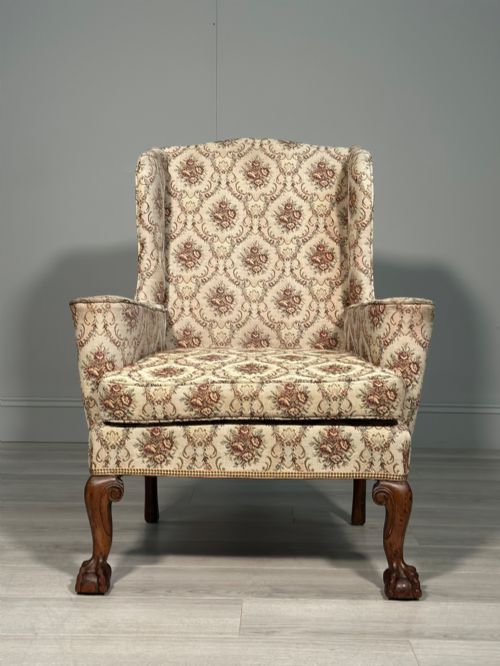
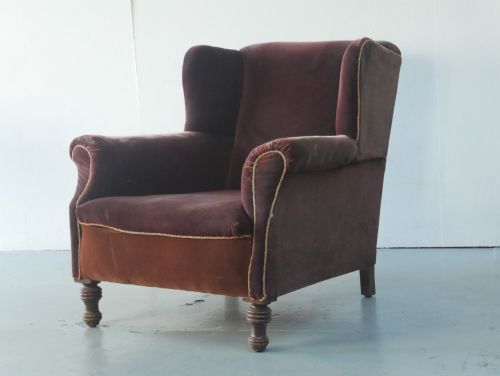
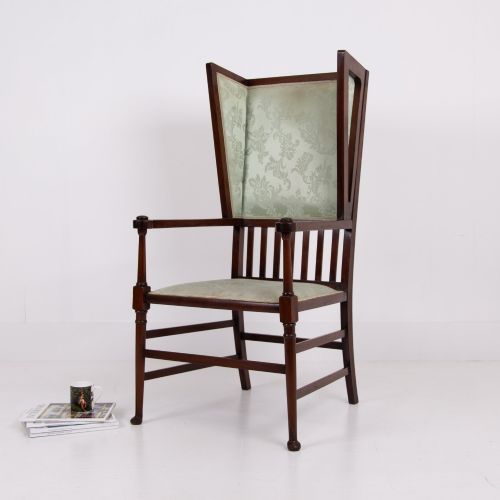
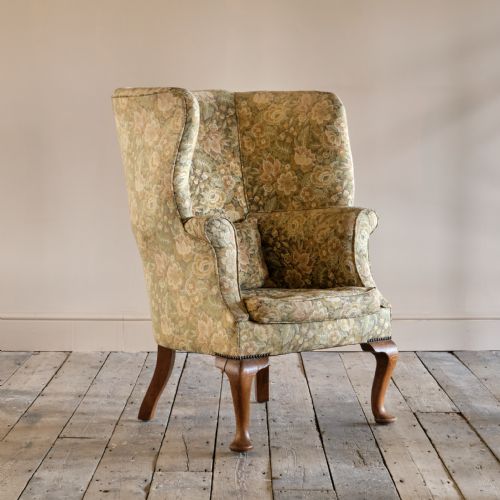
Edwardian wing back armchairs are high-backed seats designed to keep drafts away from the head, featuring characteristic side wings and generous proportions. Buyers seeking these pieces will find many examples originating from the Edwardian era, alongside related nineteenth century and early twentieth century variations.
The selection on this page centres primarily on Edwardian forms, though pieces span from the eighteenth century through to the 1920s. Common configurations include straightforward upholstered winged chairs, barrel back designs, and library chairs built for reading rooms and firesides.
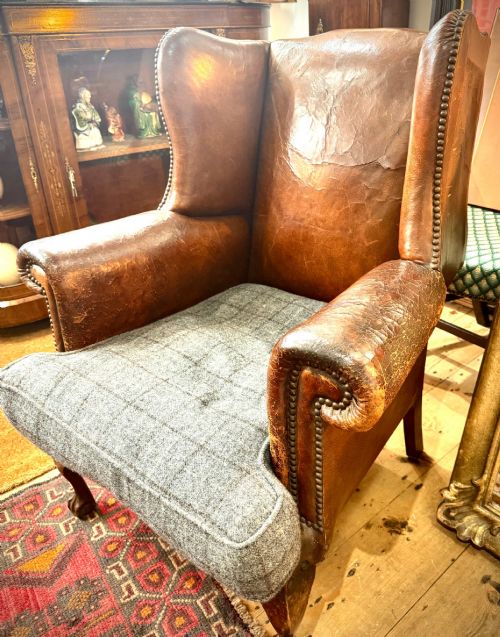
Makers and regional workshops produced diverse interpretations, ranging from plain country house models to inlaid mahogany frames and bergère styles. Upholstery varies across the selection, utilising fabric, velvet, and leather in both original and recently recovered condition.
How they were made
Carpenters constructed the structural frames of these armchairs using hardwoods such as mahogany, oak, and walnut. Timber components often featured inlaid decoration, while support came from sturdy wooden legs, sometimes finished with brass castors.
Upholstery techniques involved deep buttoning, fabric covering, and leather working over sprung or padded interiors. Workshops utilised velvet and woven textiles alongside traditional stuffing materials to achieve comfortable seating surfaces.
Edwardian Wing Back Armchairs Retail Price Guide 2026
Typical asking prices for edwardian wing back armchairs among the pieces listed under this phrase on Sellingantiques today, from the lower quarter to the upper quarter. They describe what is for sale here now, not the wider market.
Some nineteenth century library chairs were built with extra-high wings specifically to preserve gentleman's sideburns from the roaring heat of the hearth.
What varies in quality
The sophistication of the upholstery work and the integrity of the underlying woodwork distinguish finer examples. Original leather surfaces, intricate carved details, and balanced proportions elevate certain pieces above standard production models.
Whytock and Reid·Howard and Sons·Sopwith
The Edwardian Wing Back Armchairs Glossary
- Wing back
- An armchair design featuring projecting side panels designed to deflect draughts and retain heat from a fire. These wings frame the upper backrest and merge into the armrests.
- Bergère
- An enclosed upholstered armchair with wooden framing exposed around the sides and back. Panels often incorporate cane work or tight upholstery.
- Inlaid
- Woodwork decorated by inserting contrasting strips of timber or shell into recessed channels on the surface. This technique creates geometric or floral patterns on mahogany furniture.
- Barrel back
- A seating form where the curved backrest flows continuously into the arms in a semicircular shape. This style wraps closely around the occupant for added comfort.
- Deep buttoned
- An upholstery method where the fabric or leather is pulled back with tufting buttons arranged in a diamond pattern. This secures the internal padding and creates distinct surface indentations.
Edwardian Wing Back Armchairs: Frequently Asked Questions
What is a wing back armchair?
A wing back armchair is a traditional seat featuring high sides designed to shield the occupant from drafts. The projecting panels help retain warmth from an open fireplace.
These chairs typically combine a solid timber frame with deep upholstery to provide substantial support for the head and back.
How do I date an Edwardian wing chair?
Dating relies on examining the timber species, construction methods, and decorative details like inlay work. Edwardian pieces often display lighter mahogany frames and specific revival styles.
Comparison with Victorian and eighteenth century examples reveals shifts in proportion and the evolution of framing techniques over time.
Where were these armchairs used?
These armchairs served principally in libraries, drawing rooms, and country house firesides where comfort and warmth were paramount. Their enclosed design suited quiet reading spaces.
Today they function effectively as statement pieces in living areas or studies, pairing well with traditional and eclectic interiors.
Are these chairs comfortable for daily use?
Many examples provide deep cushioning and supportive high backs suited for regular relaxation. Upholstery condition varies from original leather to recently recovered fabric.
Buyers often select them for their combination of ergonomic support and historical character in a modern home.