

Edwardian Watercolour Landscape Art
Edwardian watercolour landscape art captures tranquil countryside scenes, bustling harbours and coastal views created on paper during the early twentieth century.
Edwardian Watercolour Landscape Art
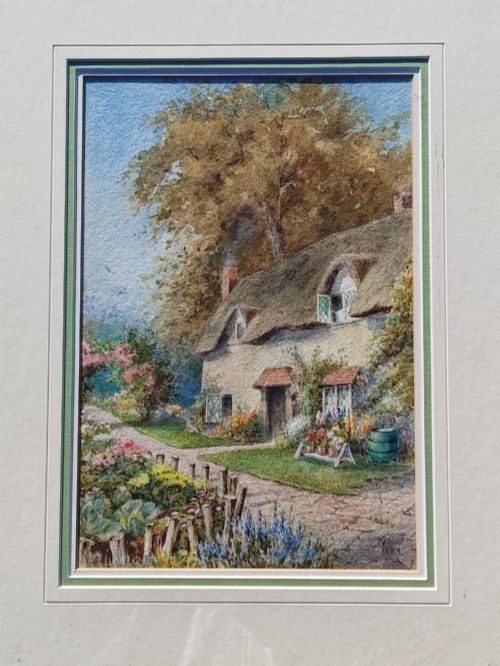
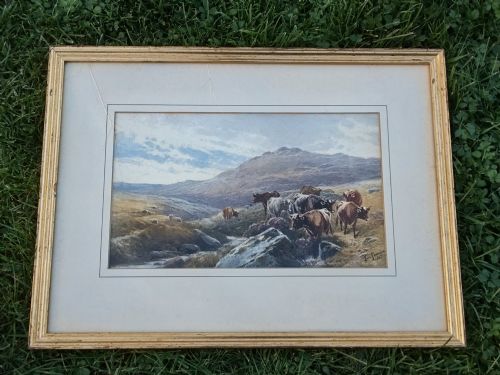
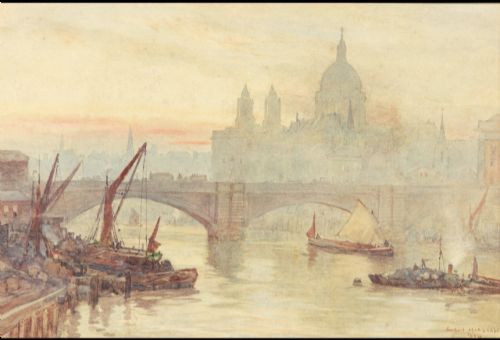
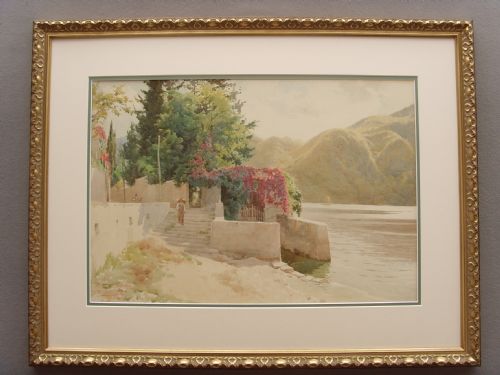
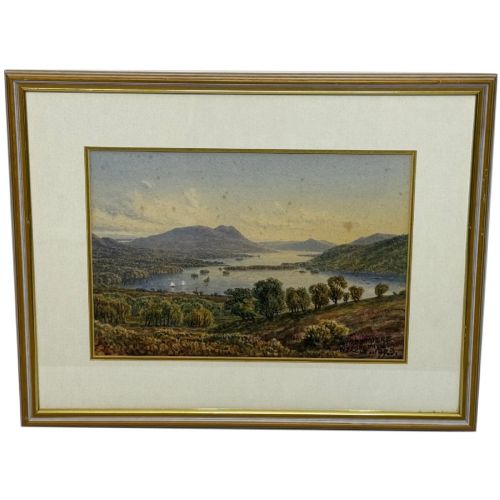
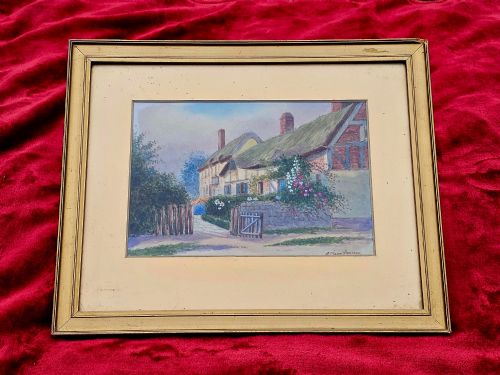
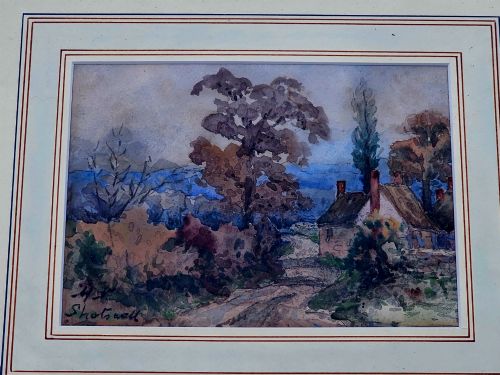
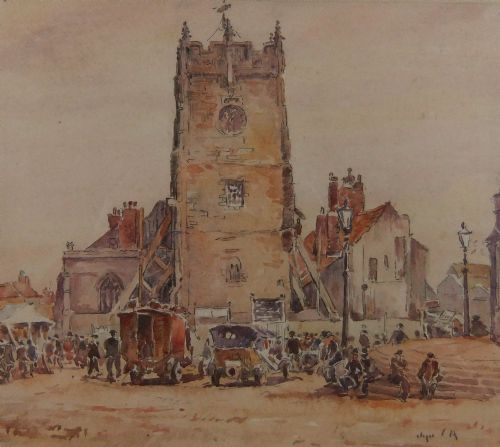
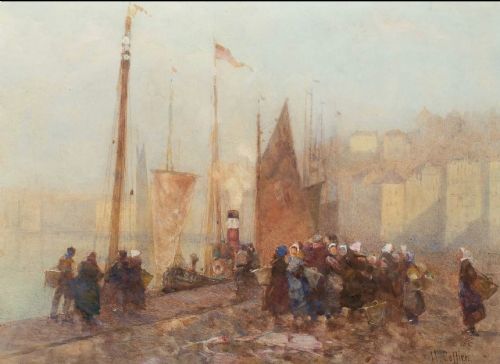
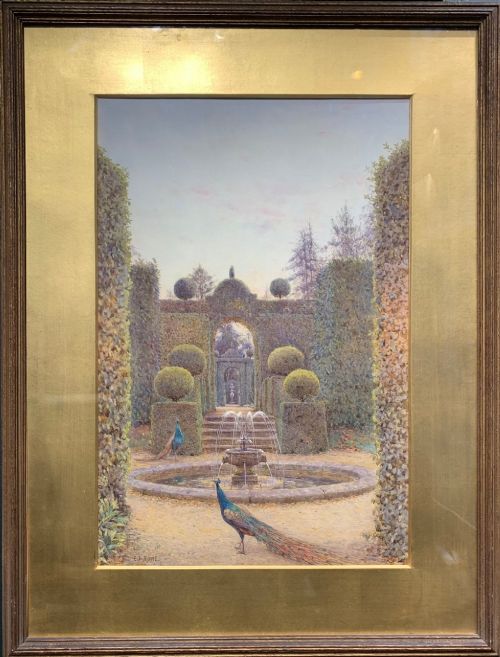
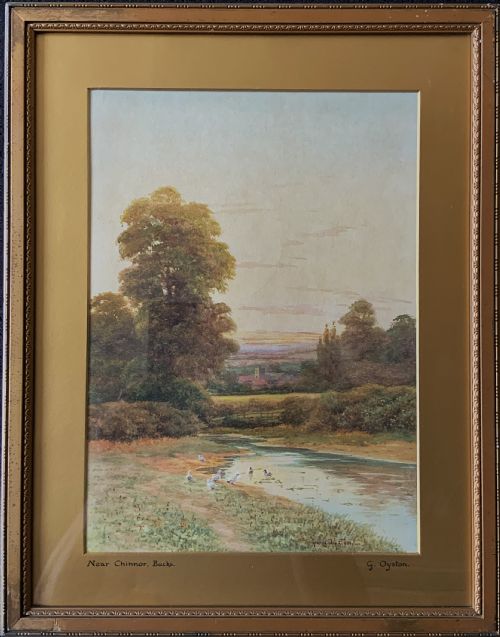
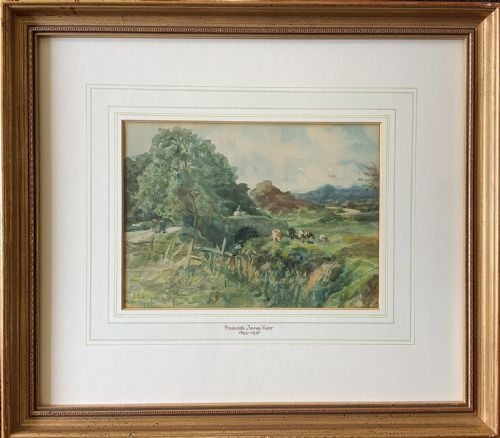
Edwardian watercolour landscape art comprises framed paintings depicting rural valleys, coastal harbours, pastoral farmland and architectural views created during the early twentieth century. These works frequently record British countryside scenes alongside occasional continental and orientalist subjects from travels abroad. Buyers select these paintings for their traditional framing, delicate pigment application and historical connection to the Edwardian era.
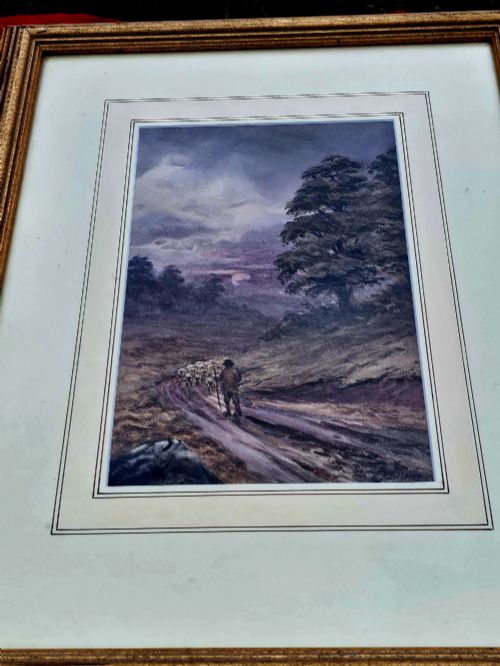
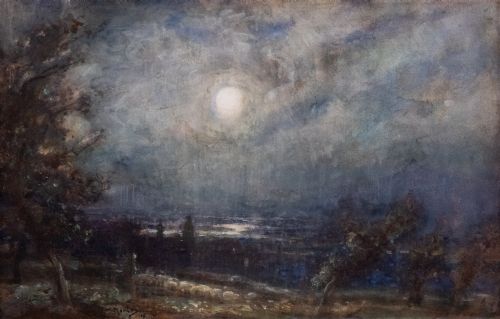
The pieces appearing on this page most commonly date from the Edwardian period and the surrounding decades of the late nineteenth and early twentieth centuries. Artists captured agricultural labour, sheep herding, quiet woodland paths and seaside docks with skilled draftsmanship and tinted washes. Such works survive behind glass in period wood and gilt frames that preserve the fragile paper surfaces.
How They Were Made
These works rely on water-soluble pigment applied to paper supports, occasionally augmented with ink, gouache or bodycolour to build opacity and detail. Painters brushed translucent washes across the paper surface to create luminous skies, water reflections and atmospheric depth. Skilled hands directed pigment control to balance soft gradations with sharp architectural lines or foliage texture.
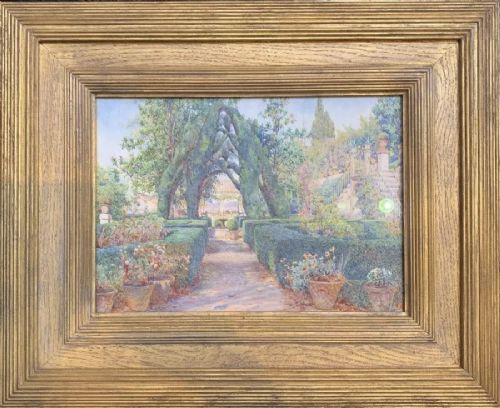
Finished watercolours were secured behind protective glass within wooden frames, sometimes finished with gilt mouldings to complement the composition. The combination of absorbent paper and delicate pigment required careful mounting to prevent moisture damage over time. Original framing materials often survive alongside the artwork, showing period joinery and hardware.
Several watercolours record eccentric local moments, including romany gypsy caravans and stubborn bulls ploughing muddy fields.
What Varies in Quality
Quality rests upon the artist's ability to command perspective, light and atmospheric depth within the limits of water-based pigment on paper. Superior examples demonstrate confident brushwork, precise tonal control and a balanced composition that captures the particular mood of a landscape or coastal scene. Weaker works display rigid lines, muddy colour mixing or flat washes that lack spatial depth.
The condition of the paper surface and the integrity of the original frame also determine the standing of an individual piece. Works retaining vibrant pigments without fading or foxing represent the higher tier of survival from this era. Surviving original frames with appropriate patination add contextual integrity to the painting they enclose.
Thomas William Morley·Ernest Arthur Rowe·George Oyston·Robert George Talbot Kelly·Alfred George Morgan
The Edwardian Watercolour Landscape Art Glossary
- Watercolour
- A painting method where the paints are made of pigments suspended in a water-based solution. Artists use this medium on paper to achieve translucent layers of colour.
- Gouache
- An opaque water-based paint method that includes a binding agent and white pigment added to watercolour. This technique creates heavier, solid areas of colour and highlights.
- Gilt Wood
- Wood treated with a thin layer of gold leaf or metallic gilt finish. Picture frames from the period often utilised this decorative treatment.
- Diptych
- An artwork made of two separate painted panels or sheets presented together as a single matched pair. These pieces share a unified subject or artist.
- Impressionism
- An art style focused on accurate depiction of light in its changing qualities and ordinary subject matter. British practitioners adapted these principles to local landscapes.
Edwardian Watercolour Landscape Art: Frequently Asked Questions
What subjects appear in these watercolours?
These paintings depict rural British countryside scenes, coastal harbours, agricultural labour, pastoral farmland and architectural landmarks. Artists also recorded foreign travel views including continental European lakes and orientalist street scenes.
Compositions range from quiet woodland paths and river valleys to bustling fishing docks and moonlit street views. Each work captures specific geographic locations across Britain and abroad during the early twentieth century.
How should I frame and display these?
Watercolours require careful placement away from direct sunlight to prevent the delicate pigments and paper supports from fading over time. Maintaining stable indoor humidity protects both the paper substrate and the original wooden frame.
Most pieces arrive behind protective glass within their period frames, which should remain intact to preserve the historical context. Professional mounting using acid-free materials ensures the long-term stability of the artwork.
How do I identify Edwardian watercolours?
Edwardian watercolours typically feature soft atmospheric washes, naturalistic palettes and representational subject matter depicting rural life or coastal topography. Signatures, dates and framing styles often provide direct evidence of the creation period around the early 1900s.
Artists working during this era often registered academic training through traditional British fine art societies. Their techniques combine detailed pencil underdrawings with transparent watercolour layers characteristic of the period.
How do these differ from oil paintings?
Watercolour paintings use water-soluble pigments applied to paper supports, producing luminous translucent layers that rely on the white paper underneath for brightness. Oil paintings utilise slow-drying pigmented oils applied to canvas or wood panels, allowing thick impasto textures and opaque coverage.
Works on paper require glass protection and lighter framing compared to heavier canvas-based oil paintings. The resulting aesthetic of a watercolour prioritises delicate atmospheric effects over heavy surface texture.