




Edwardian Wash Set
An Edwardian wash set brings daily utility into the bedroom through matching earthenware and porcelain basins.

Edwardian Wash Set
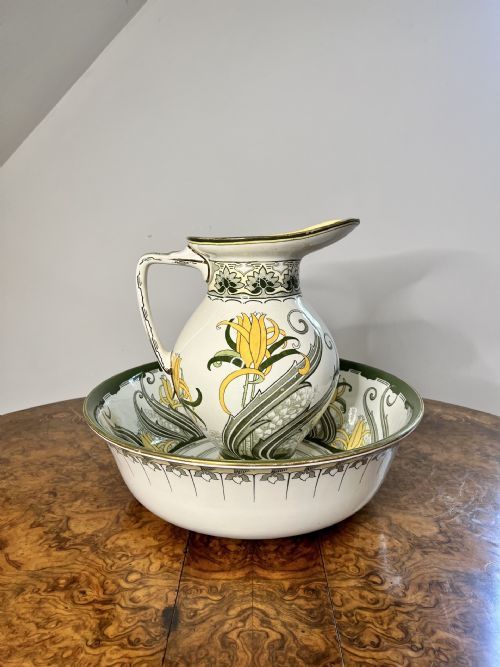
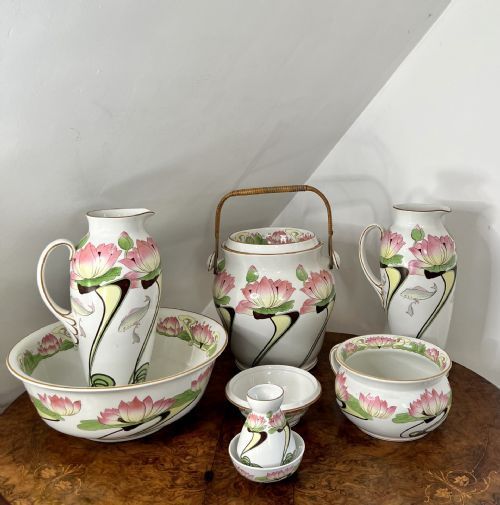
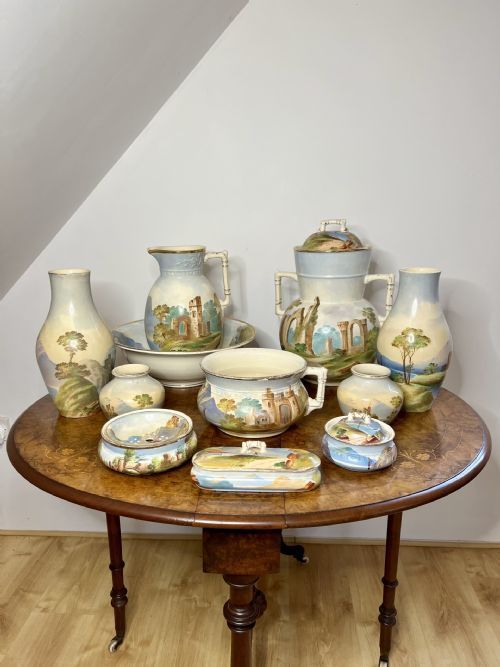
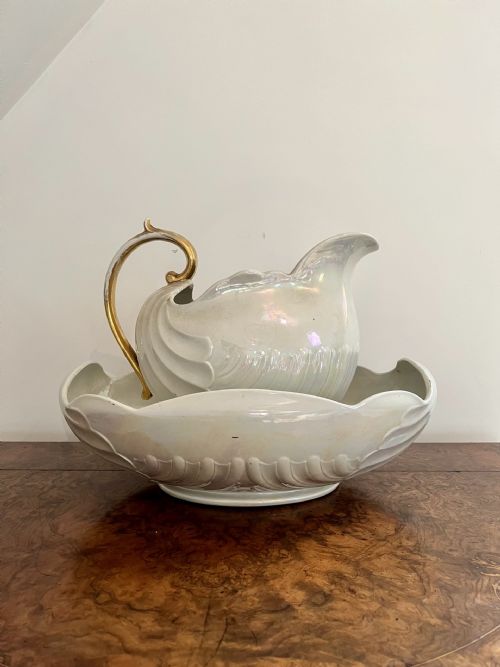
An edwardian wash set is a utilitarian ensemble designed for the bedroom before plumbed bathrooms became standard in every home. These groupings typically comprise a large water jug and a matching deep wash basin, sometimes accompanied by smaller vessels.
The pieces on this page span the Edwardian period alongside examples from the Victorian and later eras, reflecting the domestic routines of the early twentieth century. Ceramic and porcelain forms dominate the current selection, occasionally accompanied by wooden wash stands.
Makers and potteries produced these sets in varied aesthetic traditions, ranging from crisp white porcelain to decorated blue and white earthenware and flowing Art Nouveau patterns. Buyers frequently encounter complete jug and bowl sets intended to sit upon dedicated wooden furniture.
How they were made
Potteries shaped these items from earthenware and porcelain, applying liquid glazes to seal the porous clay bodies before firing them in kilns. Many examples feature printed blue and white decoration beneath the glaze, while others incorporate delicate enamel accents or gold leaf trim.
Makers combined ceramic production with carpentry where stands were included, utilising bentwood to form lightweight frames for holding the basins and jugs. Skilled hands painted patterns or applied transfers by hand prior to the final high-temperature firing.
Victorian mornings involved carrying cold water upstairs in heavy jugs, proving that early cleanliness required considerable upper body strength.
What varies in quality
Quality rests in the crispness of the ceramic moulding and the refinement of the clay body, where porcelain demonstrates a finer translucency than standard earthenware. The depth and clarity of the glaze application also distinguish standard utilitarian ware from superior production.
Artistic execution separates the ordinary sets from notable examples, particularly where hand-painted details or complex transfer printing are sharp and well-preserved. Maker attribution, such as factory marks from Doulton Burslem or Shelley, elevates the standing of an individual set.
Doulon Burslem·Medway·mark Jones & Sons·Shelley
The Edwardian Wash Set Glossary
- Earthenware
- A porous pottery type fired at lower temperatures than porcelain and typically glazed to ensure it holds water. It forms the body of many domestic wash sets.
- Porcelain
- A dense, vitrified ceramic fired at high heat until non-porous and semi-translucent. It represents the finer end of domestic washware production.
- Glaze
- A glassy coating fused to the ceramic surface during firing to seal the clay and provide a decorative finish. It protects the absorbent body from moisture.
- Transfer printing
- A decoration technique where an engraved metal plate transfers a design onto paper and then onto the ceramic surface. This allowed for intricate patterns on mass-produced wash sets.
- Art Nouveau
- A decorative style characterised by organic, flowing lines and natural motifs. It appears on several wash sets from the turn of the twentieth century.
- Bentwood
- Wood softened by steam and bent into curved structural forms. It was utilised for lightweight wash and shaving stands during the Edwardian period.
Edwardian Wash Set: Frequently Asked Questions
What pieces belong in a complete set?
A standard grouping centres on a large water jug and a deep wash basin designed for morning ablutions. Additional vessels like soap dishes or chamber pots often accompanied the core pair.
Surviving sets vary in completeness depending on what remains from the original ensemble over the decades.
How were these sets used daily?
Servants filled the large jug with warm water from the kitchen for the household to wash face and hands in the bedroom. The used water was subsequently emptied into the deep basin and discarded.
This routine predated modern indoor plumbing and running water in domestic sleeping quarters.
Where did these pieces sit?
Sets rested upon dedicated wooden washstands or marble-topped dressing furniture designed to bear the heavy weight of water-filled ceramics. The basin occupied the top circular cutout while the jug stood beside it.
Smaller items found placement on matching ledges or secondary surfaces built into the stand.
How do I care for antique ceramics?
Wash ceramic and porcelain pieces gently by hand using mild soap and warm water without harsh abrasives. Avoid submerging items with fragile gold leaf or enamel decoration for extended periods.
Display them away from high-traffic edges where the heavy jugs and bowls might suffer accidental impacts.