




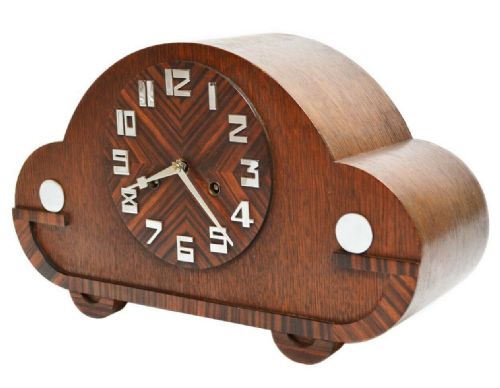

Edwardian Walnut Clock
These edwardian walnut clock pieces bring rich timber tones and reliable movement to a room, offering both practical timekeeping and period character.
Edwardian Walnut Clock
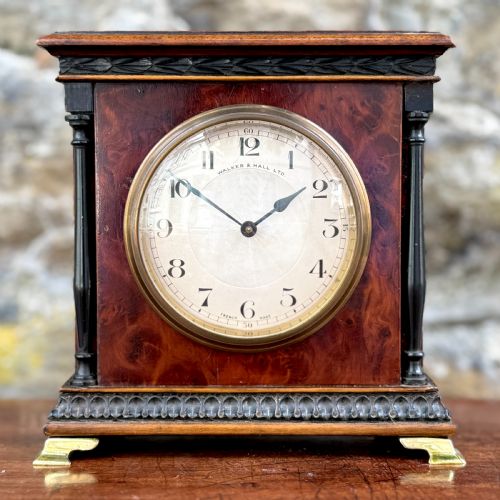
An edwardian walnut clock encompasses various forms ranging from compact desk pieces and mantel clocks to grander wall and longcase variations. These items predominantly hail from the early twentieth century and the Victorian era, showcasing rich timber cases.
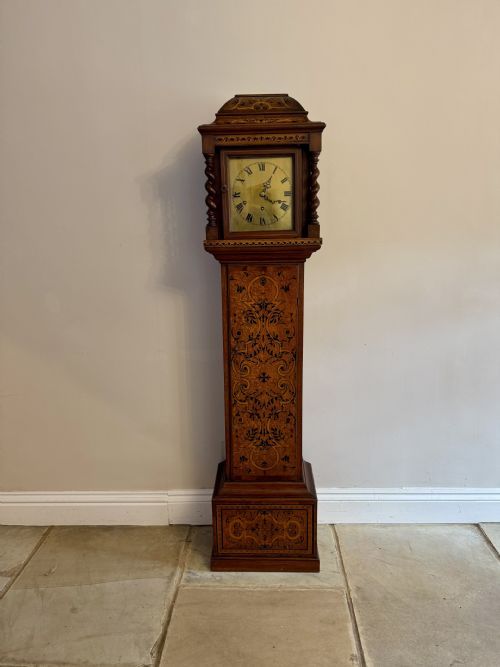
Buyers frequently encounter mantel clocks and wall clocks in this selection, often featuring contrasting wood finishes or inlaid marquetry detail. The variety extends across different sizes, accommodating both prominent hallway placement and subtle desk display.
Materials and Construction
Cases utilise walnut, burr walnut, mahogany, and ebonised wood, frequently enhanced with brass fittings, glass panels, and copper accents. These timber selections provide deep grain patterns and durable housing for intricate internal movements.
Master clockmakers combined precise mechanical movements with finely worked wooden cases, incorporating marquetry inlay and carved elements. Some pieces integrate additional meteorological instruments such as thermometers and barometers directly into the timber housing.
Edwardian Walnut Clock Retail Price Guide 2026
Typical asking prices for edwardian walnut clock among the pieces listed under this phrase on Sellingantiques today, from the lower quarter to the upper quarter. They describe what is for sale here now, not the wider market.
One wall clock doubles as a thermometer and barometer, ensuring you know the weather before leaving your hallway.
Assessing Quality and Craftsmanship
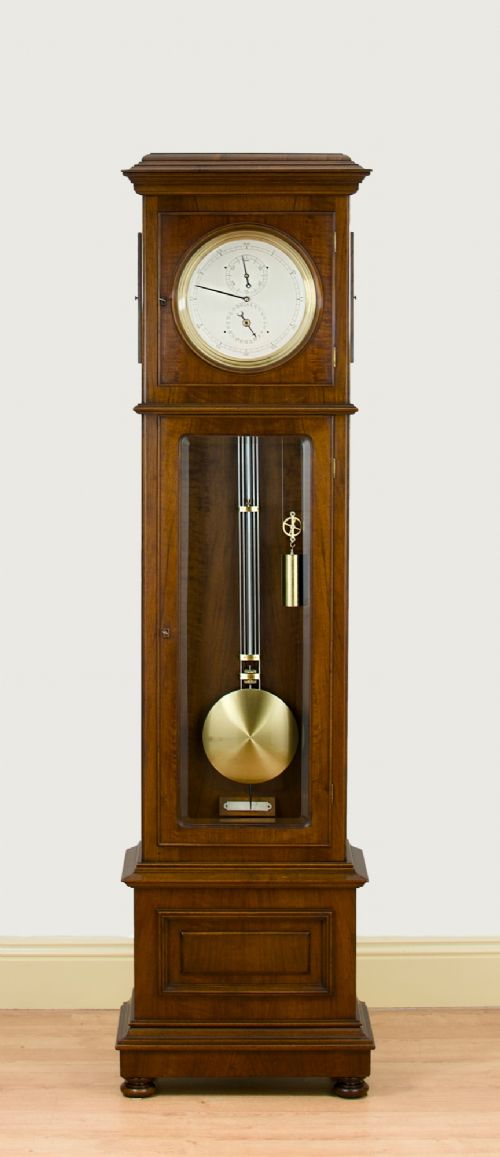
Superior examples display exceptional figuration in the walnut veneer and meticulous attention to inlay work on the clock case. The sophistication of the internal movement, from standard timepieces to striking and precision regulator mechanisms, defines the upper tier.
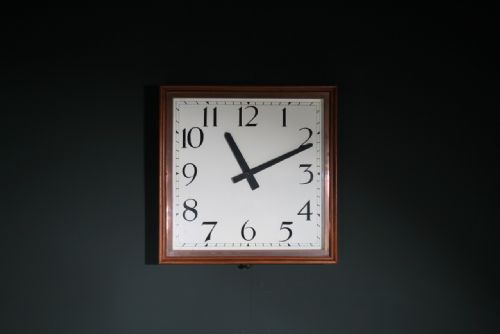
The integration of secondary functions like barometers and thermometers alongside the clock face indicates a higher level of workshop ambition. Casing execution, from carved Black Forest motifs to clean Art Deco lines, determines the overall refinement of each piece.
Walker and Hall·Lenzkirch·Payne of Tunbridge Wells·Winterhalder and Hofmeier·Baldwin of Loughborough
The Edwardian Walnut Clock Glossary
- Mantel clock
- A portable clock designed to sit on a fireplace mantelpiece or shelf. These units usually feature decorative wooden cases housing striking or simple time-only movements.
- Regulator longcase clock
- A tall pendulum clock built for extreme timekeeping accuracy. These grand pieces use heavy weights and refined gear trains to maintain precise time.
- Burr walnut
- A prized timber harvested from walnut tree growths that produces swirling, highly decorative grain patterns. Cabinetmakers utilise this wood for high-status furniture and clock faces.
- Marquetry
- The art of applying decorative pieces of veneer to a structure to form intricate patterns or pictures. Craftsmen employ contrasting woods to create detailed designs on clock cases.
- Ebonised wood
- Timber treated with a chemical finish or stain to imitate ebony. This dark treatment provides sharp contrast against lighter walnut panels on clock frames.
Edwardian Walnut Clock: Frequently Asked Questions
Where should I place a walnut mantel clock?
Position your clock on a stable, level surface away from direct sunlight, damp areas, and extreme temperature fluctuations. Walnut timber and internal mechanical parts react poorly to environmental shifts.
An interior wall or a solid mantelpiece provides the most stable environment for consistent pendulum swing and gear operation.
Why does my clock run fast or slow?
Pendulum clocks require careful regulation using the adjustment nut on the pendulum rod. Lowering the bob slows the beat while raising it speeds the clock up.
Changes in household temperature can also alter metal components slightly, requiring minor seasonal adjustments to keep accurate time.
What is the difference between a timepiece and a striking clock?
A timepiece simply records and displays the hours and minutes without producing any sound. It contains a basic movement focused entirely on motion.
A striking clock includes an additional gear train and hammer mechanism that chimes on the hour or half-hour, utilising bells or gongs fitted inside the case.