



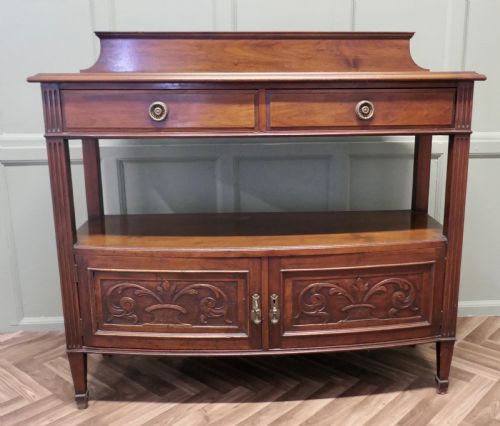

Edwardian Walnut Buffet
These edwardian walnut buffet pieces combine rich timber grain with practical storage, offering timeless elegance for dining and living rooms.
Edwardian Walnut Buffet
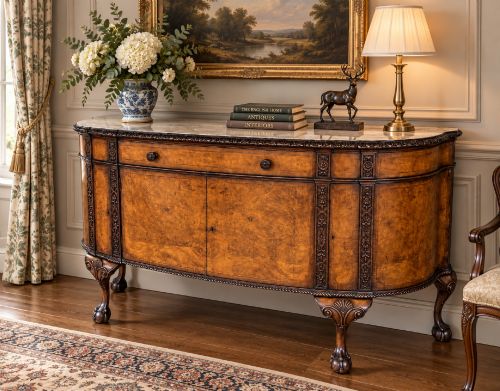
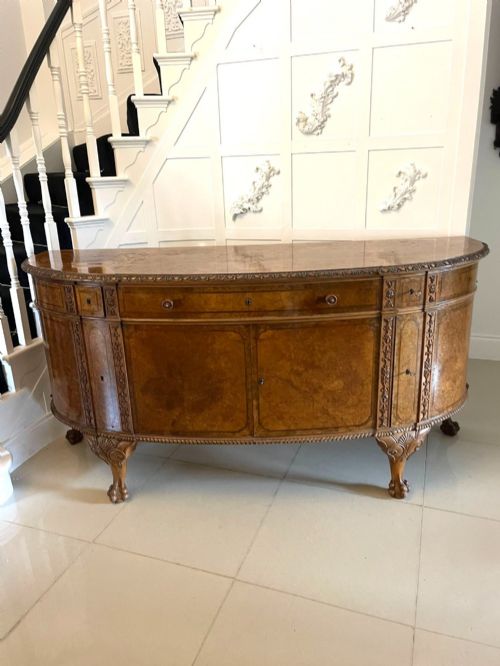
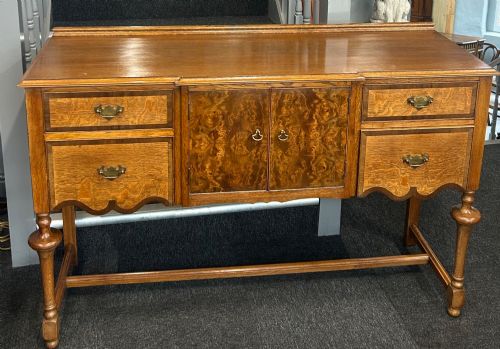
An edwardian walnut buffet serves as a principal dining room storage piece, frequently combining cupboards, drawers, and display surfaces. The pieces seen here span sideboards, credenzas, and side cabinets, reflecting varied domestic storage needs.
The version most commonly encountered on this page combines rich walnut timbers with Edwardian proportions, often featuring mirror backs or marquetry inlay. These items bridge Victorian mass and early twentieth-century refinement.
Makers utilised diverse stylistic influences, incorporating Queen Anne revival lines, Gothic details, and Art Nouveau motifs alongside standard Edwardian forms. This stylistic range allows the furniture to suit both traditional and eclectic interiors.
Materials and construction methods
Cabinetmakers relied heavily on solid walnut and decorative burr walnut veneers applied to stable secondary timbers to create striking patterned surfaces. Figured grain was carefully matched across doors and drawer fronts to produce symmetrical visual appeal.
Decoration often included boxwood inlay, brass hardware, and occasionally carved ornamentation, highlighting the structural lines of the furniture. Glass panels and mirrors were integrated into upper sections, while marble or timber served for upper serving surfaces.
Edwardian Walnut Buffet Retail Price Guide 2026
Typical asking prices for edwardian walnut buffet among the pieces listed under this phrase on Sellingantiques today, from the lower quarter to the upper quarter. They describe what is for sale here now, not the wider market.
Listings feature pieces spanning the Victorian period through the 1930s, constructed predominantly in walnut, burr walnut, and oak.
Factors influencing craftsmanship and desirability
Quality depends upon the choice and matching of the burr walnut veneer, where superior examples exhibit complex, unblemished figuring across large expanses. Finer pieces demonstrate meticulous hand-cut marquetry and crisp, deep carving rather than shallow machine work.
Edward Barnsley
The Edwardian Walnut Buffet Glossary
- Burr walnut
- A decorative timber veneer taken from the growth warts of walnut trees, prized for its swirling, intricate grain patterns. It provides a highly ornamental surface on high-end cabinet doors and tops.
- Marquetry
- The art of applying pieces of veneer to a structure to form decorative patterns and pictures. Craftsmen cut different coloured woods to fit precisely together before gluing them to the carcass.
- Credenza
- A low dining room cabinet, often featuring glass doors or central cupboards flanked by curved ends. These pieces frequently incorporate mirrors and decorative mounts.
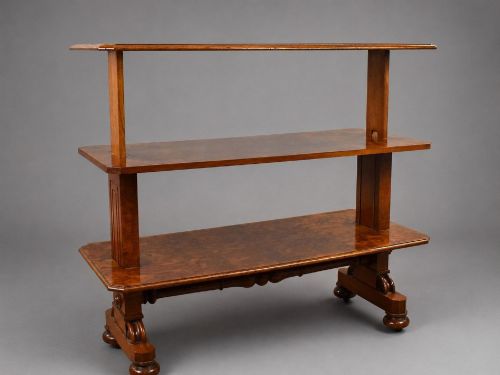
- Dumbwaiter
- A multi-tiered serving piece used to hold dishes and cutlery during meals. Versions in this tradition include adjustable tiers and rolling trolley formats.
- Ormolu
- Gilt bronze mounts used to decorate the corners, feet, and panels of fine furniture. This French technique adds metallic contrast to dark walnut surfaces.
Edwardian Walnut Buffet: Frequently Asked Questions
How do I clean an antique walnut buffet?
Dust surfaces regularly with a soft, dry cloth to prevent particulate build-up on the polished finish. Avoid silicone-based sprays, opting instead for traditional beeswax applied sparingly to nourish the timber.
Keep the furniture away from direct sunlight and heat sources to prevent the walnut veneer from drying out or splitting. Gentle care preserves the historical patina and protects the underlying wood.
Are these buffets suitable for modern dining rooms?
These versatile pieces offer generous storage for tableware, linens, and modern serving items while anchoring a room with period character. Their varied footprints accommodate diverse dining room layouts.
The warm tones of walnut timber complement both contemporary neutral palettes and traditional interior schemes. Using the top surface for display or serving maintains their original functional purpose.
How can I tell Edwardian pieces from Victorian ones?
Edwardian furniture generally exhibits lighter proportions, simpler lines, and less heavy carving than its Victorian predecessors. The influence of lighter revival styles often replaces the dark, imposing mass of mid-nineteenth-century design.
In contrast, Victorian examples frequently feature elaborate mirror backs, dense marquetry, and heavier architectural detailing. Examining internal construction and secondary woods helps confirm the period of manufacture.