


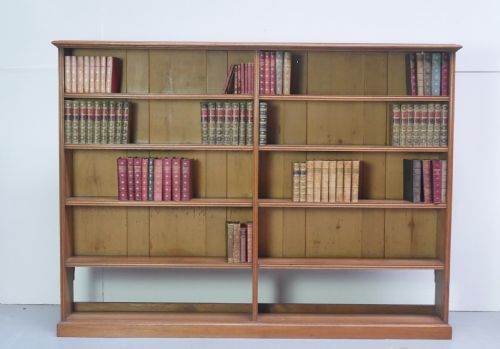


Edwardian Wall Shelving
Edwardian wall shelving brings practical display to compact rooms through light timber tiers and delicate hanging frames.
Edwardian Wall Shelving
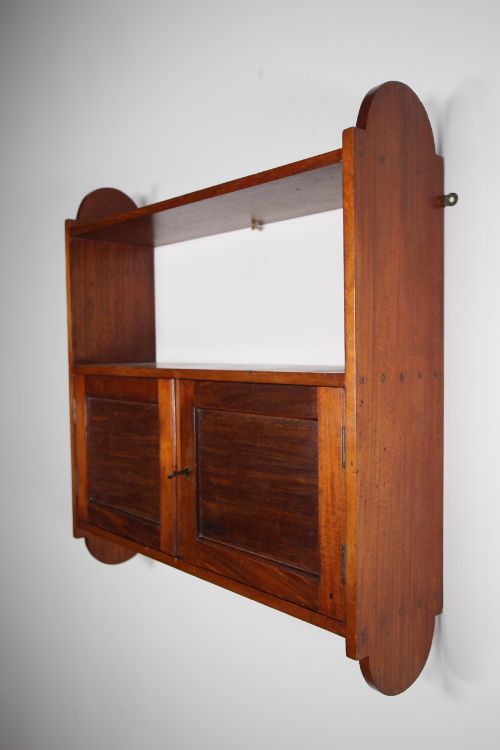
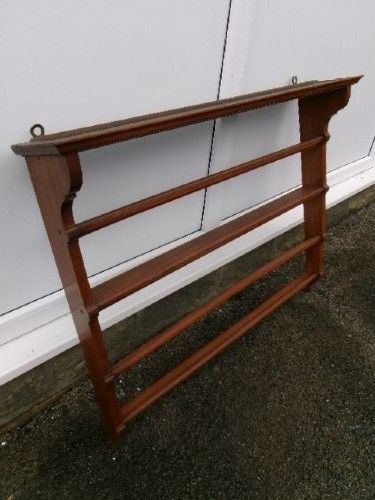
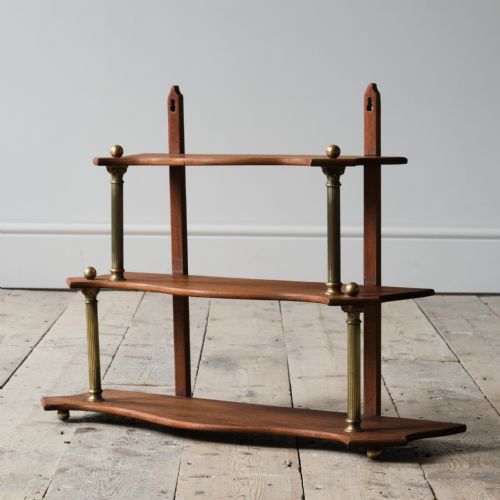
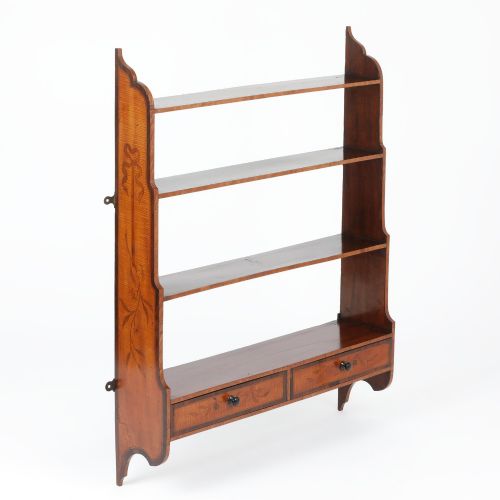
Edwardian wall shelving encompasses open hanging tiers and small wall-mounted cabinets designed to utilise vertical space in domestic interiors. When searching for Edwardian wall shelving, a buyer most frequently encounters mahogany or satinwood hanging shelves, often featuring delicate inlay work and multiple display tiers.
The pieces on this page draw upon various periods and styles, ranging from Edwardian satinwood and mahogany constructions to earlier Regency and Victorian interpretations. Alongside open shelving, the selection includes wall cabinets, hanging bookcases, and overmantel mirrors fitted with small display ledges.
These items serve to organise books and ornaments without crowding the floor area of a room. The forms vary from simple small mahogany racks to elaborate inlaid wall cabinets and Arts and Crafts designs.
Construction and Materials
Makers utilised timber veneers such as mahogany, satinwood, and walnut over solid structural carcases to achieve a refined surface. Boxwood inlay frequently provides linear stringing or delicate floral motifs along the borders of shelves and back panels.
Hanging mechanisms rely on brass fixings or integrated wooden brackets designed to support the weight of books and decorative objects safely against a wall. Glass panels appear in cabinet doors, while brass hinges and catches secure enclosed compartments.
Edwardian Wall Shelving Retail Price Guide 2026
Typical asking prices for edwardian wall shelving among the pieces listed under this phrase on Sellingantiques today, from the lower quarter to the upper quarter. They describe what is for sale here now, not the wider market.
Keep a collection of miniature books ready, because small wall shelves possess an irresistible pull for tiny volumes.
Judging Quality
Quality reveals itself in the crispness of the boxwood inlay and the selection of timber grain on prominent surfaces. Superior examples demonstrate careful jointing at the shelf junctions and harmonious proportions that balance utility with visual lightness.
Finer pieces maintain their original brass fittings and undisturbed surface finishes, showing a warm polish rather than heavy modern restoration. The integrity of the hanging structure and the neatness of the fretwork or spindle galleries further distinguish standard production from exceptional workshop output.
Heals·Arthur Simpson
The Edwardian Wall Shelving Glossary
- Overmantel
- A mirror or shelving unit designed to be mounted directly on the wall above a fireplace mantelpiece. These often incorporate small ledges for ornaments.
- Whatnot
- A piece of furniture consisting of a set of open shelves for displaying small objects or books. They can stand on the floor or hang upon a wall.
- Inlay
- A decorative technique where pieces of contrasting wood, such as boxwood, are inserted into recessed portions of the base timber to form patterns.
- Waterfall bookshelves
- A set of graduated open shelves where each tier is deeper than the one above it, following a cascading vertical line.
- Hanging cabinet
- A wall-mounted storage unit enclosed by doors, protecting the contents from dust while keeping floor space clear.
Edwardian Wall Shelving: Frequently Asked Questions
How do I hang antique wall shelves safely?
Check the original hanging points on the back of the timber frame to ensure they remain structurally sound before mounting. Secure appropriate screws directly into wall studs or utilise heavy-duty wall anchors rated for the weight of the wood and books.
Distribute the weight evenly across the shelves, placing heavier volumes on the lower tiers to maintain stability. Period hanging brackets benefit from gentle reinforcement if the brass has weakened over time.
What is the difference between a wall cabinet and open shelves?
Wall cabinets feature enclosed doors, often glazed or panelled, which protect stored items from dust and allow for private storage. Open wall shelves present an accessible display surface for books and decorative objects without visual barriers.
Both forms serve to utilise vertical wall space in compact areas, but cabinets introduce a heavier visual presence to a room. Open shelving leans toward lightness, frequently incorporating spindle galleries or shaped brackets.
Can these shelves support heavy books?
Most hanging shelves from this period are constructed for lighter volumes, decorative ornaments, and small collections rather than heavy folio editions. The timber thickness and small bracket joints are proportioned for domestic display items and modest bookshelves.
Overloading narrow hanging tiers risks straining the wall fixings and the joints where the shelves meet the backboard. Reserve heavier collections for floor-standing bookcases and utilise wall shelves for lighter reading.
How do I distinguish Edwardian pieces from Victorian ones?
Edwardian wall shelving typically displays a lighter, more delicate construction with satinwood, brighter mahogany, and refined boxwood inlay. The aesthetic moves away from the heavier, darker timbers and dense carving often associated with mid-Victorian production.
Victorian hanging cabinets tend to use darker walnut or heavily polished mahogany with robust mouldings and solid doors. Examining the interior secondary timbers and construction methods helps clarify the manufacturing period.