


Edwardian Turquoise Jewellery
Edwardian turquoise jewellery brings together vibrant blue stones, lustrous pearls and warm gold in delicate floral, heart and geometric forms that define early twentieth-century design.
Edwardian Turquoise Jewellery
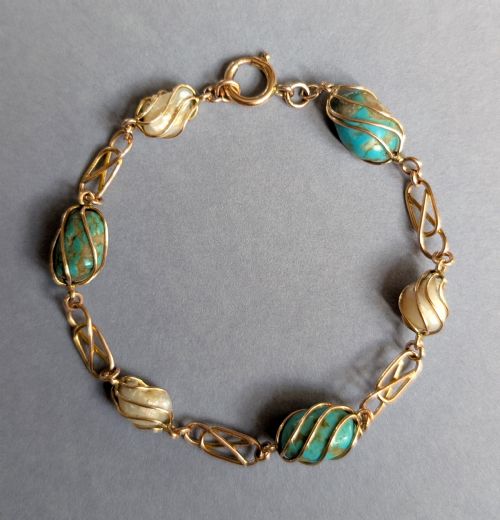
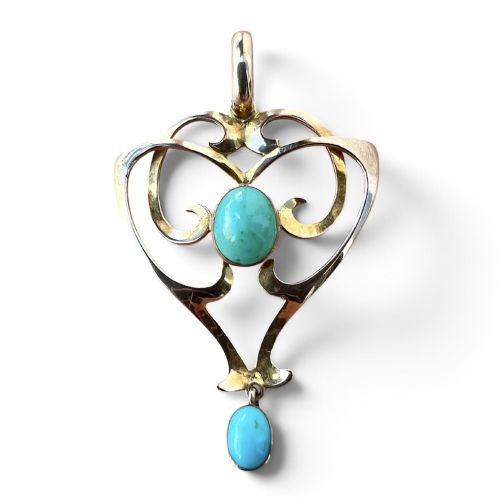
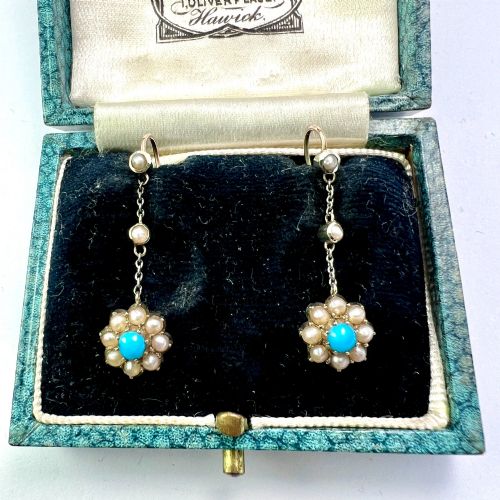
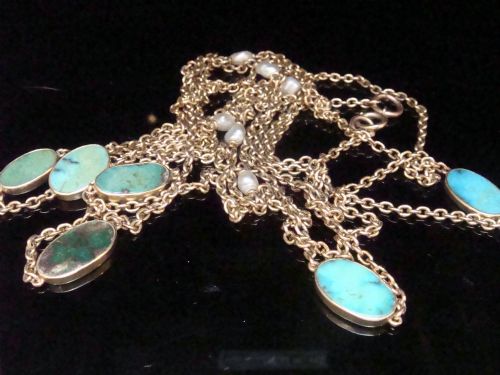
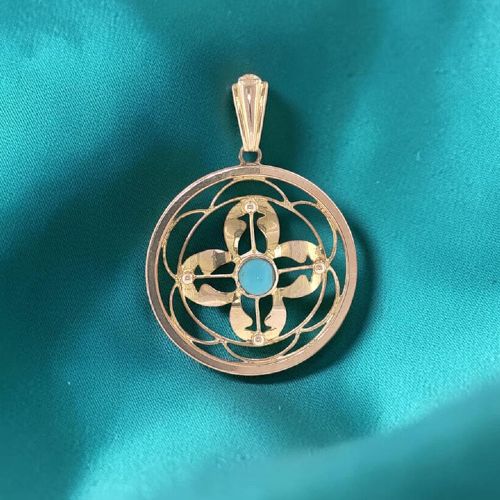
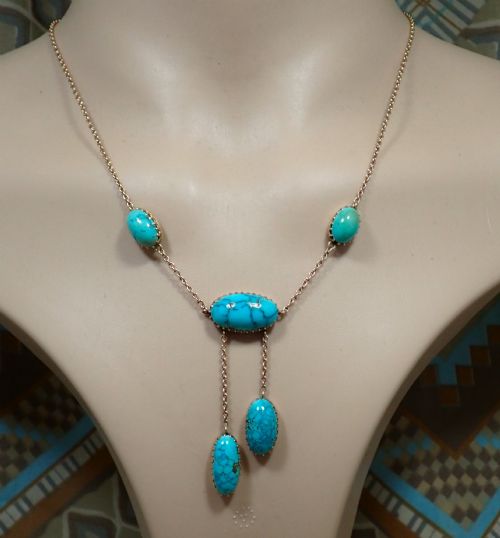
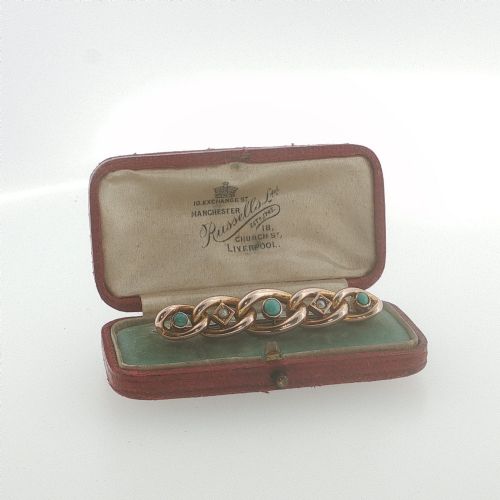
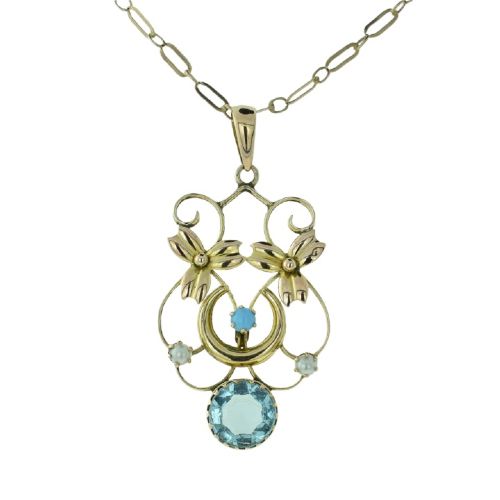
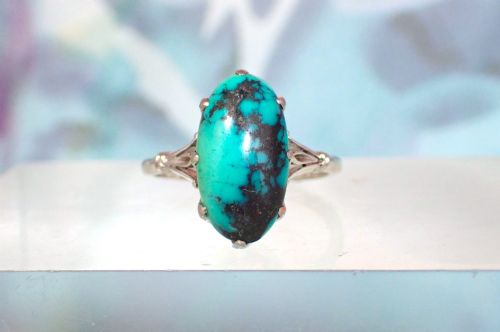
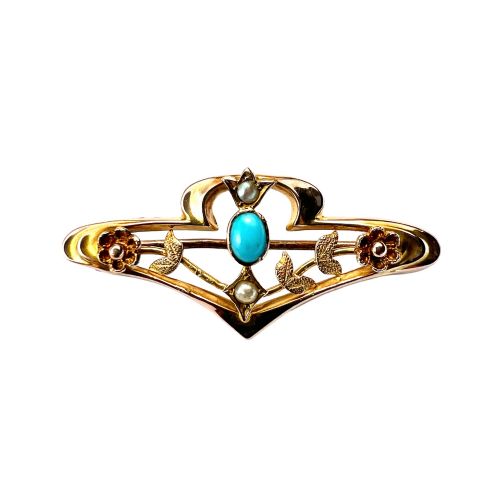
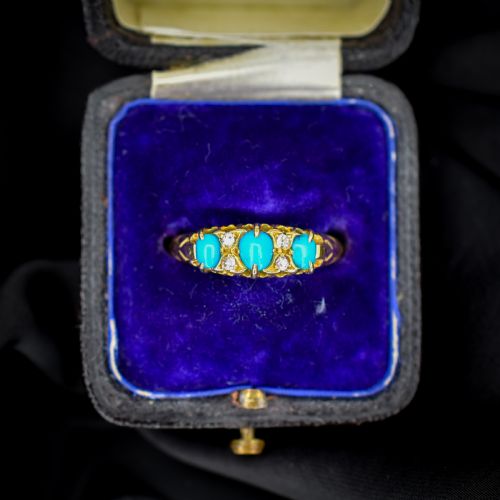
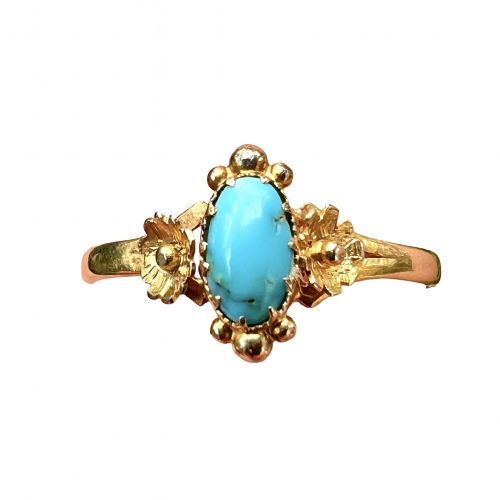
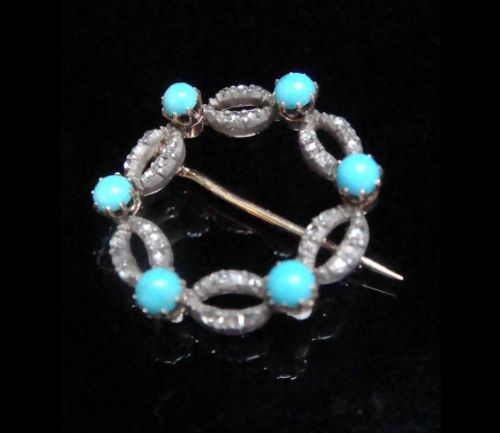
Edwardian turquoise jewellery encompasses rings, brooches, bracelets, necklaces, pendants, earrings and longuard chains originating mainly from the Edwardian period alongside Victorian and later stylistic overlaps. These pieces frequently incorporate natural turquoise, matrix turquoise and seed pearls arranged in botanical motifs such as forget-me-nots, flower drops and floral clusters.
Forms range from intimate winged heart brooches and evil eye rings to substantial curb bracelets and negligee necklaces. Such variety ensures that collectors find both everyday personal ornaments and intricate statement pieces suited to diverse tastes.
Materials and Construction
Goldsmiths and silversmiths constructed these pieces using 9ct gold, 15ct gold, 18ct gold and sterling silver, frequently employing rose gold or yellow gold to complement the vivid blue of the turquoise. Stones were carefully selected in both uniform blue varieties and matrix forms, then paired with natural pearls, seed pearls and occasional diamonds.
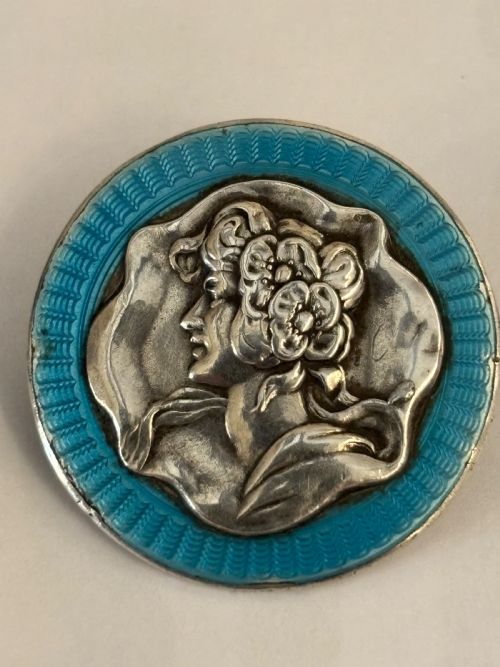
Craftsmen utilised techniques such as fine wirework, collet setting and granulation, particularly within Arts and Crafts workshops where hand-hammered surfaces and enamel accents appeared alongside the gems. Chains were fashioned with sturdy curb links or longuard constructions, while brooches incorporated secure pin stems and safety chains.
Edwardian Turquoise Jewellery Retail Price Guide 2026
Typical asking prices for edwardian turquoise jewellery among the pieces listed under this phrase on Sellingantiques today, from the lower quarter to the upper quarter. They describe what is for sale here now, not the wider market.
Materials recur in combinations of turquoise, seed pearl, 9ct gold, 15ct gold, 18ct gold and silver.
Distinctions in Quality
Quality rests upon the natural integrity and uniformity of the turquoise stones, where even colour distribution and minimal surface matrix distinguish superior specimens from lesser examples. The choice of metal further defines the tier, with higher carat gold mounts and intricate platinum or silver settings indicating superior workshop standards.
The finesse of the hand-craftsmanship dictates the overall standard, visible in the precision of pearl alignment, the delicacy of floral motifs and the absence of clumsy solder repairs. Maker attribution and well-preserved original clasps or settings elevate the standing of a piece within the broader spectrum of surviving items.
Deakin & Francis·The Gaskins·Murrle Bennett·Dorrie Nossiter·Henry Matthews
The Edwardian Turquoise Jewellery Glossary
- Matrix turquoise
- Turquoise that retains portions of the host rock webbed through the stone. This creates intricate dark patterns across the blue surface.
- Seed pearl
- A very small, naturally occurring pearl, often unperforated or half-drilled, clustered closely together to form floral clusters and borders.
- Negligee necklace
- A necklace featuring a central vertical drop with two unequal lengths suspended from a main chain. This style gained popularity during the Edwardian era.
- Longuard chain
- A long decorative chain worn around the neck, often fitted with a swivel clasp to suspend watches, lockets or pendants.
- Parure
- A matching set of jewellery designed to be worn together, typically including earrings, a ring and a necklace.
- Guilloche enamel
- A decorative technique where an enamel layer is applied over metal engraved with a repetitive geometric pattern.
Edwardian Turquoise Jewellery: Frequently Asked Questions
What defines Edwardian turquoise jewellery?
These pieces are characterised by the pairing of bright turquoise stones with pearls, set within yellow or rose gold and silver mounts. The designs frequently utilise floral, heart and ribbon motifs that reflect the optimism of the period.
Craftsmanship during this era favoured light, openwork structures that maximised the play of light across the gems. Such items served as sentimental gifts and fashionable everyday adornments.
How can I tell Edwardian pieces from Victorian ones?
Edwardian items typically display lighter, airier metalwork and whiter gold or platinum settings compared to the heavier, warmer yellow gold common in earlier Victorian production. Motifs also shifted towards delicate garlands, bows and symmetrical floral drops.
However, stylistic overlap remains common because makers continued producing romantic revival designs across both decades. Hallmarks and date letters stamped inside the mount often provide the definitive answer.
Were these pieces worn every day?
Many items, such as small rings, brooches and longuard chains, were robust enough for daily wear as personal talismans or functional dress accessories. Delicate negligee necklaces and parure sets were reserved for evening events and formal social gatherings.
The inclusion of safety chains on heavier bracelets and brooches demonstrates that owners wore them regularly and wished to prevent loss.