

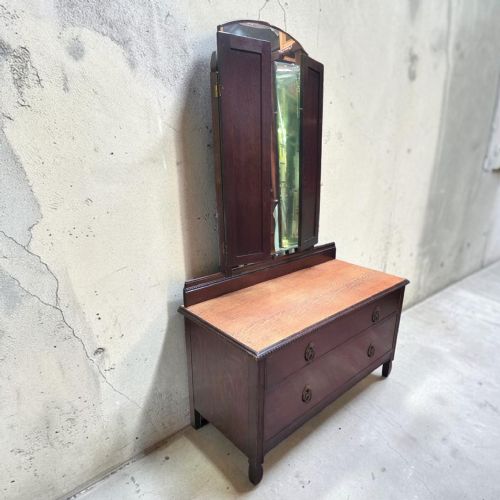
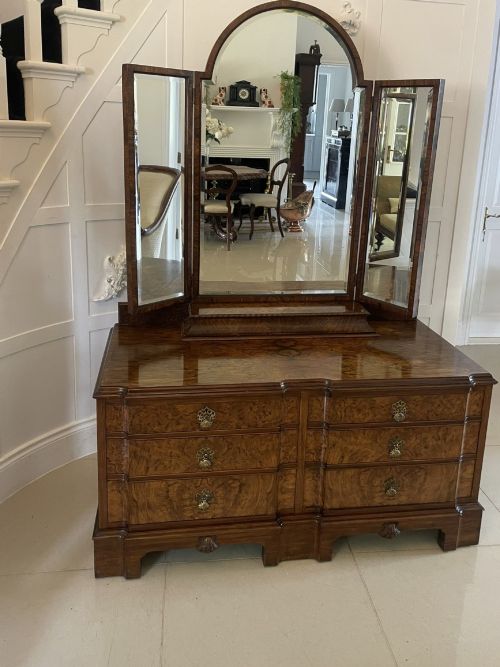


Edwardian Triple Mirror
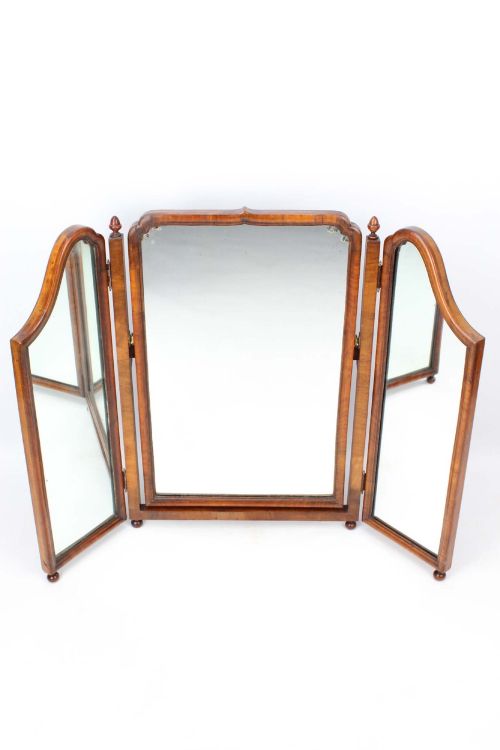
An Edwardian triple mirror brings depth and light to a room, offering three folding plates in mahogany, oak or walnut.
Edwardian Triple Mirror
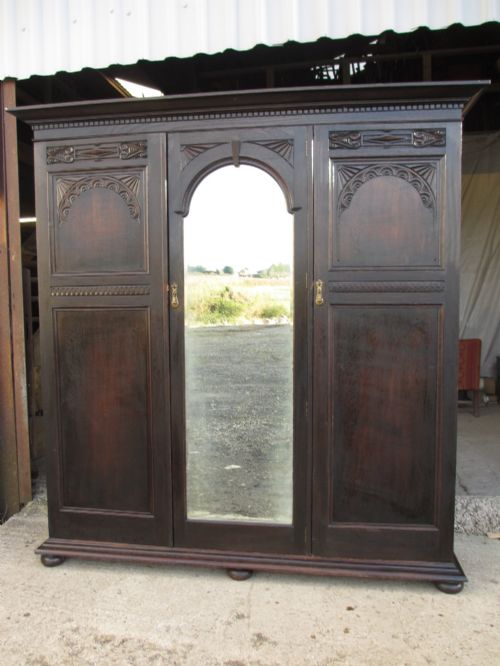
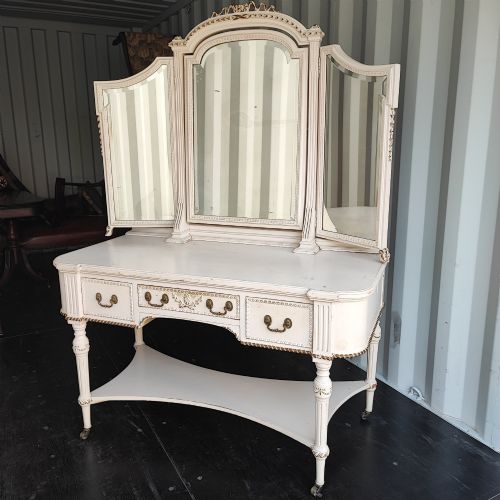
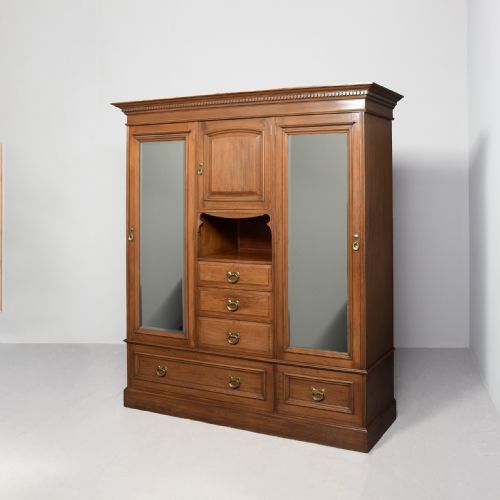
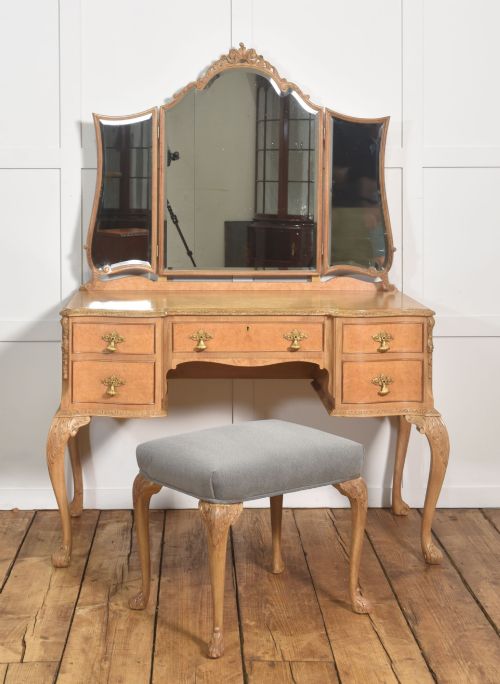
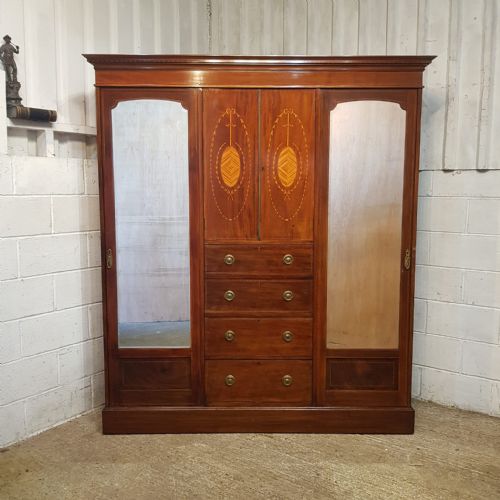
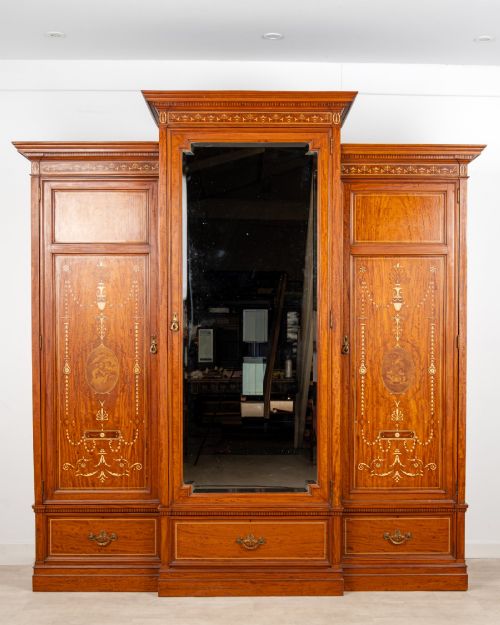
When searching for an edwardian triple mirror, buyers encounter two distinct formats across these pieces: large dressing table mirrors designed to sit upon a chest or base, and expansive wardrobe doors flanked by folding glass wings. The majority seen here stem from the Edwardian period and the early twentieth century, though nineteenth-century Victorian examples also appear regularly.
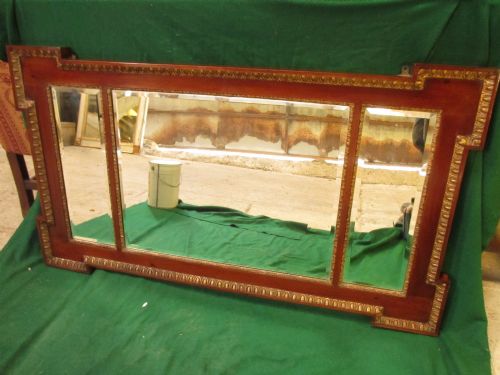
Beyond dressing furniture, the selection includes wall-hanging pieces and overmantel mirrors structured with three distinct panels. These items incorporate various woods such as mahogany, satinwood and oak, alongside gilt frames and brass fittings.
The practical function remains consistent across forms, using hinged side plates to alter angles and reflect light from multiple corners of an interior. Craftsmanship from this era leans heavily toward inlaid details, carved woodwork and structural framing tailored to domestic spaces.
How they were made
Makers constructed these frames using solid hardwoods like mahogany, walnut and oak, often applying fine veneers of satinwood or burr walnut to visible surfaces. Inlay work frequently defines the Edwardian pieces, contrasting lighter woods into darker backdrops.
Mirror glass is held within hinged wooden or gilt brass frames, allowing the side panels to pivot smoothly on brass hinges. Carved elements, whether linear Art Nouveau motifs or classical revival details, are worked directly into the solid timber sections.
Edwardian Triple Mirror Retail Price Guide 2026
Typical asking prices for edwardian triple mirror among the pieces listed under this phrase on Sellingantiques today, from the lower quarter to the upper quarter. They describe what is for sale here now, not the wider market.
Design influences across the inventory include Art Nouveau, Art Deco, Sheraton Revival and Queen Anne Revival styles.
What varies in quality
The standard of timber selection and veneer matching dictates the visual impact of each piece. Superior examples utilise carefully figured burr walnut, straight-grained walnut or rich mahogany with precise string inlay, whereas simpler items rely on plain oak or pitch pine.
Hardware and joinery define the execution level. High-grade items incorporate substantial brass hinges, dovetailed drawer construction and clean bevelling on the mirror plates, while more utilitarian pieces display simpler joints and plain flat glass.
Maple and Co·Maurice Adams
The Edwardian Triple Mirror Glossary
- Compactum
- A large fitted wardrobe designed with multiple interior compartments, hanging space and drawers. These multi-section pieces often integrate central mirror doors.
- Triptych
- A three-panelled folding arrangement where two flanking sections hinge inward toward a larger central mirror. This configuration allows adjustable angles for dressing or decorative reflection.
- Overmantel
- A large mirror designed to hang directly above a fireplace mantelpiece. They frequently incorporate architectural framing and multiple glass sections.
- Inlay
- A decorative technique where contrasting pieces of wood or metal are fitted into recesses flush with the surface. Edwardian pieces often use satinwood or boxwood lines.
- Satinwood
- A durable, light-coloured tropical hardwood valued for its natural sheen and grain pattern. It appears frequently as a veneer or solid timber on inlaid dressing furniture.
Edwardian Triple Mirror: Frequently Asked Questions
How do I clean antique mirror glass?
Use a soft microfiber cloth with mild soapy water, avoiding harsh commercial ammonia cleaners that can damage old silvering behind the glass.
Dry the surface immediately to prevent moisture from seeping under the edges of the wooden frame.
Can these dressing mirrors be hung on a wall?
Most surviving triple mirrors from this era were built to rest securely upon dressing chests or tables rather than hang independently. Converting them requires assessing the weight of the wooden frame and securing appropriate wall brackets.
Smaller folding table mirrors stand alone without structural support.
What is the difference between Edwardian and Victorian styles?
Victorian pieces tend to be heavier, darker and more ornate, often constructed from dense mahogany or pitch pine with deep mouldings. Edwardian designs generally feature lighter woods like satinwood, brighter finishes and simpler inlaid decoration.
Proportions became more restrained by the turn of the century to maximise reflected light.
How do the hinged side panels operate?
The outer wings connect to the central plate via brass hinges that allow independent pivoting. This adjustment lets the user angle the reflection or fold the wings flat against the centre.
Original hinges should move smoothly without sagging or straining the wood.