





Edwardian Teaspoons Set
These edwardian teaspoons set selections gather fine silver service pieces packaged for display and table use.
Edwardian Teaspoons Set
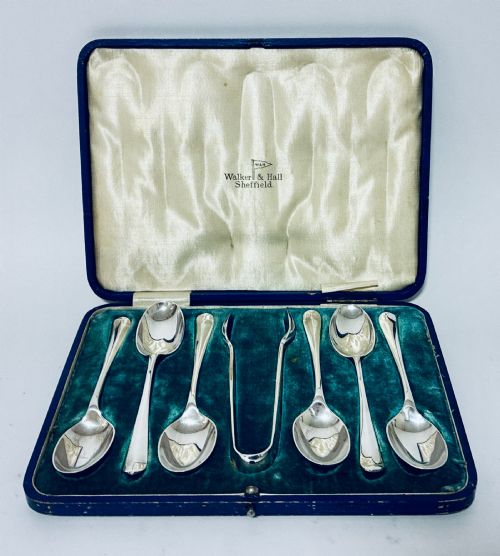
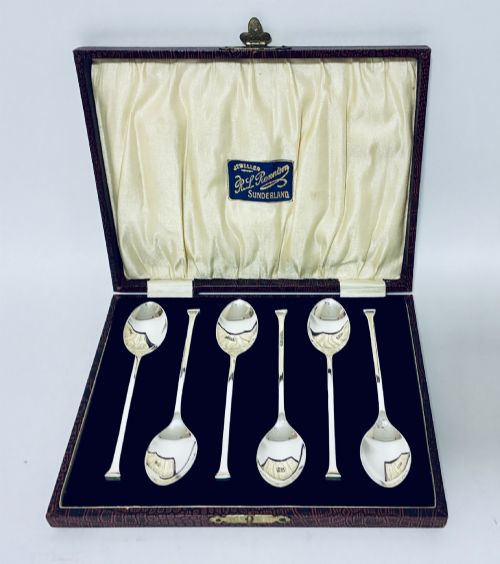
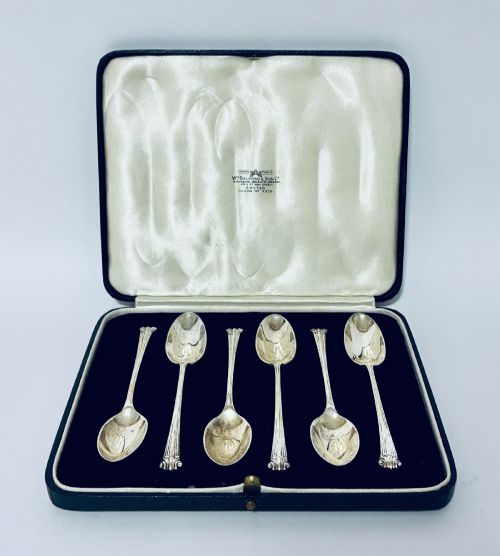
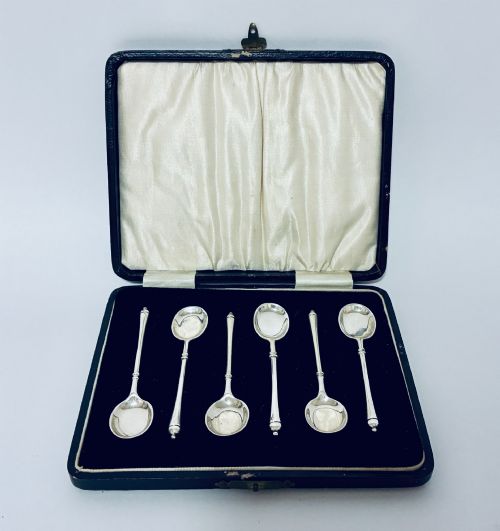
An edwardian teaspoons set comprises grouped silver flatware created for tea service and formal table dining, often accompanied by matching sugar tongs. These collections appear in fitted boxes lined with materials such as velvet, silk, satin, or leatherette, preserving the pieces when not in active use on the table.
The assortment on this page extends beyond basic domestic teaspoons to encompass specialised forms like coffee spoons, demi-tasse spoons, and butter knives. Stylistic influences across the selection range from Victorian and Edwardian designs through Arts and Crafts, Art Nouveau, and Art Deco movements, reflecting changing tastes in dining habits.
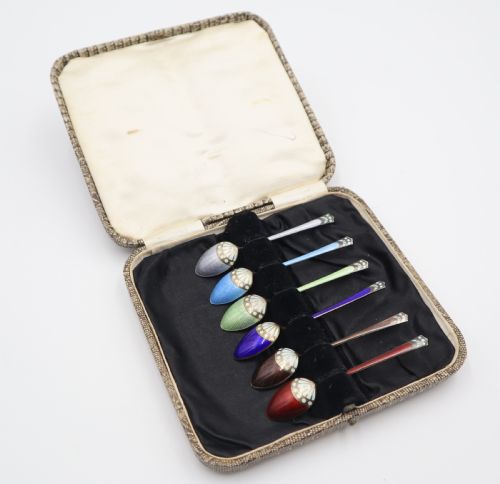
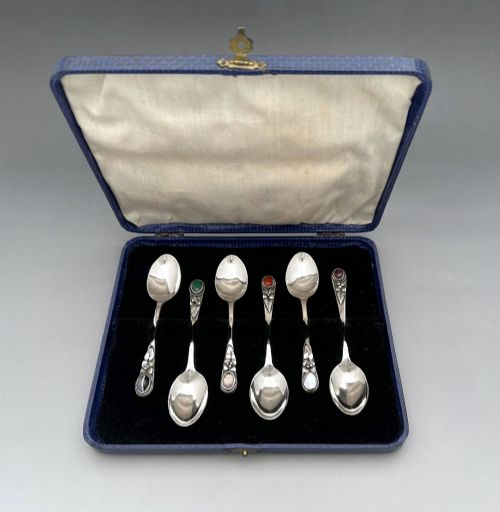
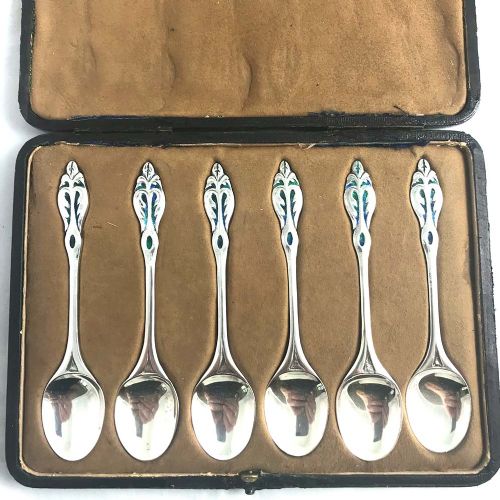
While many groupings originate from the Edwardian period, the inventory also includes Victorian pieces alongside later twentieth-century iterations up to nineteen fifty. Buyers encounter both plain sterling silver sets and more decorative variations enhanced by enamelwork or semi-precious stones.
Materials and construction
The primary material across these sets is sterling silver or silvergilt, shaped into individual spoons, tongs, and knives. Metalsmiths employed traditional manufacturing techniques to forge handles and bowls, sometimes applying gold wash over the silver surfaces.
Decorative elements involve skilled craftsmanship such as hand-applied enamel work and the mounting of semi-precious stones into the metalwork. Presentation cases utilise luxury textiles including silk, velvet, satin, and textured leatherette to securely house each spoon.
Edwardian Teaspoons Set Retail Price Guide 2026
Typical asking prices for edwardian teaspoons set among the pieces listed under this phrase on Sellingantiques today, from the lower quarter to the upper quarter. They describe what is for sale here now, not the wider market.
Some boxed sets paired miniature spoons with sugar tongs so delicate they required an exceptionally gentle touch at the tea table.
Assessing quality and craftsmanship
Quality in an edwardian teaspoons set rests on the execution of decorative details, such as the precision of enamel work or the secure mounting of semi-precious stones. Finer sets exhibit crisp detailing on traditional motifs like seal tops, apostle figures, or intricate handle profiles.
The integrity of the original presentation case contributes significantly to the overall standard of the set. Well-preserved fitted boxes lined with intact silk or velvet indicate careful ownership and protect the silver flatware from surface wear.
Liberty & Co·Robert Stebbings
The Edwardian Teaspoons Set Glossary
- Sterling silver
- A standard alloy of silver containing ninety-two point five percent pure silver and seven point five percent other metals, usually copper. This composition provides the durability required for functional cutlery while maintaining a bright metallic lustre.
- Silvergilt
- Silver objects that have been coated with a thin layer of gold on their exterior surfaces. This technique produces a rich golden appearance while retaining a solid silver base.
- Demi-tasse spoons
- Smaller scale spoons specifically proportioned for small coffee cups used after dinner. They frequently appear in cased sets alongside matching sugar tongs.
- Sugar tongs
- Small hinged utensils designed for lifting sugar lumps into tea or coffee cups. They commonly accompany boxed sets of teaspoons and coffee spoons.
- Enamel
- A decorative glassy substance fused to metal surfaces through high-temperature firing. It provides vibrant colour accents on handles and bowl backs.
- Seal top spoon
- A traditional spoon style featuring a flat, circular terminal resembling a wax seal stamp. This historic form appears in revival pieces within silver collections.
Edwardian Teaspoons Set: Frequently Asked Questions
What is included in a typical set?
Most collections consist of six or twelve matching spoons designed for tea or coffee service. Many sets also include matching sugar tongs or butter knives housed within the original fitted presentation case.
The inclusion of specialised pieces like demi-tasse spoons or enamel decoration indicates a more formal table service accessory intended for display as well as use.
How should I store silver spoons?
Silver flatware benefits from storage in fitted boxes lined with soft textiles such as velvet, satin, or silk. These protective cases prevent scratching and reduce exposure to atmospheric elements that cause tarnishing.
Keeping sets in their original leatherette or fabric-lined presentation boxes preserves both the spoons and their period housing in optimal condition.
How do I identify the period?
Dating relies on stylistic markers associated with specific eras, such as the flowing organic lines of Art Nouveau or the geometric abstraction of Art Deco. Maker marks and silver hallmarks stamped onto the metal provide definitive manufacturing dates and assay office origins.
Design motifs like apostle figures or seal tops often reference earlier historic revivals while being manufactured in later decades.
Were these sets used daily?
Historic boxed flatware sets were primarily acquired for formal entertaining, special afternoon tea gatherings, or given as significant wedding and anniversary gifts. The presence of delicate textiles in the presentation boxes suggests they were carefully preserved between uses rather than kept in rough daily circulation.
Many sets show minimal wear because they spent decades safely stored inside their original fitted cases.