
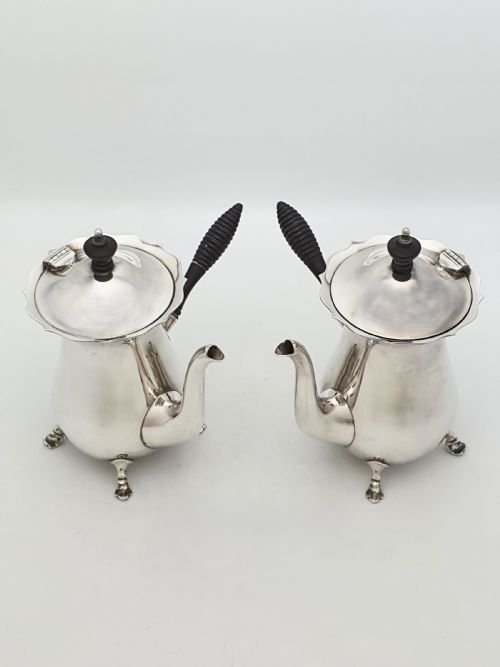


Edwardian Tea Service Set
An edwardian tea service set brings the refined hospitality of the early twentieth century straight to the table.
Edwardian Tea Service Set
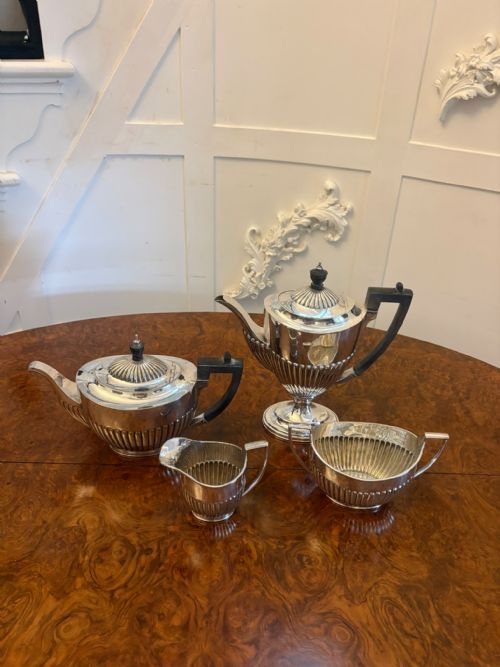
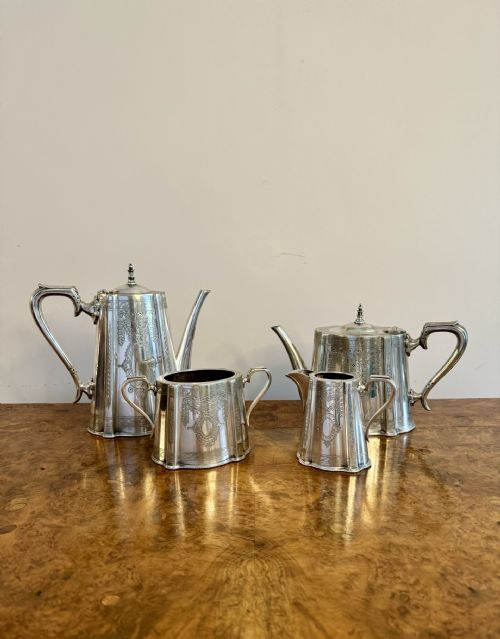
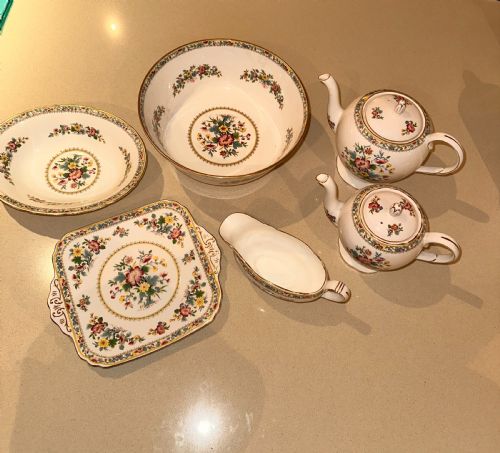
An edwardian tea service set encompasses matched assemblies of pots, cream jugs and sugar basins designed for formal afternoon entertaining. The groupings on this page span complete silver plated four piece configurations alongside porcelain tea sets and porcelain breakfast sets originating from the Edwardian era and surrounding decades.
Most entries concentrate on silver plated metalware alongside bone china and porcelain formations produced by established factories. Buyers encounter everything from compact three piece assemblages to extensive multi-piece dinner services and café au lait pots.
Makers and potteries from the period applied traditional English aesthetics alongside Edwardian Rococo revival motifs, Art Nouveau flourishes and occasional Art Deco touches. These services reflect the social rituals of a bygone period through utilitarian vessels shaped for daily domestic use.
Materials and Technique
Silversmiths utilised durable base metals coated with silver plate, or worked in solid sterling silver, applying techniques such as hand embossing and detailed grapevine ornamentation. Fitted wooden elements, ebonised wood and bone accents appeared on handles and finials to insulate warmth.
Potteries shaped bone china and porcelain into delicate cups, saucers and pots, frequently finishing surfaces with hand-painted decoration, trailing patterns and applied gold leaf gilding. Makers stamped hallmarks into metal bases and printed factory marks onto ceramic undersides to denote authenticity.
Bat wing patterns flutter across porcelain teacups, letting morning tea take flight.
Distinctions in Standard
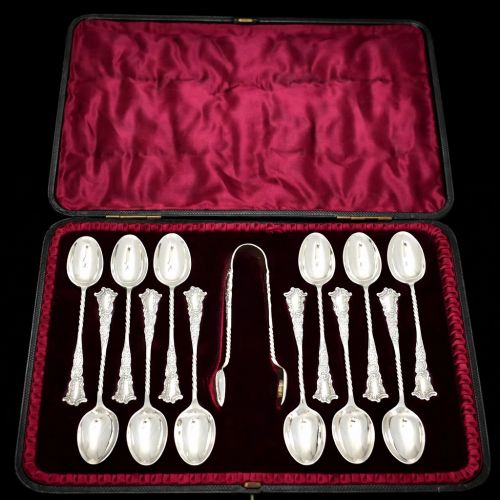
The standard of an edwardian tea service set rests upon the crispness of chased or embossed metal detailing and the preservation of original silver plating across complex handle and spout junctions. Complete sets retaining their fitted cases and original matching components command greater respect among collectors.
Ceramic variations depend on the precision of hand-painted brushwork, the vibrancy of underglaze colours, and the translucency of the bone china body. Pieces bearing identifiable factory stamps from renowned makers demonstrate superior artistic oversight during production.
Walker and Hall·Coalport·Royal Albert Crown China·William Moorcroft·Goldsmiths and Silversmiths Co·Harry Atkin
The Edwardian Tea Service Set Glossary
- Silver Plate
- A layer of pure silver bonded to a base metal core, commonly utilised for large holloware services during the Edwardian period. This technique provided the visual weight of solid silver at a more accessible cost.
- Bone China
- A type of porcelain incorporating animal bone ash, resulting in a strong, milky-white ceramic body suited to thin-walled tea cups and saucers. It became a staple of English tablewares.
- Hallmark
- An official stamp applied to precious metals indicating the assay office, metal purity, and year of manufacture. Sterling silver tea sets often display these tiny stamped markers.
- Gold Leaf
- Extremely fine sheets of hammered gold applied to ceramic or metal surfaces for decorative gilding. It highlights rims, handles, and painted motifs on tea services.
- Cafe Au Lait Pot
- A tall vessel designed specifically for serving hot milk alongside coffee. These pots frequently accompany larger breakfast and tea services from the era.
Edwardian Tea Service Set: Frequently Asked Questions
How many pieces make a complete tea service?
A standard tea service typically comprises a teapot, a milk jug and a sugar basin, forming a basic three piece grouping. Larger configurations often add a coffee pot or expand to include cups, saucers and teaspoons.
Matching sets vary from compact three piece arrangements up to extensive forty or one hundred piece dinner and tea services depending on the original commission.
Can I use silver plated tea sets daily?
Silver plated tea sets handle regular use well provided they receive gentle hand washing with non-abrasive cloths. Avoid dishwashers and harsh chemical cleaners to protect the delicate silver surface and any applied gilding.
Storing pieces dry prevents tarnishing and preserves the polished finish of the metal over years of entertaining.
How do I identify Edwardian porcelain?
Edwardian porcelain displays specific maker marks, registration numbers, and pattern names printed on the underside of bases. Stylistic cues include soft floral motifs, hand-painted trailing daisies, and transitional Art Nouveau curves.
Comparing factory backstamps against established ceramic reference records reveals the exact decade of manufacture.
What is the difference between bone china and porcelain?
Bone china incorporates calcified animal bone into the paste, creating a lighter, more translucent ceramic body that resists chipping. Traditional porcelain relies on kaolin and petuntse without bone ash.
Both materials formed the backbone of fine English tea services during the early twentieth century.