



Edwardian Tantalus Set
An edwardian tantalus set secures your spirits behind a locking mechanism while displaying cut crystal decanters for formal entertaining.
Edwardian Tantalus Set
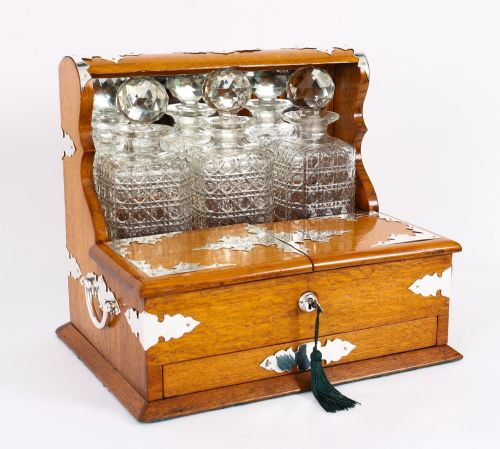
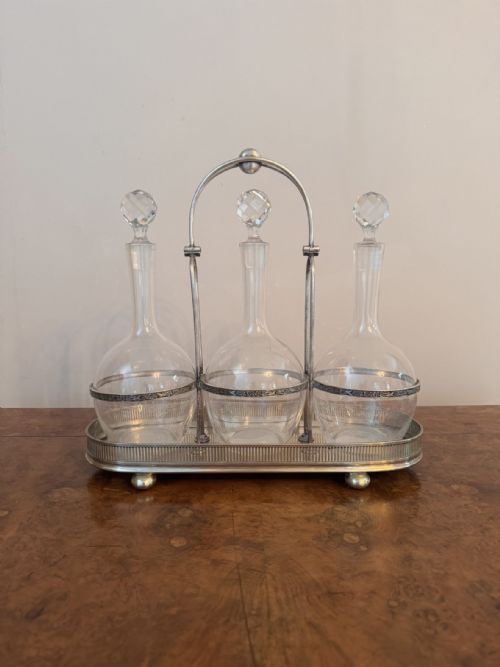
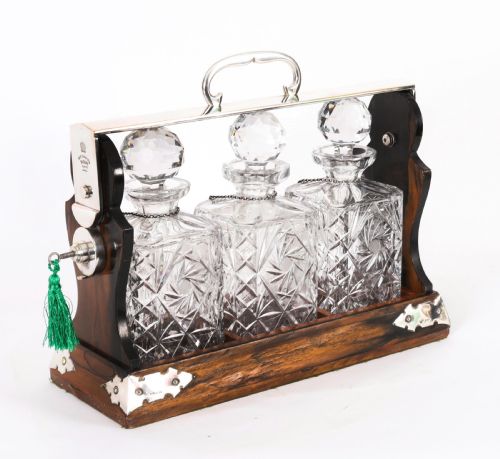
An edwardian tantalus set combines a locking wooden frame with heavy glass decanters designed to restrict access to liquor while keeping bottles visible. You will most commonly encounter oak frames holding two or three cut crystal decanters, often paired with silver plated mounts.
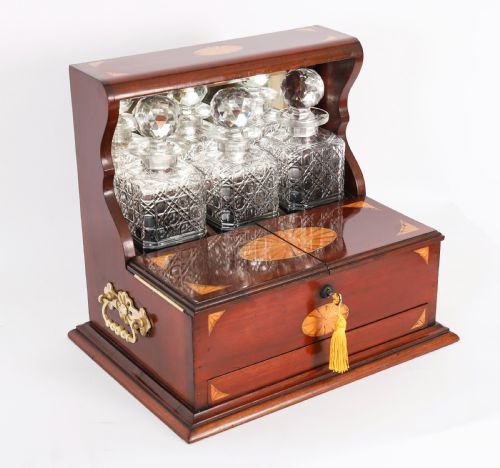
Many examples double as games compendiums, incorporating compartments for cards and boards beneath the liquor section. The form bridges domestic utility and social display, originating as a gentleman's barware accessory in the late nineteenth and early twentieth centuries.
The phrase covers both standalone decanter frames and complex dry bars incorporating brass hardware and inlaid wood. Pieces span from late Victorian origins into the Edwardian period and early twentieth century.
Materials and construction
Makers built the frames primarily in oak, walnut, satin wood, and coromandel, occasionally applying marquetry stringing or brass mounts. These timbers provided the structural rigidity required to house heavy glass bottles securely within a locking framework.
Decanters are formed from cut glass or cut crystal, paired with silver plated or silver hardware for the locking bars and handles. The mechanism relies on a key-operated drop bar that blocks the stoppers until unlocked.
Listings feature oak, walnut, coromandel, and satin wood alongside cut crystal and silver plate across Victorian and Edwardian periods.
Distinctions in quality
Quality rests upon the execution of the woodwork and the complexity of the internal fittings, particularly in combination pieces housing games equipment. Dense timbers like coromandel and fine marquetry inlay separate standard production from high-end commissions.
The weight and clarity of the cut crystal decanters, alongside the heft and finish of the silver plated mounts and locking mechanisms, dictate the tier of the piece. Fully functional locks with original keys and matching cut crystal sets elevate the construction.
Betjemann’s·Hukin and Heath
The Edwardian Tantalus Set Glossary
- Tantalus
- A locking drink container frame that holds decanters securely so they remain visible but inaccessible without a key. The name derives from the mythological figure of Tantalus.
- Games Compendium
- A fitted box containing equipment for multiple parlour games, frequently integrated beneath the decanters in larger tantalus sets. These boxes often include cribbage boards, playing cards, and dominoes.
- Coromandel
- A dense, heavily figured exotic timber utilised for luxury boxes and furniture during the Victorian and Edwardian eras. Its dark brown grain with pale streaks makes it highly decorative.
- Silver Plate
- A thin layer of silver applied to a base metal foundation, commonly used for the locking bars, handles, and bottle collars of tantalus frames. This technique provided the appearance of solid silver at a lower cost.
- Marquetry
- Inlaid wood veneers arranged in decorative patterns on the surface of furniture or boxes. Artisans used contrasting timbers to create geometric or floral motifs on the cabinet lids.
Edwardian Tantalus Set: Frequently Asked Questions
How does a tantalus lock work?
The locking bar runs across the top of the decanter stoppers to prevent them from being lifted out of the frame. Turning a key releases the vertical end bar, allowing it to swing down and free the bottles.
Original locks require matching keys to operate the internal spring-loaded or slide mechanisms. Without the key, the locking bar remains fixed in place over the crystal stoppers.
What is the difference between a tantalus and a drinks box?
A tantalus exposes the decanters within an open frame while securing them beneath a locking bar. A drinks box or dry bar encloses the bottles entirely inside a lidded or folding cabinet.
Both forms belong to the same category of period barware, but the tantalus prioritises visual display alongside security.
Are all the decanters original to the set?
Decanters were heavy and prone to breakage during daily use, meaning many sets acquired replacement bottles over time. Matching cut crystal patterns and exact neck measurements indicate original contents.
Slight variations in glass weight or cutting patterns suggest replacement bottles were introduced later in the piece's history.
How should I care for an oak and silver plated tantalus?
The wood benefits from occasional application of traditional wax polish to nourish the grain and maintain the surface sheen. Avoid harsh chemical cleaners on the silver plated mounts and glass components.
Keep the locking mechanism lightly lubricated if necessary, and protect coromandel or inlaid surfaces from direct sunlight to prevent fading.