

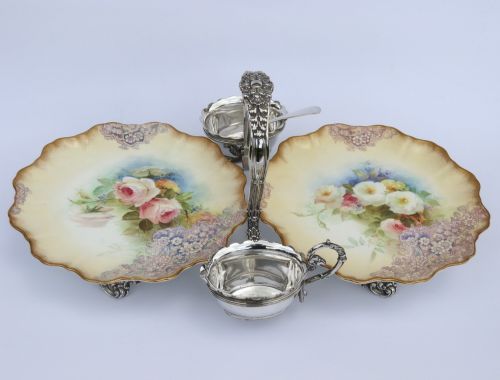


Edwardian Tableware Service
An edwardian tableware service brings dining tables of the early twentieth century to life, offering matching settings for tea, coffee, and formal meals.
Edwardian Tableware Service
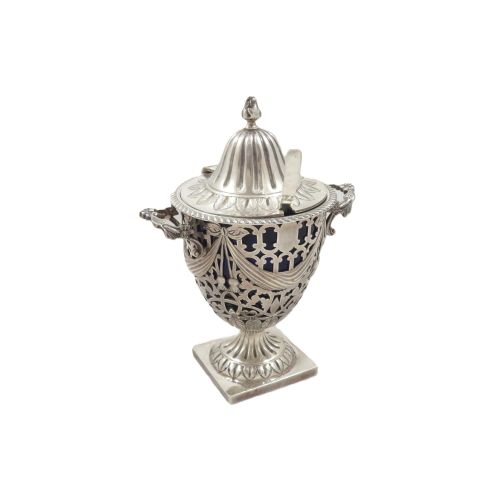
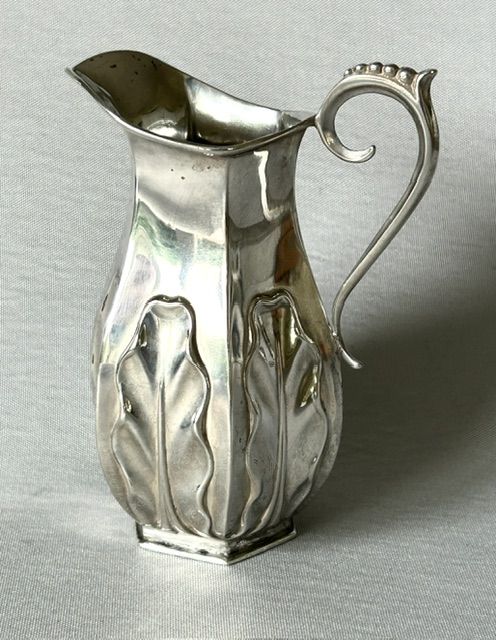
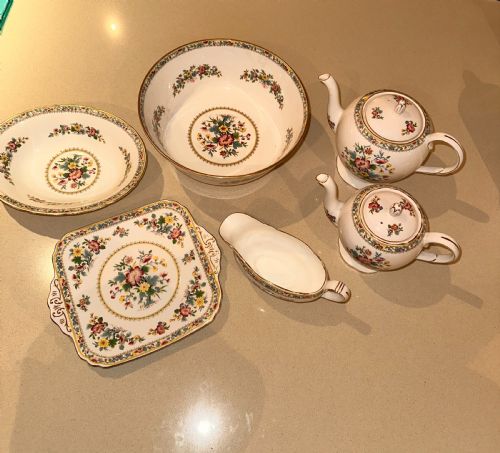
An edwardian tableware service encompasses dining and beverage sets produced during the Edwardian period alongside closely related late Victorian and George V pieces. These collections range from large hand-painted dinner services to silver plated tea sets, coffee services, and egg cruet sets.
The selections on this page lean heavily towards silver plated tea sets and ceramic dinner services, alongside specialised pieces like strawberry dessert sets and egg cruet sets. You will find complete settings alongside smaller services intended for two people.
Origins stretch across traditional English workshops and major potteries, uniting porcelain, earthenware, sterling silver, and silver plate into cohesive dining ensembles. These sets reflect the formal dining and social rituals of the early twentieth century.
Assessing quality and craftsmanship
Quality rests upon the crispness of the metal embossing and the precision of the hand-painted ceramic decoration. Superior sets display careful gilding and well-preserved plating that remains intact across intricate handles and stands.
Completeness and maker attribution elevate certain services above standard domestic wares. Pieces bearing distinct marks from notable makers like Walker and Hall or established potteries command stronger interest through documented origin and cohesive design.
Edwardian Tableware Service Retail Price Guide 2026
Typical asking prices for edwardian tableware service among the pieces listed under this phrase on Sellingantiques today, from the lower quarter to the upper quarter. They describe what is for sale here now, not the wider market.
Listings feature items spanning the Victorian era through the 1930s, uniting silver plate, sterling silver, porcelain, and earthenware.
Walker and Hall·Doulton Burslem·Coalport·Copeland Spode·Gladstone potteries
The Edwardian Tableware Service Glossary
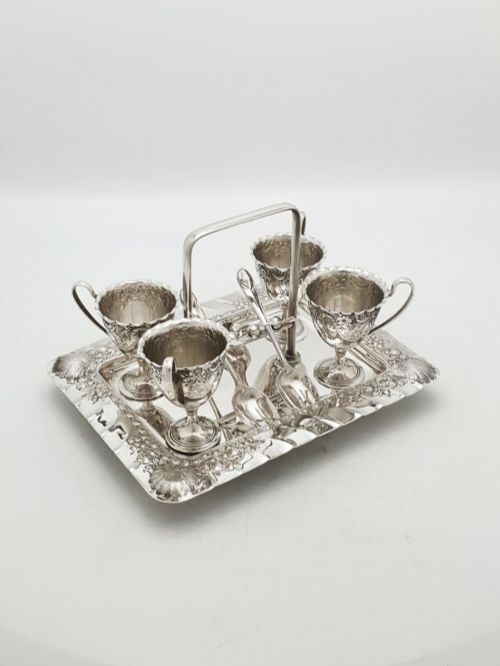
- Egg cruet set
- A specialised table frame fitted with cups for boiled eggs, spoons, and salt cellars. These silver plated sets were standard additions to formal morning dining.
- Silver plate
- A base metal coated with a thin layer of pure silver. This technique provided the visual weight of sterling silver at a more accessible cost for large tea and dinner services.
- Gilding
- The application of gold leaf or gold paint to ceramic surfaces or metal mounts. It highlights rims, handles, and painted motifs with a metallic sheen.
- Sauce boat
- A small vessel designed for gravy or sauces, typically featuring a pouring spout and an attached or separate matching stand. George V examples often display graceful neoclassical handles.
Edwardian Tableware Service: Frequently Asked Questions
What pieces are included in an edwardian tableware service?
These services comprise matched components for dining, tea, or coffee, varying from large hundred-piece dinner services down to three-piece tea sets. Specialised items like egg cruets and strawberry dessert sets also appear within this category.
Materials range from porcelain and earthenware to silver plate and sterling silver, frequently accented with hand-painted motifs and gold leaf.
How do I care for silver plated tea sets?
Silver plated items require gentle cleaning with non-abrasive cloths and specialised silver polishes to preserve the plating over the base metal. Avoid harsh detergents and abrasive scrubbers that can wear away the silver layer.
Store these pieces in dry environments to minimise tarnishing, using acid-free tissue if wrapping them for storage.
Can I use antique ceramic dinner services daily?
Ceramic and porcelain dinner services from the early twentieth century can be used, but hand-washed care is generally recommended to protect hand-painted details and gold leaf decorations. Modern dishwashers and microwaves can damage the delicate glazes and older earthenware bodies.
Hand washing in warm water with mild soap ensures the longevity of painted patterns and gilded rims.
How do I distinguish Edwardian sets from Victorian pieces?
Edwardian tableware often leans towards lighter, more refined neoclassical designs, whereas Victorian pieces frequently display heavier ornamentation and deeper embossing. However, stylistic overlap is common during transitional years around the turn of the century.
Examining hallmarks on silver components or pottery backstamps provides the most reliable guide to precise dating.