




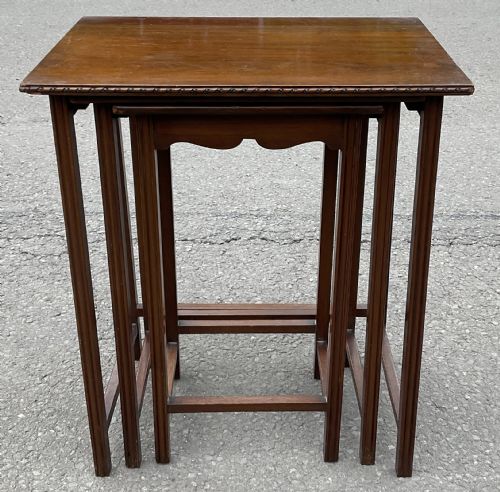


Edwardian Table Ware
Edwardian table ware comprises versatile occasional tables, kettles on stands, and boxes crafted during a period of fine domestic refinement.
Edwardian Table Ware
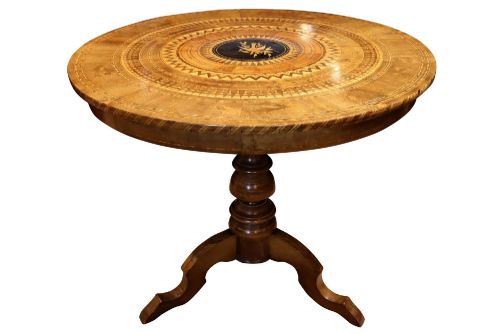
When you search for edwardian table ware, you encounter a selection of occasional tables, spirit kettles on stands, and small wooden boxes spanning the late nineteenth and early twentieth centuries. These pieces reflect the formal hospitality and domestic habits of the era, ranging from tea service accessories to movable lamp and side surfaces.
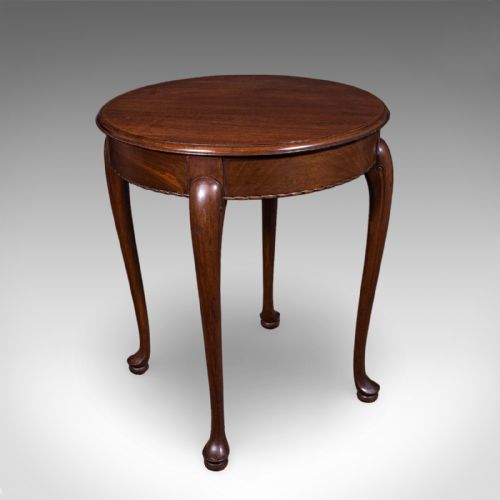
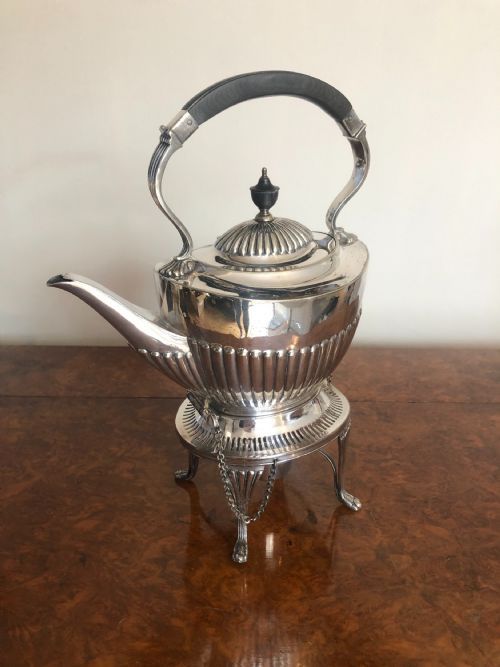
The most common forms on this page include occasional tables in walnut and mahogany, alongside silver plated spirit kettles designed for afternoon tea. Makers often drew on earlier Georgian Revival styles, producing versatile items suited for drawing rooms and sitting spaces.
Materials and construction
Makers utilised dense timbers such as walnut and mahogany, frequently applying decorative veneers like burr walnut, satinwood, and boxwood to enrich the surfaces. Specialised techniques such as Sorrento ware marquetry, parquetry, and Tunbridge Ware inlay appear across tables and boxes, creating intricate geometric or floral patterns.
Metalwork complements the woodwork in items like spirit kettles, where silver plating provides a durable and reflective finish on stands equipped with burners. Mixed wood veneers and ebony accents further demonstrate the careful assembly characteristic of the period's workshops.
Edwardian Table Ware Retail Price Guide 2026
Typical asking prices for edwardian table ware among the pieces listed under this phrase on Sellingantiques today, from the lower quarter to the upper quarter. They describe what is for sale here now, not the wider market.
Listings feature walnut, mahogany, silver plate, and mixed wood veneers across tables, kettles, and boxes.
Judging the quality
Quality rests upon the precision of the timber selection and the complexity of the surface decoration, such as the intricacy found in Tunbridge Ware or Sorrento marquetry panels. Pieces displaying well-figured burr walnut or finely preserved inlay work stand apart from simpler utilitarian examples.
Structural integrity and the retention of original components, such as burners on spirit kettles or matching wood veneers on tables, distinguish superior items. The crispness of the joinery and the harmonious grain matching across table tops reveal the maker's hand.
Waring & Gillow
The Edwardian Table Ware Glossary
- Marquetry
- A decorative technique where small pieces of veneer are assembled to form pictorial or geometric patterns on a wooden surface. This method demands high precision to ensure tight joints between contrasting timbers.
- Parquetry
- Geometric wood mosaic work used for surface decoration, typically forming repeating patterns such as cubes or stripes. It provides a durable and visually striking finish for table tops.
- Spirit Kettle
- A small water vessel mounted on a metal stand with an integrated spirit burner for heating water at the tea table. These items were essential for formal hospitality.
- Tunbridge Ware
- A distinct type of decorative woodwork characterised by tiny mosaic tiles formed from naturally coloured woods to create pictorial scenes. The technique originated in Kent and was applied to small boxes and tables.
Edwardian Table Ware: Frequently Asked Questions
What is an edwardian spirit kettle?
A spirit kettle is a small water vessel mounted on a metal stand featuring a burner beneath it. These pieces were used to boil water for tea service directly in the room.
They combine practical function with decorative metalwork, often rendered in silver plate.
How do I identify occasional tables?
Occasional tables are small, movable surfaces designed for specific tasks like holding a lamp, drinks, or books. They appear in various shapes and timbers such as walnut and mahogany.
Their compact size allowed them to be placed wherever needed in a furnished room.
What woods are common in these pieces?
Walnut and mahogany form the primary structure for many tables and boxes. Makers enhanced these foundations with decorative veneers like satinwood, boxwood, and ebony.
Inlay techniques like Tunbridge Ware also incorporated numerous native and exotic timber species for colour contrast.
How were decorative surfaces created?
Artisans employed marquetry and parquetry to lay down precise pieces of veneer onto a solid timber base. These methods produced intricate geometric patterns and pictorial scenes.
Specialist workshops utilised coloured woods to achieve detailed shading without the use of paint.