



Edwardian Sugar Sifter
An edwardian sugar sifter is a table silver piece designed for dusting sugar, sought after for formal dining displays.
Edwardian Sugar Sifter
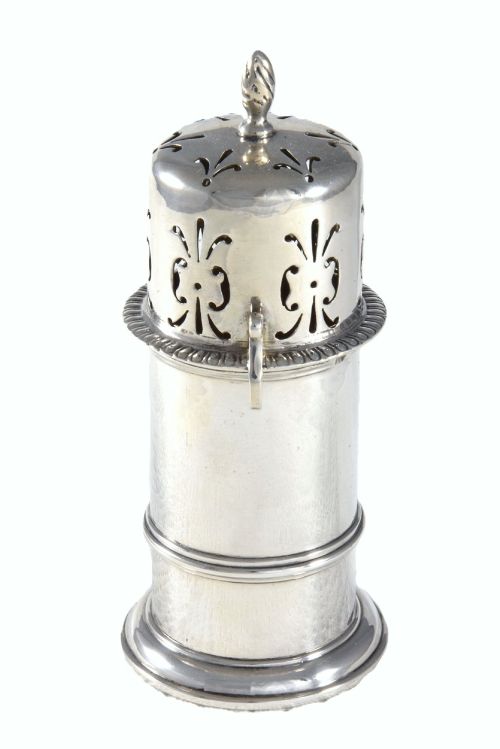
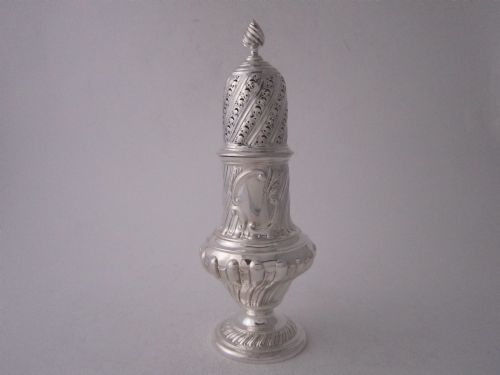
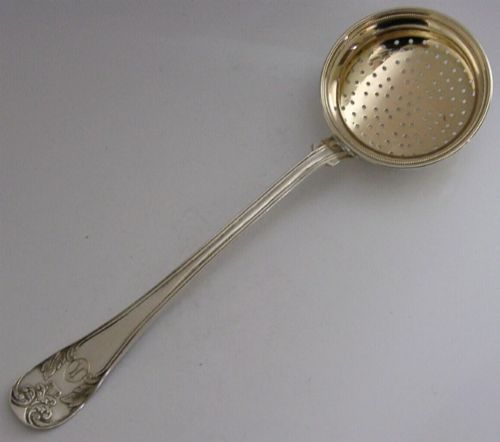
An edwardian sugar sifter sits on the dining table or sideboard, taking the form of tall casters with pierced tops or specialised spoons with large, perforated bowls. The typical examples found here date from the Edwardian era, alongside related Victorian pieces, Georgian revival items, and later 1930s designs.
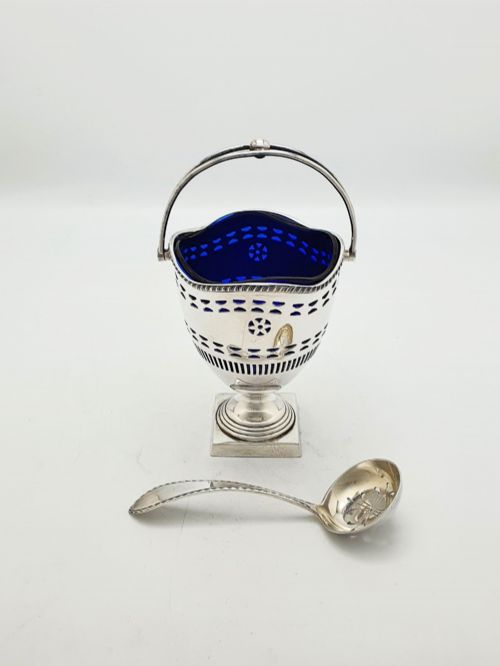
Beyond the standard tall caster shape, the inventory includes sets featuring sugar bowls with cobalt glass or green glass liners, alongside fitted presentation boxes containing jugs and tongs. These domestic silver implements reflect the formal tea and dessert customs of the period.
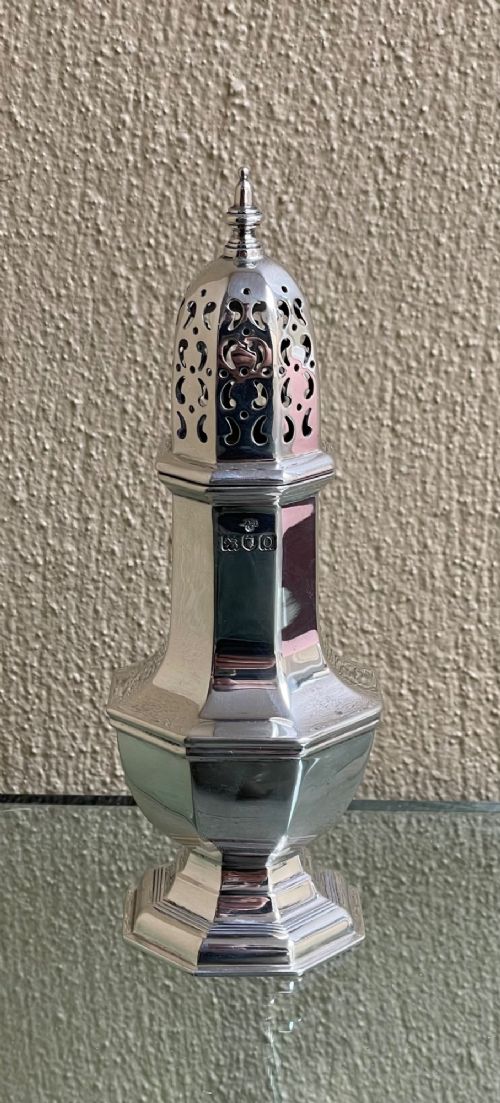
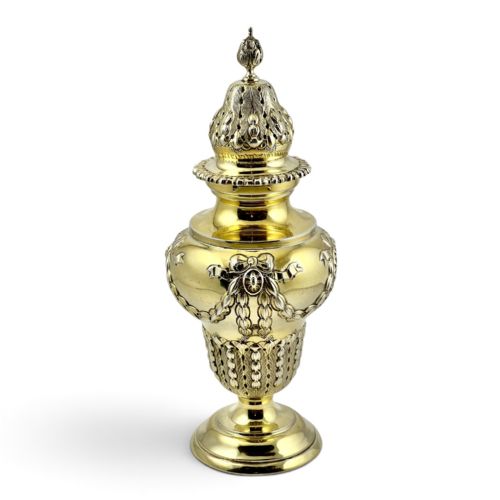
The styles span traditional Edwardian and Victorian aesthetics through to Arts & Crafts, Swedish Art Nouveau, and geometric Art Deco polygons. Makers utilise materials ranging from standard silver plate to solid sterling silver and silver gilt.
How they were made
Silversmiths constructed solid silver and silver gilt casters using traditional spinning and casting methods, piercing the top domes by hand or with mechanical presses to create the sprinkler holes. Silver plated items employed base metal cores finished with a bonded layer of silver.
Items incorporating coloured glass, such as cobalt or green glass liners, required close collaboration between metalworkers and glassblowers to ensure a snug fit inside pierced metal frames. Specialised spoons and ladles utilised hammered sheet silver, often enhanced with gold gilt highlights or applied decorative elements.
Edwardian Sugar Sifter Retail Price Guide 2026
Typical asking prices for edwardian sugar sifter among the pieces listed under this phrase on Sellingantiques today, from the lower quarter to the upper quarter. They describe what is for sale here now, not the wider market.
Listings incorporate items spanning from the late Victorian period through the Edwardian era into the Art Deco designs of the 1930s.
What varies in quality
The heaviness of the silver gauge and the crispness of the pierced pattern on the dome dictate the primary tier of quality. Superior pieces maintain substantial weight in the hand and exhibit clean, sharp apertures that permit an even distribution of sugar.
Detailing such as internal silver gilding, original fitted presentation boxes, and intact coloured glass liners elevate individual pieces. Items bearing clear hallmarks from established silversmiths demonstrate greater craftsmanship than unmarked silver plate.
The Barker Brothers·Roberts & Belk·Wedgwood
The Edwardian Sugar Sifter Glossary
- Caster
- A tall container with a pierced lid used for sprinkling sugar or spices onto food. It forms the most common upright shape for this search.
- Silver Gilt
- Silver that has been coated with a thin layer of gold on its surface. This technique adds warmth and protects the underlying metal from tarnishing.
- Cobalt Glass
- A deep blue glass produced by adding cobalt oxide to the molten batch. It frequently appears as a contrasting liner inside pierced silver sugar bowls.
- Hallmark
- An official stamp applied to precious metals indicating the standard of purity, the assay office, and the year of manufacture. These marks provide the primary means of dating domestic silver.
Edwardian Sugar Sifter: Frequently Asked Questions
How do I clean antique silver sugar items?
Silver pieces require gentle washing in warm, soapy water using a soft cloth to preserve the finish and any applied gilding. Avoid harsh chemical dips that strip the natural patina accumulated over the decades.
Items with glass liners require the glass to be removed and washed separately to prevent moisture from trapping underneath the metal mounts.
Were these pieces used every day?
These silver items were primarily manufactured for middle and upper-class households to be used during formal tea, dessert, and dining occasions. They formed part of broader dining table services alongside matching cream jugs and sugar bowls.
Many survived in pristine condition because they spent most of their existence stored in fitted presentation boxes or displayed in cabinets between formal gatherings.
How do I identify an Edwardian piece?
Edwardian silver is identified primarily through official hallmarks stamped on the metal, which record the specific assay office year letter for the reign of King Edward VII between 1901 and 1910. Stylistic cues such as neoclassical revival motifs and lighter, graceful forms also help distinguish them from heavier Victorian designs.
Items produced immediately before or after this decade share similar manufacturing techniques, making the hallmark the definitive guide to the exact period.