


Edwardian Style Pearls
Edwardian style pearls bring together delicate gold work and luminous gems to create pendants, necklaces and rings with lasting appeal.
Edwardian Style Pearls
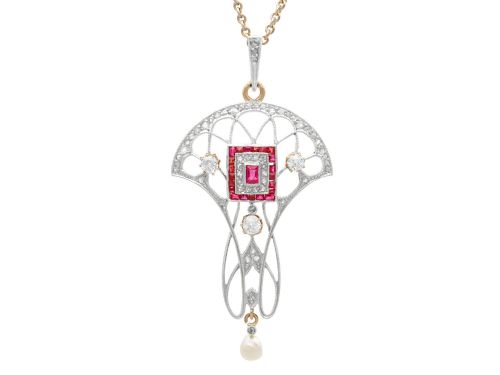
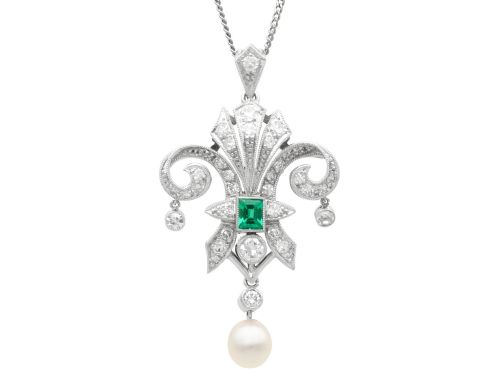
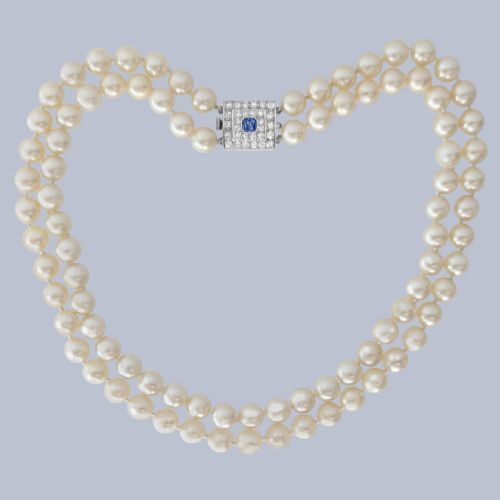
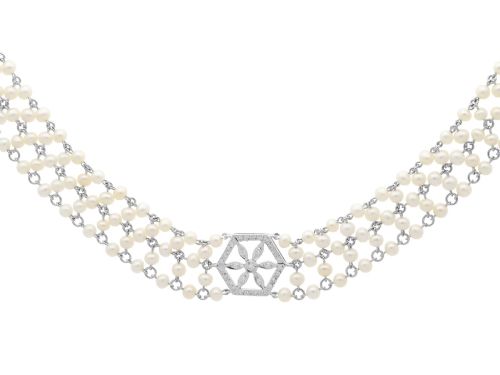
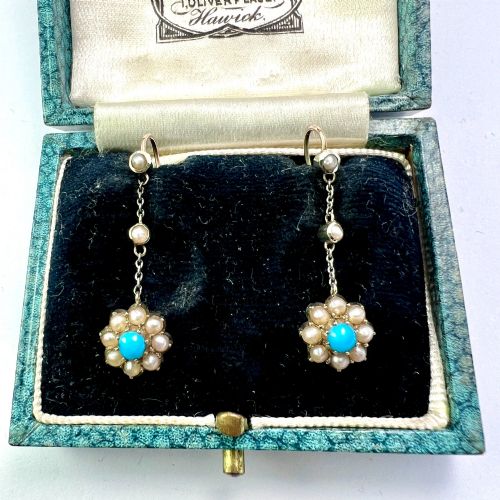
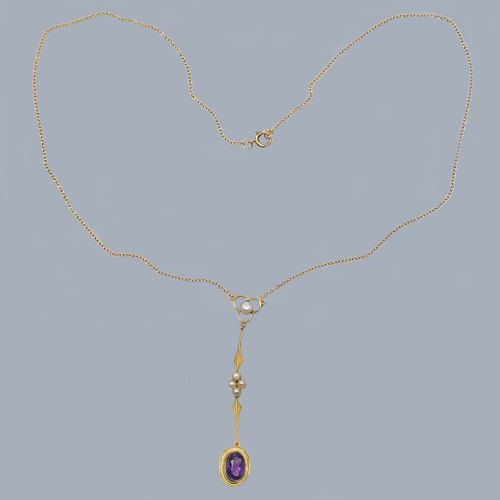
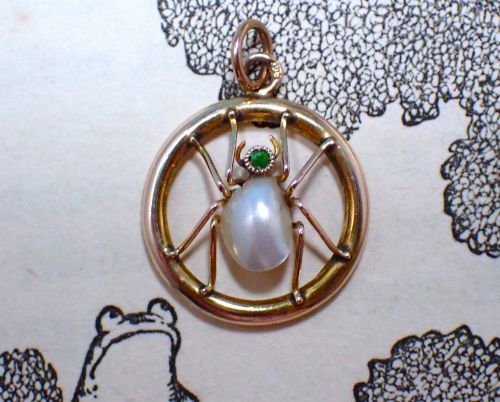
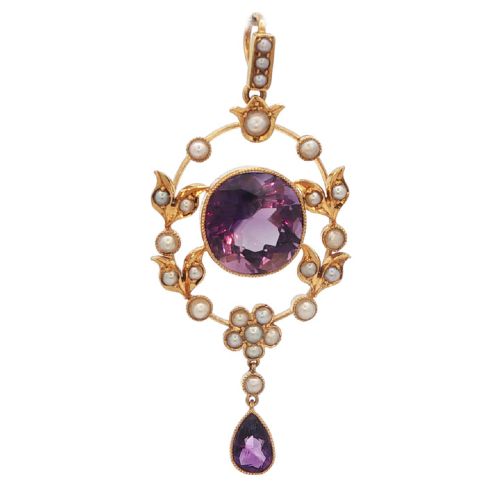
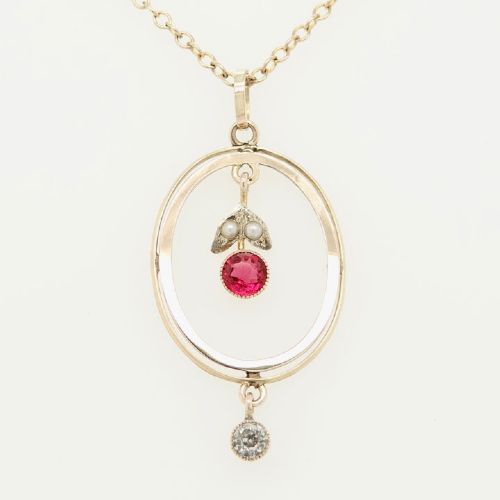
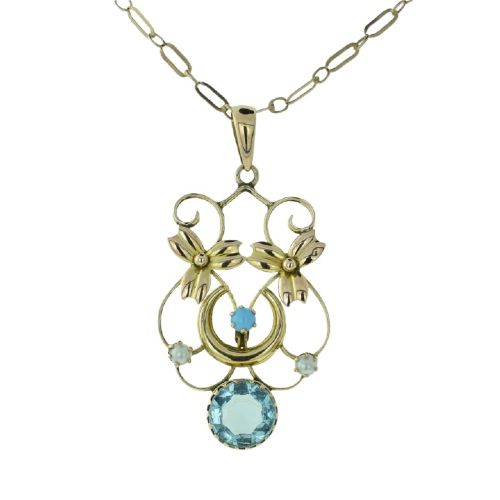
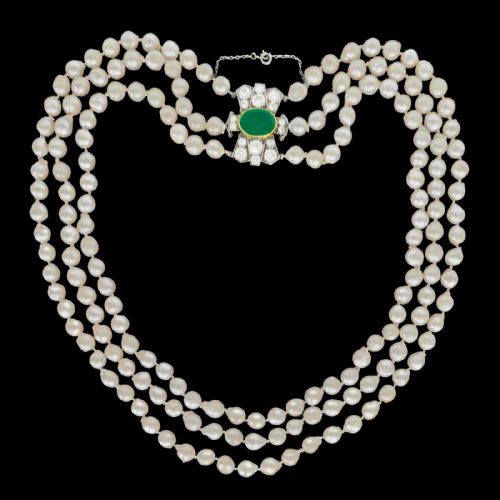
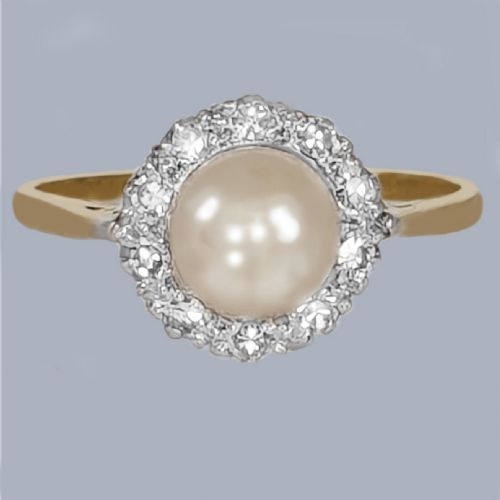
Edwardian style pearls encompass delicate pendants, necklaces, earrings and rings that draw on early twentieth-century design. When searching for edwardian style pearls, buyers encounter pieces incorporating seed pearls alongside gemstones like turquoise, amethyst and diamond.
The pieces on this page span several periods, including Victorian, Edwardian, Art Deco and mid-century items, reflecting various interpretations of the aesthetic. Pendants and necklaces dominate the selection, often featuring intricate metalwork framing the central pearl.
How they were made
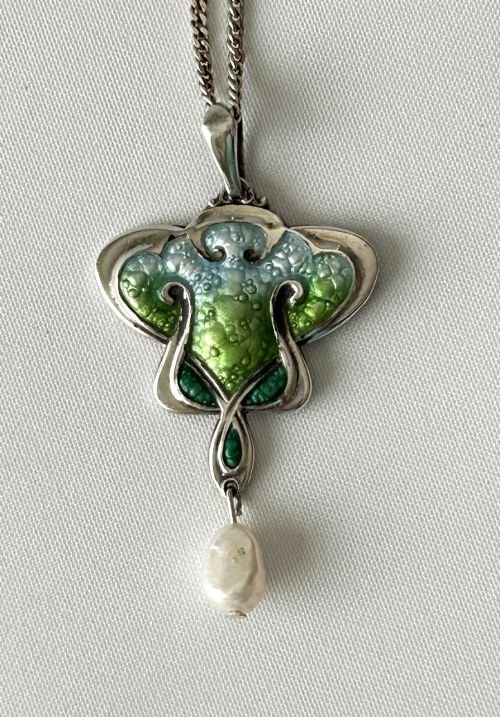
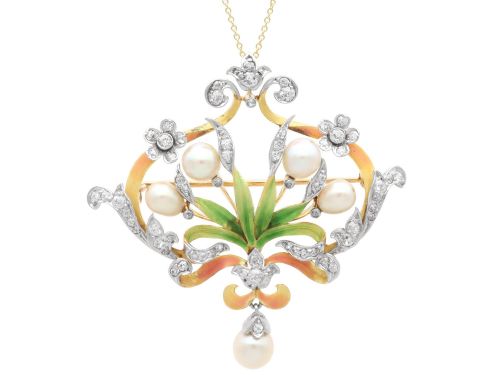
Goldsmiths utilised metals such as 9ct gold, 15ct gold, silver and platinum to form the structure of pendants and rings. Enamel work frequently adds colour to silver and gold mounts, while diamonds and coloured gemstones provide contrast.
Jewellers set seed pearls and natural saltwater pearls into intricate garland and floral motifs typical of the period. Delicate chains, clasps and settings demonstrate meticulous hand assembly techniques characteristic of early workshops.
Edwardian Style Pearls Retail Price Guide 2026
Typical asking prices for edwardian style pearls among the pieces listed under this phrase on Sellingantiques today, from the lower quarter to the upper quarter. They describe what is for sale here now, not the wider market.
What varies in quality
The calibre of edwardian style pearls rests on the lustre and origin of the pearls themselves, distinguishing natural saltwater specimens from cultured or faux alternatives. Metal purity also differentiates the pieces, with higher carat gold and platinum settings commanding greater regard.
Design complexity and the presence of maker attribution elevate individual pieces above standard production items. Finer examples display superior gemstone matching, such as calibrated rubies or emeralds, alongside intricate enamel detailing.
Liberty and Co·Theodor Fahrner·Hamilton and Co
The Edwardian Style Pearls Glossary
- Seed pearl
- A very small natural pearl, often unpierced or threaded, commonly used in clusters and delicate floral motifs during the Edwardian era.
- Garland style
- A design movement inspired by eighteenth-century French motifs, featuring flowing ribbons, swags and floral wreaths rendered in platinum and gold.
- Blister pearl
- A pearl formed when a pearl-producing irritant adheres to the inner shell of an oyster, creating a dome-shaped pearl used frequently in Arts and Crafts jewellery.
- Lavalier
- A pendant necklace featuring a central drop stone or pearl suspended from a chain, popular throughout the Edwardian and Art Nouveau periods.
- Old rose cut
- A vintage diamond cutting style with a flat base and a faceted dome, commonly seen in late Victorian and Edwardian gemstone jewellery.
Edwardian Style Pearls: Frequently Asked Questions
How do I care for antique pearl jewellery?
Antique pearls require gentle handling because organic gems are softer and more porous than mined stones. Avoid exposing them to perfumes, cosmetics, harsh chemicals and ultrasonic cleaning methods.
Store pearl necklaces flat to prevent stretching the silk thread, and wipe them gently with a soft cloth after wearing. Professional restringing ensures that older threads remain secure and strong.
How can I tell genuine antique pearls from modern ones?
Genuine antique pearls often display slight irregularities in shape, lustre and surface texture compared to uniform modern cultured pearls. Natural saltwater pearls react under specialist gemological testing, showing distinct internal structures.
Examining the metalwork and setting techniques can also provide clues to the age of the piece. Hallmarks, metal purity such as 15ct gold, and mounting styles help confirm the period of manufacture.
What is the difference between seed pearls and cultured pearls?
Seed pearls are exceptionally tiny natural pearls harvested historically in large quantities for delicate Victorian and Edwardian jewellery. They are rarely perfectly round and were often arranged in clusters or threaded onto horsehair.
Cultured pearls are grown with human intervention by placing a nucleus inside an oyster, resulting in larger, more uniform spheres. Older pieces almost exclusively feature natural seed pearls or saltwater pearls rather than modern cultured varieties.