

Edwardian Style Open Shelves
Edwardian style open shelves provide practical display and storage, bringing period character and warm timber tones into a room.
Edwardian Style Open Shelves
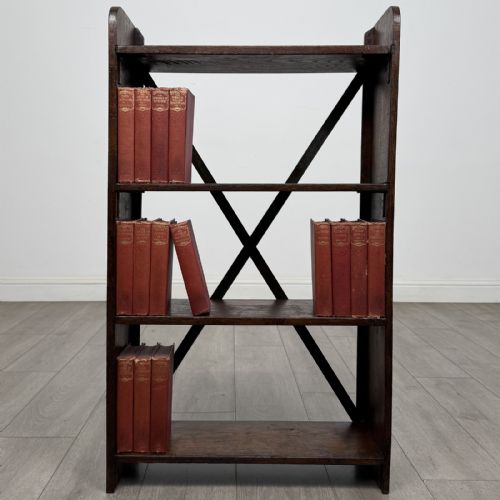
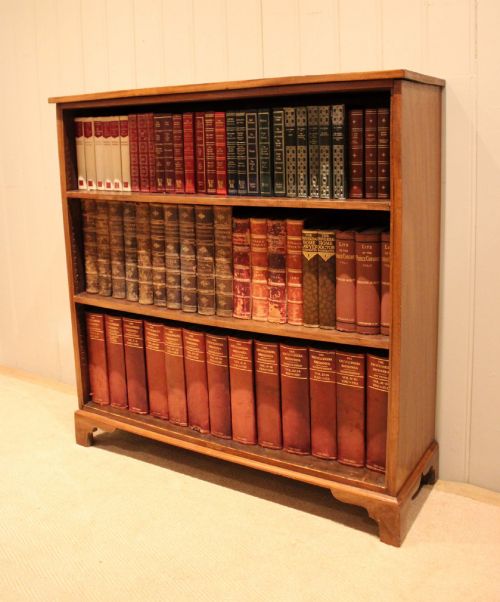
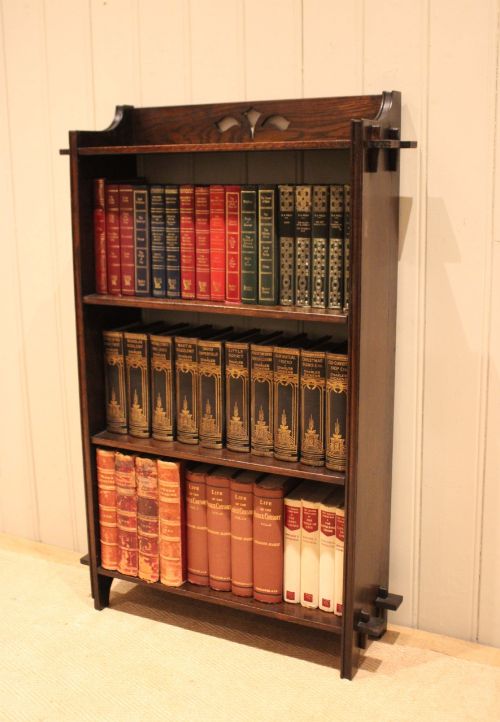
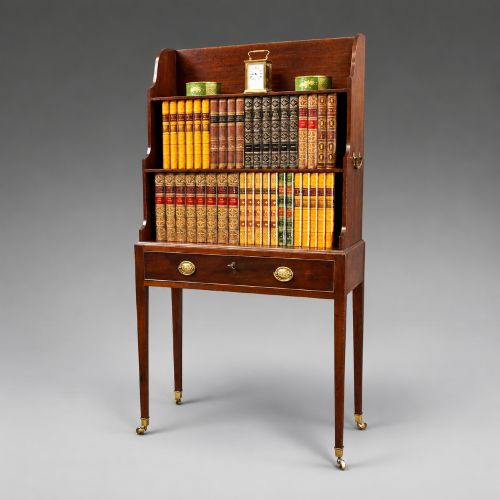
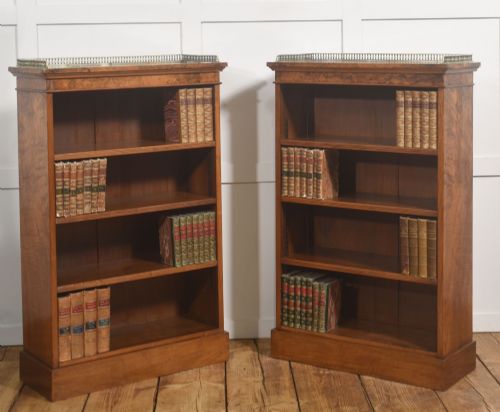
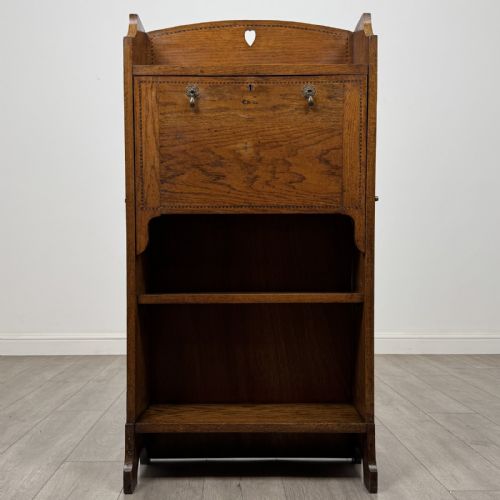
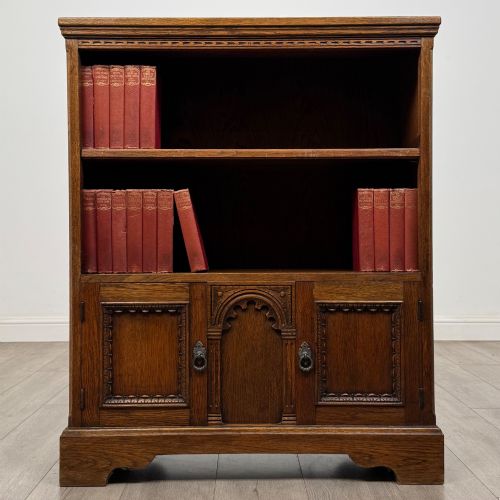
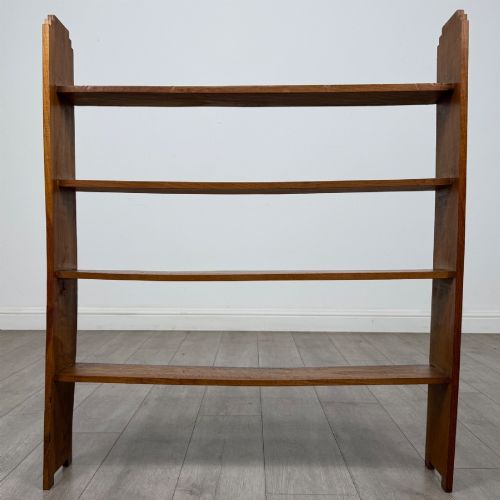
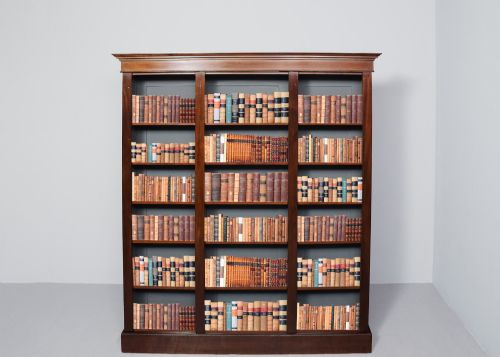
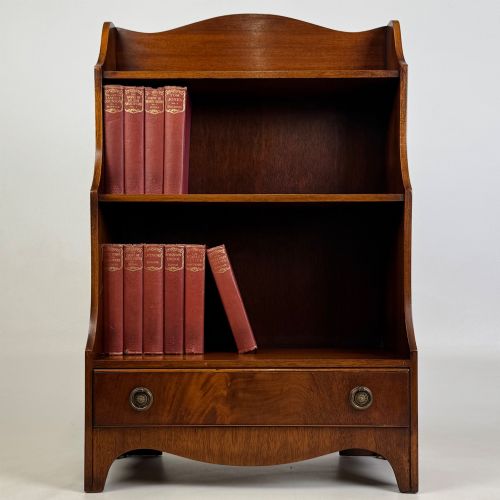
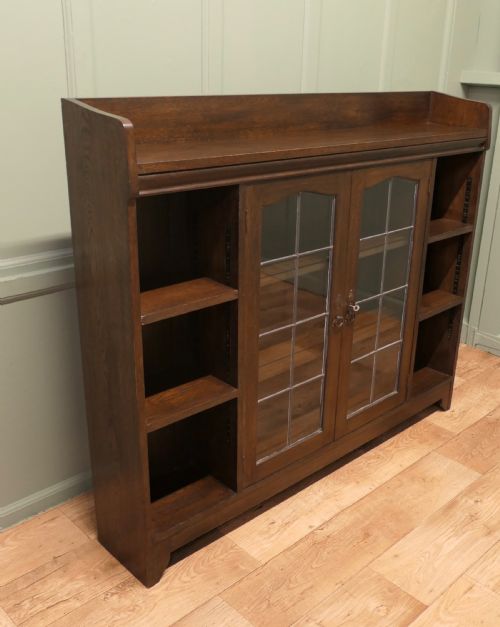
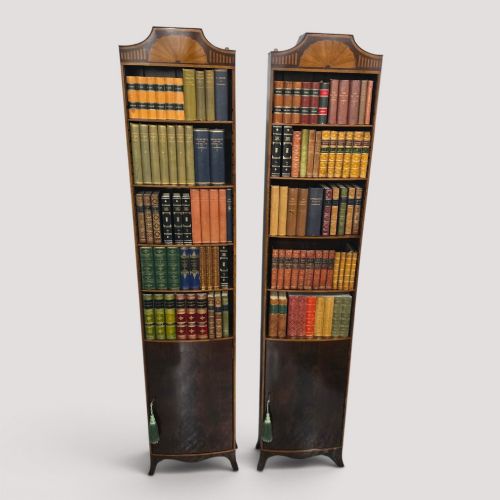
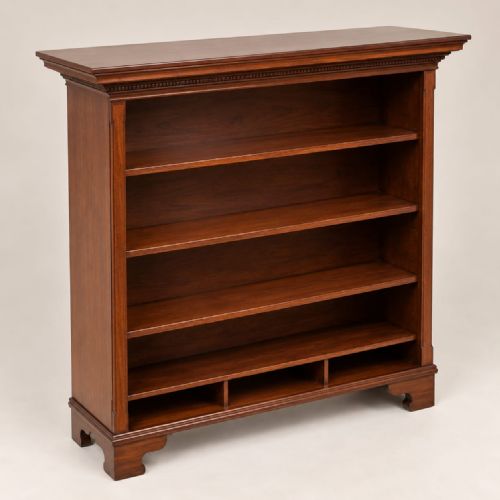
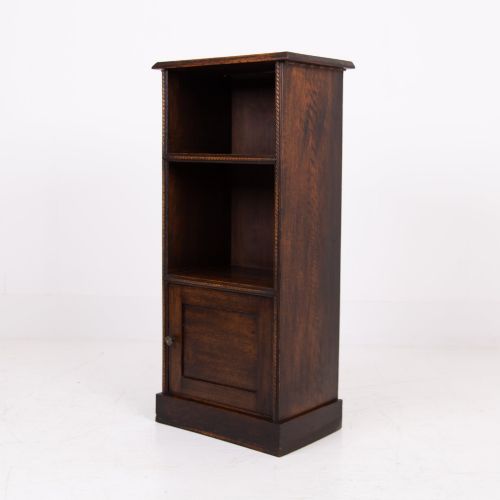
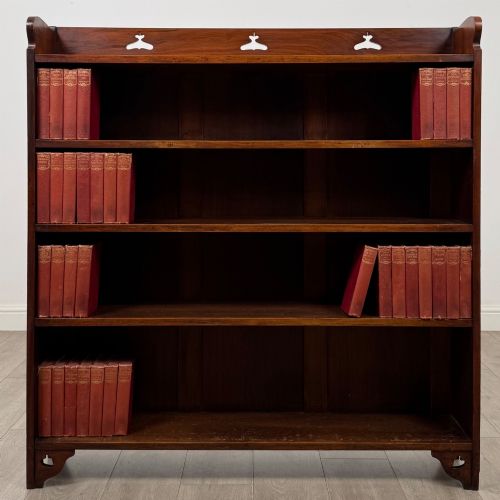
Edwardian style open shelves encompass bookcases, open bookcases, bookstands, and whatnots designed to house libraries and display objects. These pieces appear in formats ranging from compact small bookcases to large breakfront examples and waterfall bookcases.
The material record spans the Victorian, Edwardian, and later periods, stretching from the late nineteenth century through to the nineteen thirties. Makers adopted revivalist aesthetics including Sheraton Revival, Georgian Revival, and Aesthetic Movement alongside Arts and Crafts ideals.
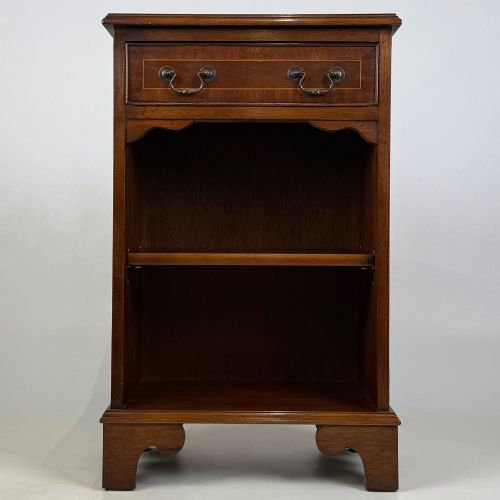
Oak and mahogany form the backbone of the selection, accompanied by walnut, satinwood, and occasional brass fittings. Buyers encounter solid timbers alongside finely figuredveneers and inlaid decoration.
Materials and Construction
Cabinet makers utilised dense hardwoods such as oak, mahogany, and walnut, frequently selecting burr veneers for visual depth on prominent surfaces. Satinwood and boxwood provided contrasting stringing and inlaid friezes.
Many examples incorporate adjustable shelves supported by integrated shelving mechanisms, allowing variable heights for different volumes. Brass castors appear on floor-standing cabinets to ease movement across rooms.
Edwardian Style Open Shelves Retail Price Guide 2026
Typical asking prices for edwardian style open shelves among the pieces listed under this phrase on Sellingantiques today, from the lower quarter to the upper quarter. They describe what is for sale here now, not the wider market.
Some items come equipped with brass castors, built so a heavy library could follow the sunlight across the carpet.
Craftsmanship and Proportion
Quality rests in the selection of timber grain, the precision of inlay work, and the integration of functional elements such as fret-cut detailing or adjustable shelving. Finer workshops applied considered proportions and structural restraint that elevated standard utility furniture into distinguished decorative pieces.
Attributions to notable makers or retail houses indicate higher standards of cabinet making and design pedigree. The presence of secondary timbers and the complexity of architectural cornices or glazed and panelled additions further distinguish the tier of production.
Heals·Wylie Lochhead·Maple and Co·Waring and Gillows·Liberty and Co
The Edwardian Style Open Shelves Glossary
- Waterfall bookcase
- A set of open shelves stepped back progressively from bottom to top. This form creates a descending profile suited to smaller rooms.
- Whatnot
- A multi-tiered piece of freestanding furniture designed for displaying ornaments or books. These typically feature slender upright supports and open sides.
- Aesthetic Movement
- A late nineteenth century design style prioritising visual beauty over narrative function. Pieces often incorporate ebonised details, inlaid motifs, or lighter woods.
- Sheraton Revival
- A late nineteenth and early twentieth century style drawing on eighteenth century neoclassical designs. It is characterised by symmetrical geometry and delicate satinwood inlay.
- Fret-cut
- A woodworking technique involving pierced patterns cut through thin timber using a scroll saw. This adds decorative openwork to friezes and side panels.
Edwardian Style Open Shelves: Frequently Asked Questions
How do I style open shelves?
Arrange books vertically and horizontally alongside decorative objects to break up solid rows of text blocks. Leave space around items to maintain the visual lightness inherent in these period designs.
Position larger, heavier volumes on lower shelves for physical stability while placing smaller decorative pieces higher up.
Are the shelves adjustable?
Many examples feature adjustable shelves that move on traditional wooden supports or mechanical tracks. This adaptability accommodates varying book heights.
Fixed shelves do appear in certain older or simpler models, so checking individual descriptions is advisable if shelf spacing matters.
Which wood types are common?
Oak and mahogany dominate the selection, offering durability and traditional grain patterns. Walnut and satinwood appear frequently in finer decorative pieces with inlaid details.
Individual pieces often incorporate secondary timbers for internal partitions and backs while retaining primary hardwoods for external surfaces.
What defines Arts and Crafts pieces?
Arts and Crafts shelving prioritises honest construction and visible material qualities over applied surface ornament. Simple lines and functional adjustments define the aesthetic.
These items often utilise solid oak with subtle structural joinery rather than elaborate veneers or classical revival motifs.