

Edwardian Sterling Silver Photo Frame
These pieces turn everyday portraiture into domestic ornament, bringing polished metal and shaped timber to desks and mantelpieces.
Edwardian Sterling Silver Photo Frame
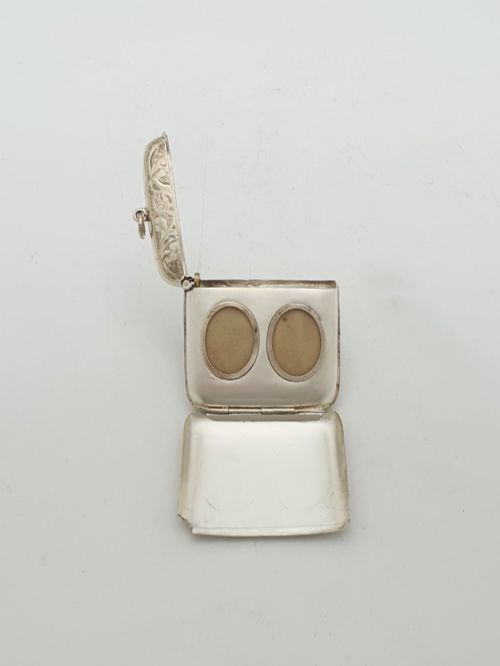
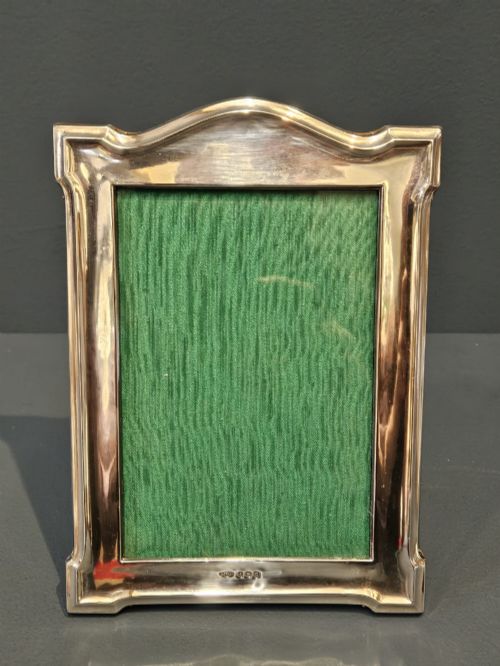
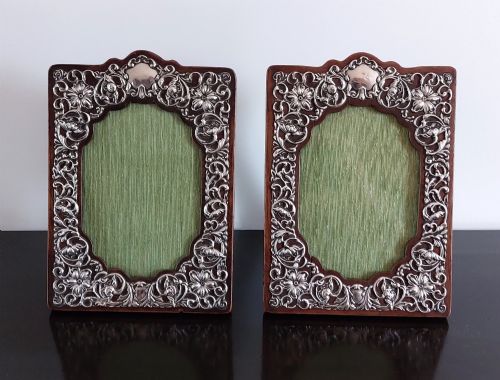
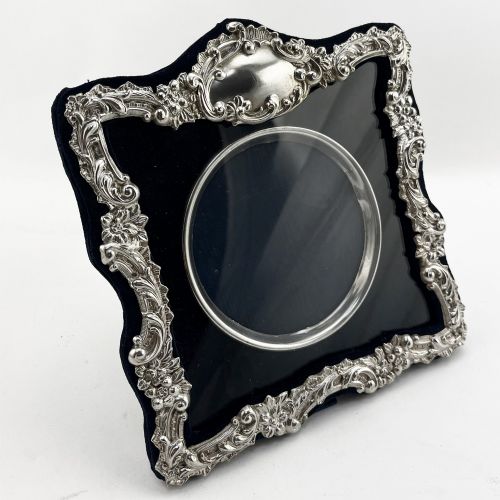
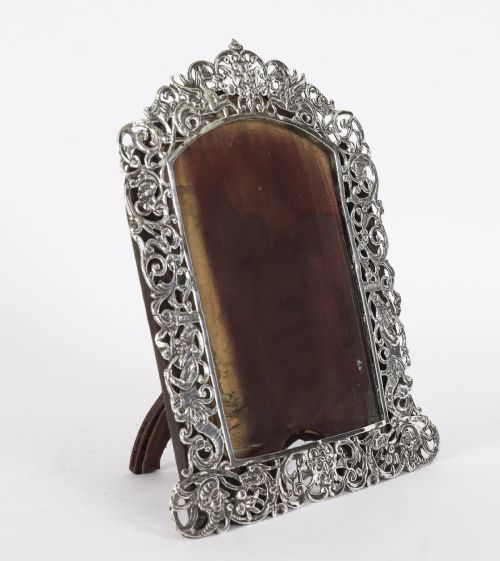
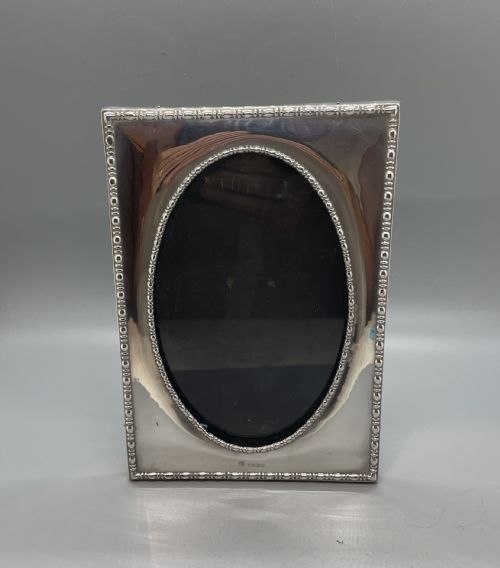
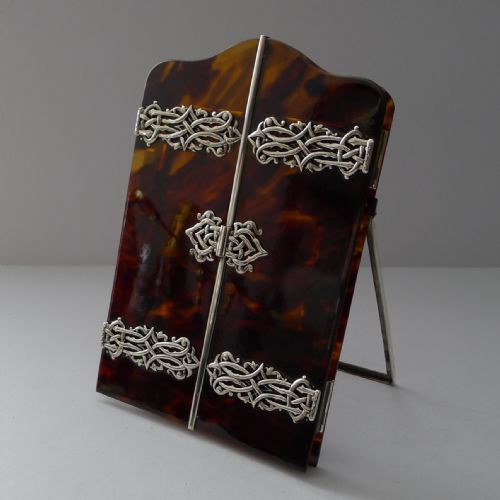
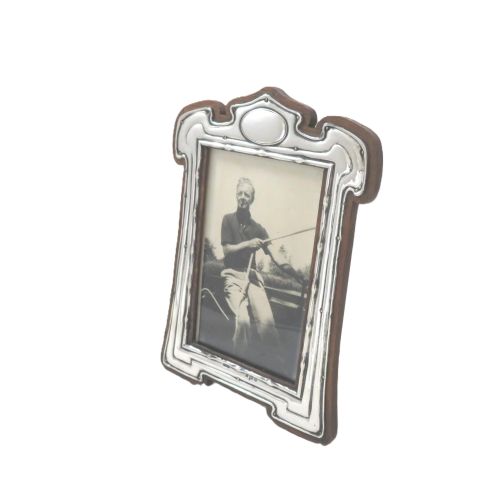
An edwardian sterling silver photo frame provides a decorative housing for family portraits and keepsakes, combining precious metal front plates with wooden backs and easel supports. The pieces found here span the late nineteenth century through to the early decades of the twentieth century, taking in Victorian, Edwardian, and George V periods.
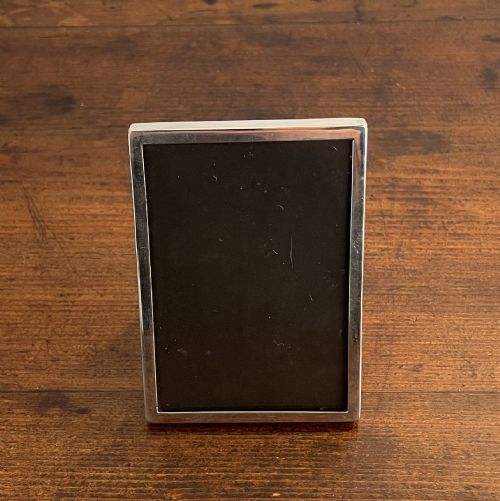
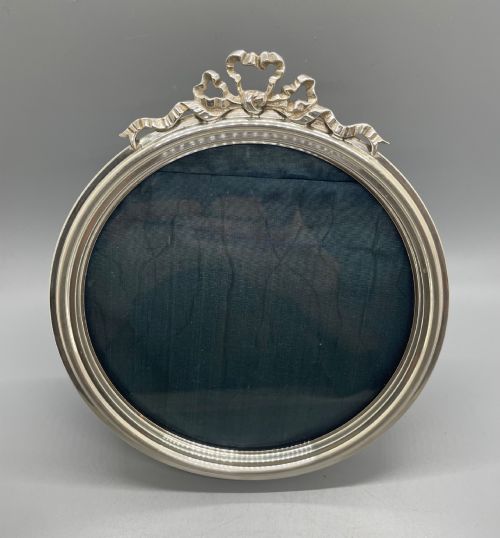
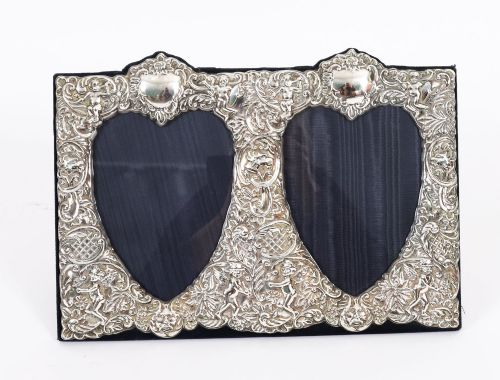
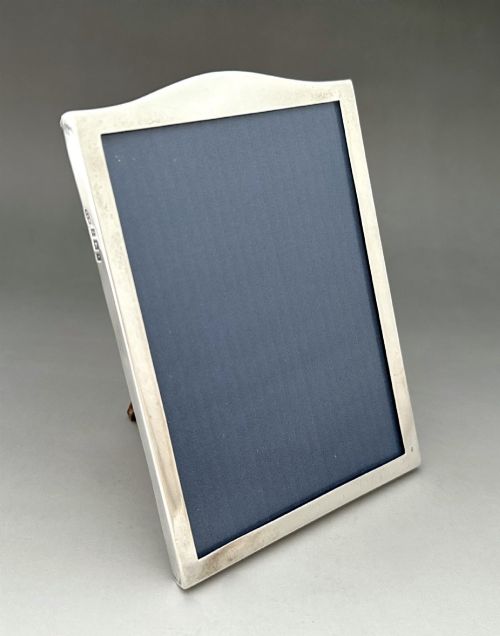
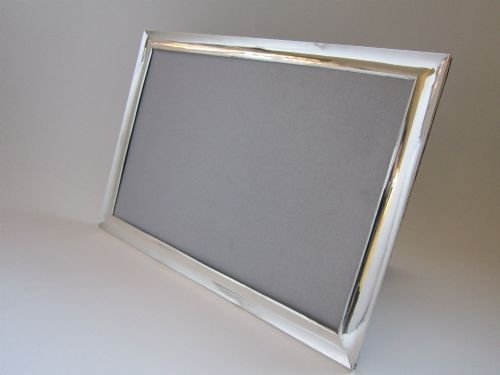
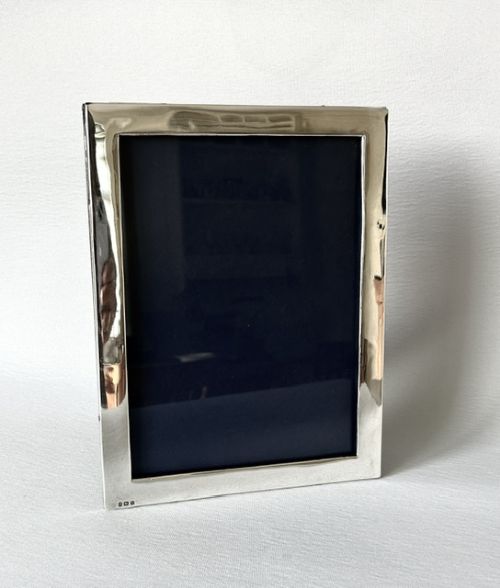
Most examples originate from provincial assay offices like Birmingham and Sheffield, alongside larger works from London makers. Shapes vary from simple rectangular portrait formats to circular, oval, and heart configurations, often designed to stand vertically or horizontally.
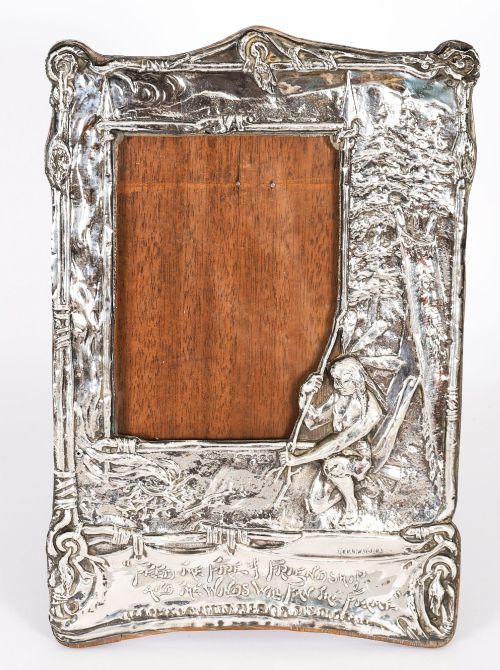
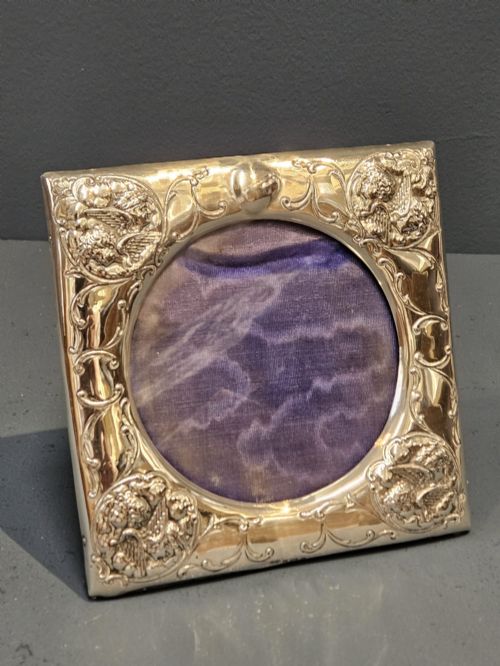
The style ranges from plain linear borders to decorative embossing and distinct artistic movements. Art Nouveau motifs appear frequently alongside Neoclassical Revival swags, Arts and Crafts enamel work, and Victorian Rococo revivals.
Materials and construction
Silversmiths constructed the front facades from sterling silver sheet, hammering, pressing, or casting the metal before applying embossed, pierced, or engraved ornamentation. Frames often feature vegetal flourishes, winged cherubs, or figurative scenes integrated directly into the silver border.
The delicate silver front is mounted onto a wooden carcass, typically oak or mahogany, which provides structural rigidity. A hinged wooden strut at the rear allows the piece to prop upright on a surface.
Backs and internal liners are finished with protective materials such as velvet, leather, or fabric. Glazing protects the photograph within, held securely behind the silver bezel.
Edwardian Sterling Silver Photo Frame Retail Price Guide 2026
Typical asking prices for edwardian sterling silver photo frame among the pieces listed under this phrase on Sellingantiques today, from the lower quarter to the upper quarter. They describe what is for sale here now, not the wider market.
Design movements represented include Art Nouveau, Arts and Crafts, Neoclassical Revival, and Victorian Rococo Revival.
Evaluating craftsmanship
The weight and thickness of the sterling silver sheet dictate the primary division in quality. Thicker metal resists denting and maintains crisp relief in embossed motifs, whereas thinner pressings lose definition in high-wear areas.
The execution of decorative details separates standard production from finer output. Hand-chased embossing, crisp hallmark stamps, and integrated enamel work demonstrate superior workshop practices compared to flat machine stamping.
The integrity of the structural backing materials matters significantly. Original wooden supports, intact velvet or leather linings, and well-fitted easel mechanisms preserve the overall architectural coherence of the piece.
Rosenthal Jacob And Co·William Comyns·William Hutton And Sons·Mappin Bros·W I Broadway And Co
The Edwardian Sterling Silver Photo Frame Glossary
- Sterling silver
- An alloy comprising ninety-two point five percent silver by mass and seven point five percent other metals, usually copper, chosen for durability.
- Assay office
- A statutory body that tests the purity of precious metals and stamps items with official hallmarks to verify standard.
- Easel back
- A hinged wooden or metal strut attached to the rear of the frame designed to support the object upright on a flat surface.
- Repoussé
- A metalworking technique where the artisan hammers the silver from the reverse side to form a raised design on the front.
- Cartouche
- An ornamental frame or tablet motif, often left blank for engraved initials or monograms.
Edwardian Sterling Silver Photo Frame: Frequently Asked Questions
How do I date my silver photo frame?
Dating relies on the hallmarks stamped into the silver border, which include assay office symbols, date letters, and the lion passant denoting sterling standard.
Stylistic indicators such as Art Nouveau whiplash lines or geometric George V profiles further help narrow the decade of manufacture.
What wood is used behind the silver?
Oak and mahogany form the primary structural backing materials found beneath the fabric or leather coverings.
These timbers provide the necessary rigidity to support the heavy silver front and the hinged easel strut.
Can these frames sit horizontally and vertically?
Many rectangular examples feature double-hinged struts or universal fittings allowing placement in either orientation.
Oval, round, and heart-shaped variants are generally fixed to display in one specific direction.
How should I clean tarnished silver frames?
Gentle application of a specialised silver cloth or mild liquid polish removes oxidation without wearing away thin embossed details.
Harsh abrasive pastes and excessive rubbing near hallmarks or soft wooden joints must be avoided.