




Edwardian Sterling Serviette Ring
These Edwardian sterling serviette rings are small silver table pieces designed to mark individual napkins, offering functional elegance for the dining table.
Edwardian Sterling Serviette Ring
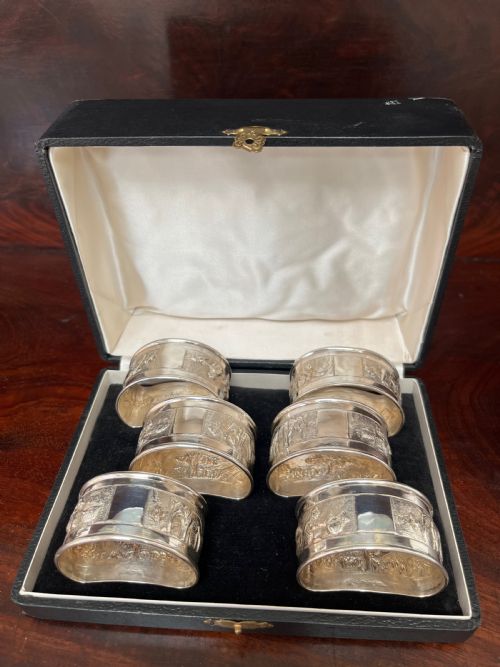
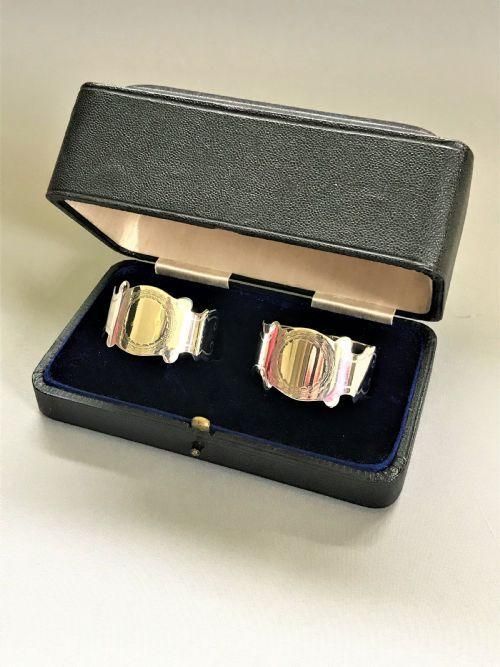
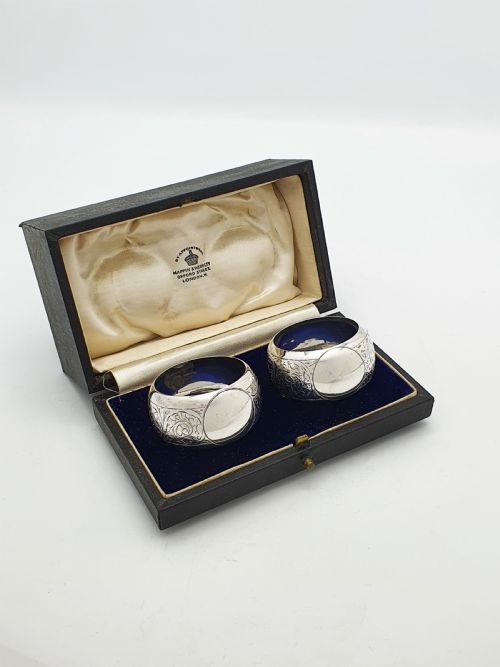
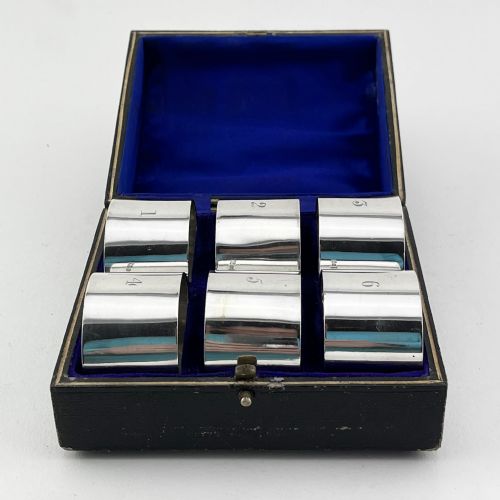
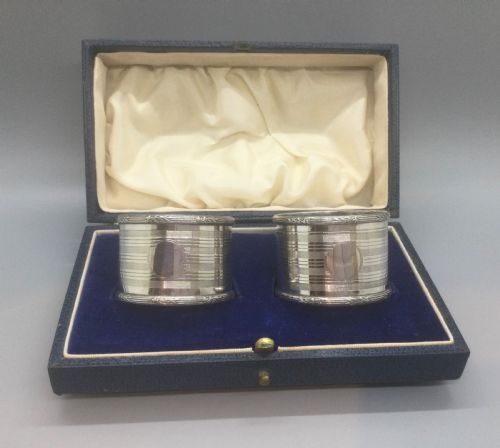
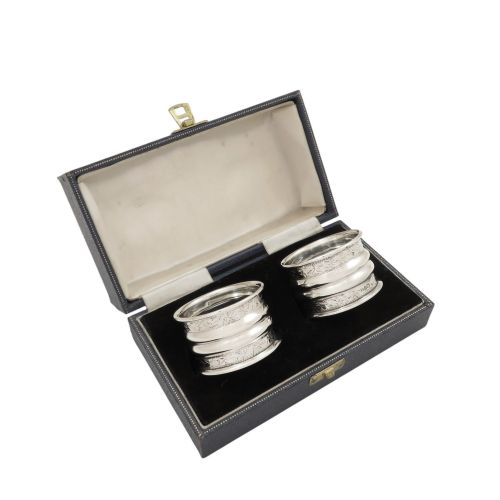
An Edwardian sterling serviette ring is a table accessory designed to hold individual napkins between meals, most commonly appearing from the Edwardian and George V periods. These pieces frequently survive as pairs or cased sets alongside single examples, reflecting original domestic dining customs.
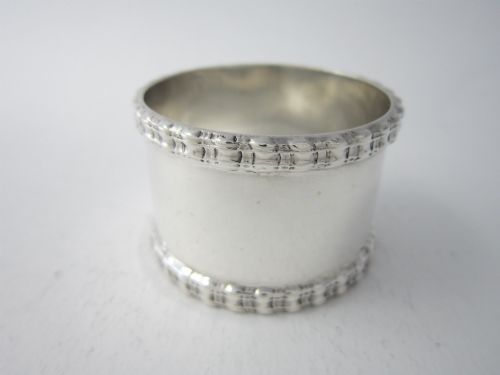
The selections available here range from plain Edwardian silver forms to Arts and Crafts variants and pieces decorated with enamel. Collectors often encounter them housed in original fitted boxes lined with silk or velvet.
Makers from the early twentieth century shaped these napkin rings to serve a practical function while displaying the hallmarks of contemporary silversmithing. They remain compact examples of domestic silver that transition easily from display cabinets to everyday use.
How They Were Made
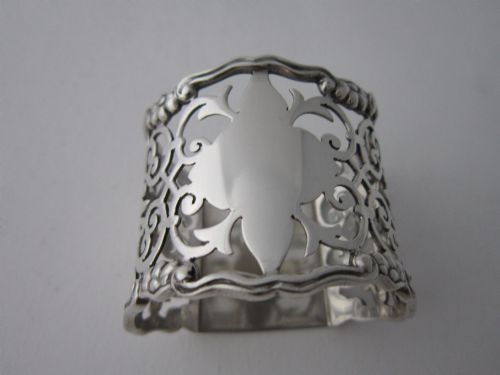
Silversmiths formed these napkin rings primarily from sterling silver, shaping sheet metal into cylindrical bands and securing the seams. Workshops frequently applied applied borders, engraved monograms, or chased surface patterns to enrich the plain metal bodies.
Enamel and gemstones appear on specific Arts and Crafts examples, adding colour and decorative contrast to the sterling silver structure. Fitted presentation cases utilise materials such as leatherette, leather, silk, and velvet to house the silver sets securely.
Materials appearing across these domestic silver listings include enamel, gemstones, leatherette, and velvet.
What Varies in Quality
The standard of an Edwardian sterling serviette ring rests upon the weight of the silver and the crispness of the original hallmarks stamped into the metal. Substantial gauge silver provides physical durability and maintains structural integrity against daily handling.
Design complexity distinguishes basic utilitarian items from works associated with notable makers or specific artistic movements like Arts and Crafts. Pieces retaining original fitted boxes lined with silk or velvet often demonstrate greater overall preservation.
C.T. Burrows & Sons·Liberty & Co·Mappin & Webb·Guild of Handicraft
The Edwardian Sterling Serviette Ring Glossary
- Sterling silver
- A silver alloy containing 92.5 percent pure silver and 7.5 percent other metals, typically copper, chosen for strength in tableware.
- Hallmark
- An official stamp applied to precious metals indicating the standard of purity, the assay office, and the date letter for the year of manufacture.
- Arts and Crafts
- A design movement emphasising handcraftsmanship, simple forms, and traditional guild methods rather than mass industrial production.
- Chased
- A decorative technique where a silversmith pushes metal from the front using hammers and punches to raise a low-relief pattern.
- Silk lined box
- A fitted presentation case featuring an interior lining of silk designed to protect silver items during storage and transport.
Edwardian Sterling Serviette Ring: Frequently Asked Questions
What is a serviette ring?
A serviette ring is a small band used at the dining table to identify and hold an individual cloth napkin between meals.
These personal table accessories became popular in the Victorian period and remained household fixtures through the Edwardian era and George V period.
How do I date these silver rings?
Dating relies primarily on the legible hallmarks stamped into the sterling silver, which include specific symbols and date letters for assay offices.
Stylistic details such as Arts and Crafts influences or plain Edwardian borders also help place the piece within its correct decade of production.
Were these originally sold in sets?
Many napkin rings were produced and retailed as matched pairs or larger cased sets of six for family dining.
Fitted presentation boxes lined with silk or velvet frequently accompanied these multi-piece sets from the original retail jewellers.
How do I clean antique silver rings?
Maintenance involves gentle cleaning with a soft cloth and specialised silver polish to remove tarnish without abrading the metal surface.
Avoiding harsh chemical dips preserves any subtle engraving or applied enamel details present on the sterling silver body.