



Edwardian Sterling Mirror
An Edwardian sterling mirror brings dressing table elegance into focus, offering the reflective quality and silver weight that collectors prize.
Edwardian Sterling Mirror
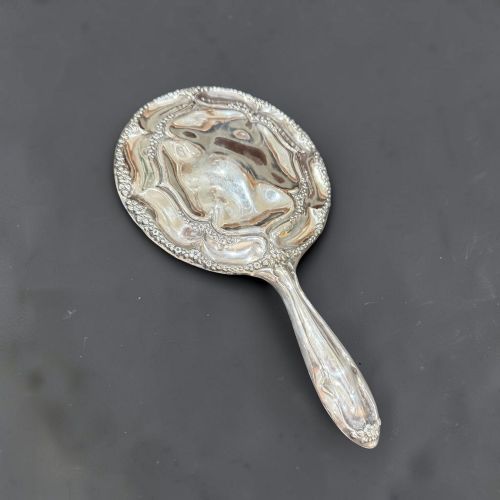
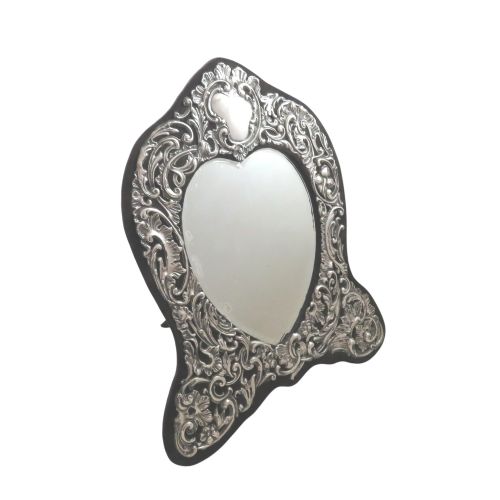
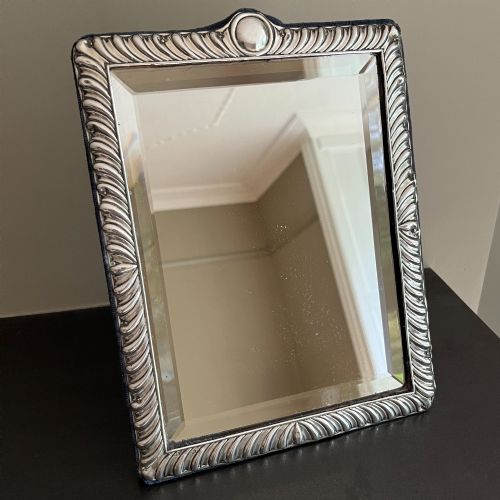
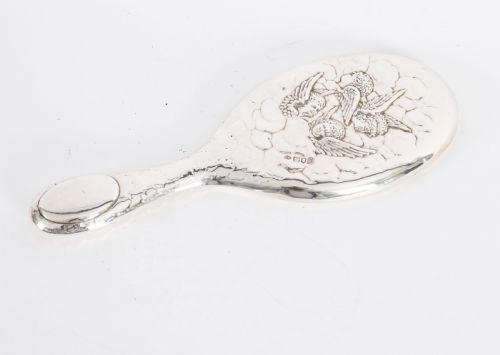
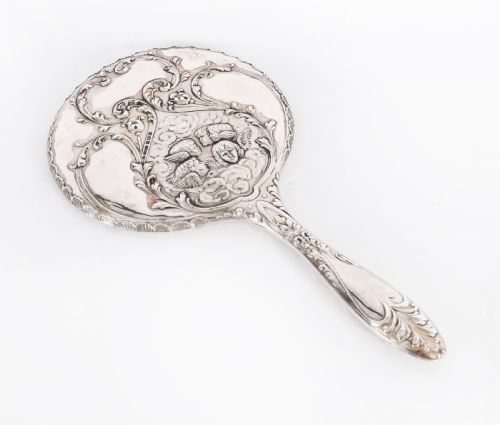
An edwardian sterling mirror is a dressing table accessory designed for personal grooming or tabletop display, often appearing as a hand mirror, strut mirror, or large dressing table mirror. The pieces available here span from the late nineteenth century through the 1920s, encompassing Edwardian, Victorian Rococo Revival, Art Nouveau, and Art Deco styles.
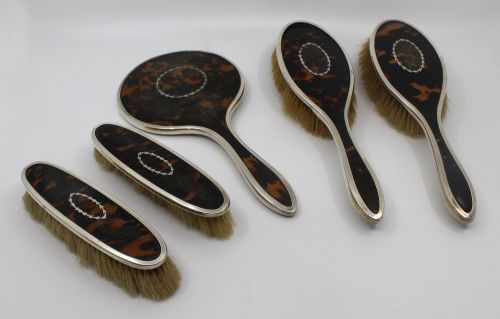
Hand mirrors and smaller vanity items are the most frequent finds in this category, alongside larger table mirrors with easel backs. Makers utilised materials such as sterling silver, mirror glass, velvet, and natural bristle, frequently pairing the silver with faux tortoiseshell or enamel.
Design characteristics range from simple embossed patterns to elaborate figural motifs featuring cherubs or floral Art Nouveau lines. Buyers will also encounter vanity sets and compacts that share the same period silver construction.
Materials and construction
The primary metal utilised across these pieces is sterling silver, frequently carrying hallmarks that indicate assay offices such as Birmingham and London alongside specific production dates. This silver frame is typically mounted around bevelled mirror glass and backed with materials like velvet or wood to provide structural support for daily use.
Decorative elements involve embossing, chased figural work, and the application of translucent guilloché enamel or faux tortoiseshell panels. Hand mirrors frequently incorporate natural bristle brushes within matching vanity sets, whilst strut mirrors rely on hinged silver backings for tabletop stability.
Edwardian Sterling Mirror Retail Price Guide 2026
Typical asking prices for edwardian sterling mirror among the pieces listed under this phrase on Sellingantiques today, from the lower quarter to the upper quarter. They describe what is for sale here now, not the wider market.
Listings feature periods spanning from the nineteenth century through the 1920s, incorporating materials such as sterling silver, enamel, and natural bristle.
Evaluating craftsmanship and condition
Quality in these mirrors rests upon the weight of the sterling silver and the depth of the embossed or chased ornamentation. Finer examples display crisp detail in figural motifs and maker marks that remain clear and legible after decades of handling.
The integrity of the mirror glass and the firmness of the backing also distinguish superior pieces. Items that retain their original velvet backs, undamaged enamel panels, or complete vanity set components hold greater integrity for collectors.
Charles Boyton·S Blanckensee and Son·Henry Matthews·William Comyns
The Edwardian Sterling Mirror Glossary
- Sterling silver
- A silver alloy containing 92.5 percent pure silver and 7.5 percent other metals, usually copper, chosen for durability in tableware and decorative objects. This composition forms the standard metal body for the mirror frames.
- Strut mirror
- A portable mirror featuring a hinged prop or easel back designed to stand upright on a dressing table or desk. This form allows the piece to remain stationary without requiring hand support.
- Guilloché enamel
- A decorative technique where a precise geometric pattern is mechanically engraved beneath a translucent layer of coloured enamel. This finish frequently appears on the backs of vanity sets and compacts.
- Faux tortoiseshell
- A manufactured material designed to imitate the mottled amber and brown shell of the hawksbill turtle. It provides a contrasting dark panel behind the sterling silver mount.
- Hallmark
- An official stamp applied by an assay office to indicate the purity of the metal, the maker, and the year of manufacture. These marks provide the primary evidence for dating individual pieces.
Edwardian Sterling Mirror: Frequently Asked Questions
What is an edwardian sterling mirror?
An edwardian sterling mirror is a vanity accessory framed in hallmarked silver, produced during the early twentieth century or the surrounding decades. These items encompass hand-held dressing pieces and larger table mirrors intended for domestic use.
Such objects reflect the design tastes of the period, incorporating styles from Victorian revivalism to Art Nouveau and Art Deco.
How do I clean antique silver?
Antique silver requires gentle cleaning with a specialist cloth to remove tarnish without harming the underlying metal or embossed details. Harsh liquid dips should be avoided, particularly on pieces with enamel, velvet, or faux tortoiseshell elements.
Preserving the original patina helps maintain the historical character of the silver frame.
How do I date an edwardian sterling mirror?
Dating relies primarily on the assay office hallmarks stamped directly into the silver mount. These marks typically indicate the city of testing, the standard of silver, and a specific date letter.
Stylistic cues such as Art Nouveau whiplash lines or Art Deco geometric forms also point toward specific decades of manufacture.
Can these mirrors be used daily?
These mirrors function well for daily grooming when handled with reasonable care for their age and materials. Hand mirrors and table mirrors remain practical dressing table accessories.
Care should be taken to protect backing materials like velvet and fragile elements such as glass or enamel from moisture and impact.