



Edwardian Stationery
Edwardian stationery encompasses desk accessories, writing tables, and storage cabinets made during the early twentieth century to keep correspondence organised.
Edwardian Stationery
Edwardian stationery comprises practical desk furniture and small desktop accessories designed for correspondence and paper management. Pieces on this page stem primarily from the Edwardian period and the late nineteenth century, spanning various wood types and metals.
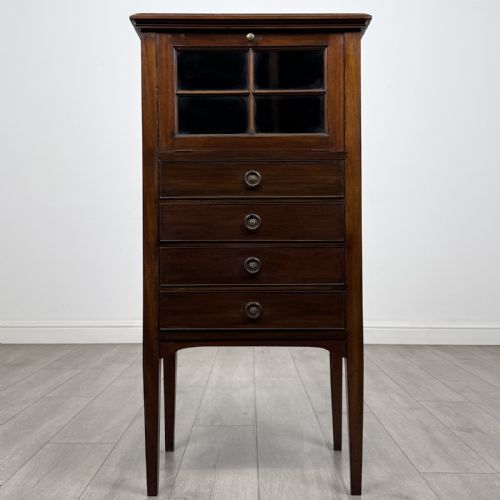
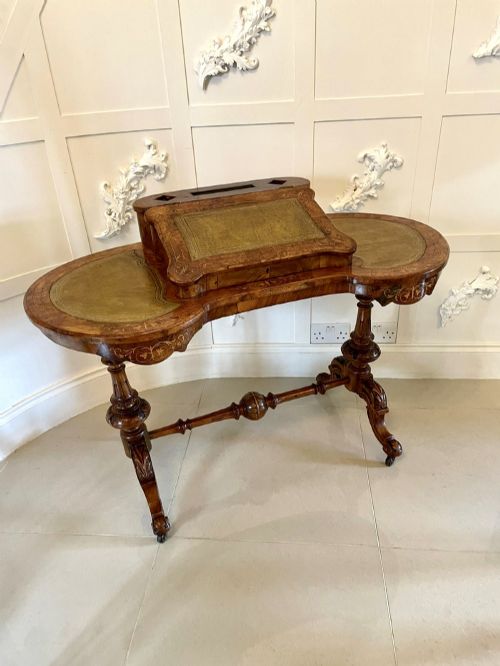
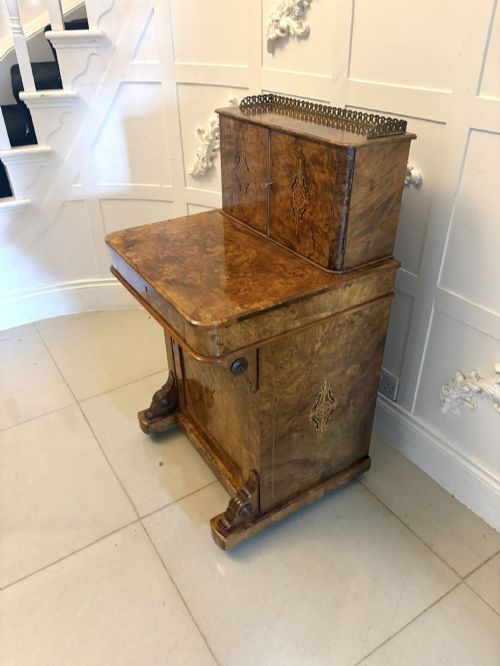
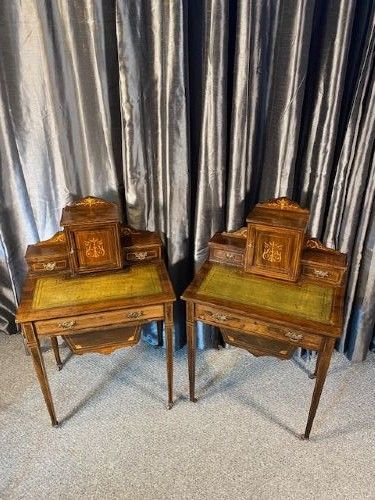
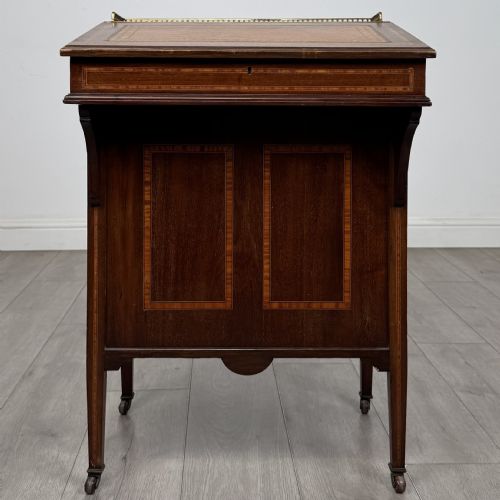
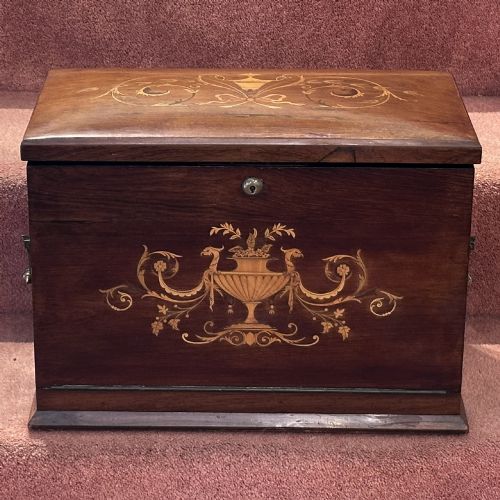
Common forms include stationery boxes, letter boxes, writing desks, and filing cabinets. Items range from simple oak desk tidies to elaborate rosewood and walnut davenports with integrated storage compartments.
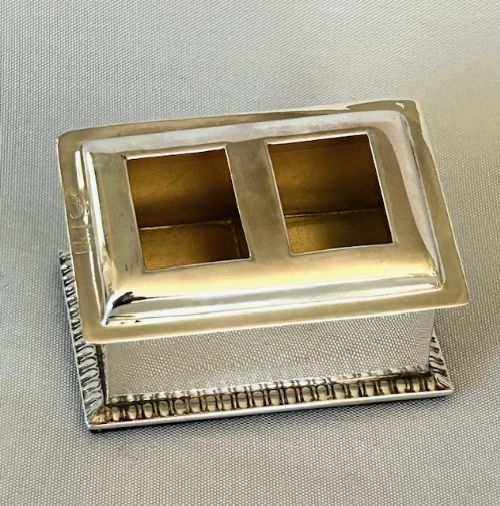
Desk accessories such as stamp boxes, ink blotters, and perpetual calendars complement larger items like writing tables and metamorphic desks. These objects reflect the formal correspondence habits of domestic and office environments from the period.
Materials and Technique
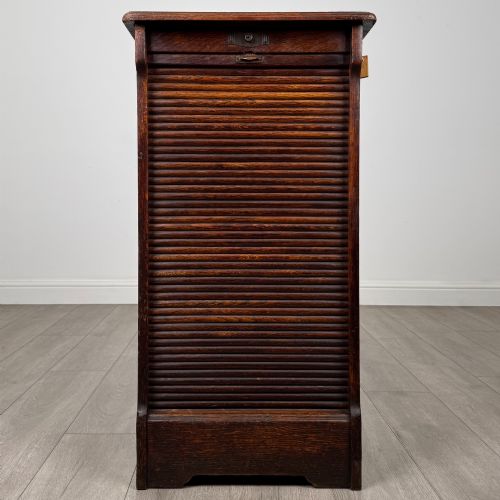
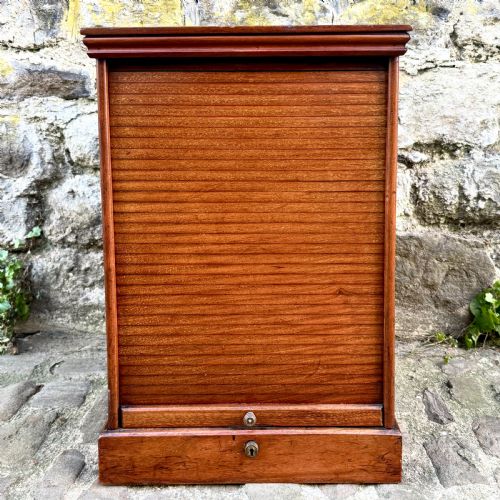
Cabinet makers utilised hardwoods such as mahogany, oak, rosewood, and walnut for furniture and larger storage boxes. Marquetry inlay, tambour fronts, and brass hardware frequently appear across both desks and filing cabinets.
Smaller desk items incorporate sterling silver mounts, cast brass, copper, leather, and tortoiseshell. Techniques involve precision dovetailing, hinged mechanisms, and tooled leather inserts suited to daily desktop use.
Edwardian Stationery Retail Price Guide 2026
Typical asking prices for edwardian stationery among the pieces listed under this phrase on Sellingantiques today, from the lower quarter to the upper quarter. They describe what is for sale here now, not the wider market.
Desk accessories from the period include novelty items shaped like butterflies and golf equipment to amuse Victorian and Edwardian letter writers.
Standards of Construction
Quality depends on the selection of timber veneers, such as burr walnut or satinwood, and the precision of inlaid detailing. Superior pieces display seamless joints on tambour doors and well-fitted internal stationery dividers.
Hardware weight and metalwork finishing distinguish finer items, particularly on silver-mounted letter holders, brass calendars, and cast novelty clips. Original locks, keys, and functional mechanical elements elevate a piece.
William Tonks of Birmingham·J.C Vickery of London
The Edwardian Stationery Glossary
- Davenport desk
- A compact writing desk featuring a sloping desktop above a pedestal of drawers. It typically incorporates a side-opening cabinet or stationery compartment.
- Tambour front
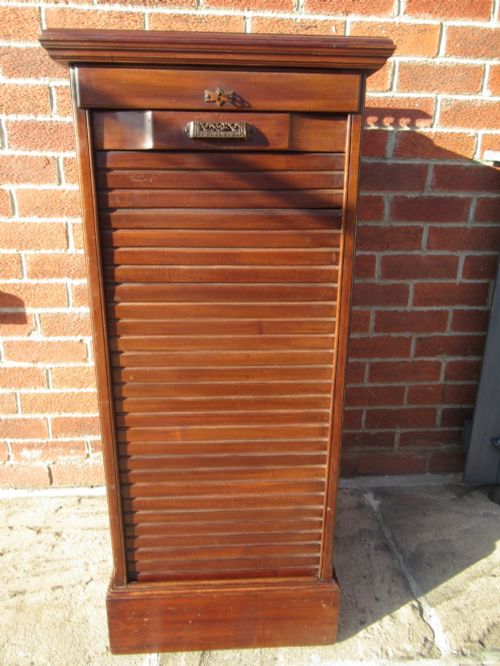
- A sliding shutter constructed from narrow strips of wood glued to canvas, allowing smooth movement around a curved enclosure on filing cabinets and desk tidies.
- Writing slope
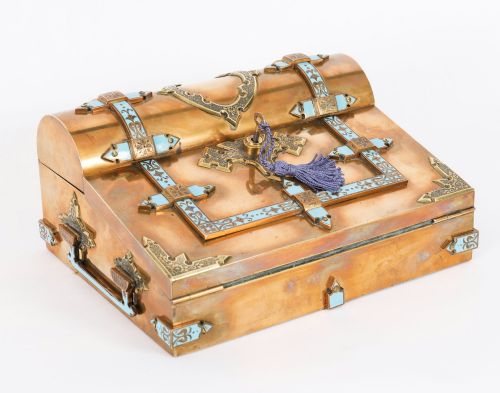
- A portable or table-standing box that opens to reveal a slanted writing surface and interior storage slots for paper and ink.
- Perpetual calendar
- A desk accessory with adjustable cards, dials, or rollers designed to display the day and month for any given year.
- Stirrup clip
- A spring-loaded metal clip shaped like a riding stirrup, utilised on desks for holding papers, telegrams, or letters in place.
Edwardian Stationery: Frequently Asked Questions
What is an Edwardian stationery box?
An Edwardian stationery box is a desktop cabinet designed to hold writing paper, envelopes, and cards. These boxes often feature hinged lids, fall-front panels, or tiered interior compartments.
Cabinet makers produced them in woods such as oak, mahogany, and walnut, frequently incorporating brass mounts or inlaid patterns to match other desk furniture.
How were tambour cabinets used?
Tambour cabinets provided secure storage for correspondence, files, and office papers in Edwardian workspaces. The flexible slatted door slid smoothly along a track to conceal the interior shelves.
This mechanism saved desk space by eliminating traditional swinging doors that required clearance in front of the unit.
What is the difference between a davenport and a writing table?
A davenport is a small, upright desk with a sloping lid built over a pedestal of side drawers. It combines a writing surface with enclosed storage for stationery.
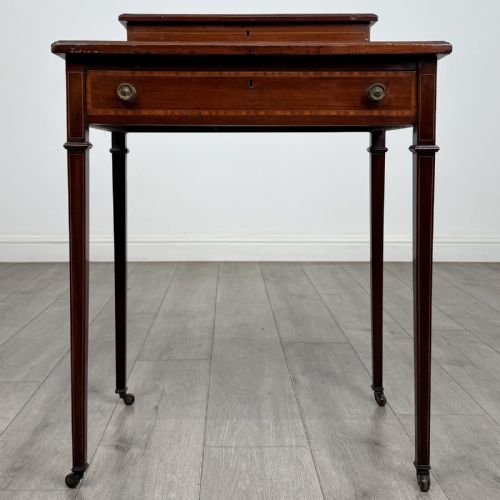
A writing table is a freestanding table with slender legs and drawers beneath the top, offering a flat surface intended primarily for writing rather than integrated document storage.
How do I care for antique leather writing inserts?
To maintain tooled leather desk inserts, keep them away from direct sunlight and excessive heat to prevent the material from drying out. Dust the surface gently with a dry cloth.
Avoid using modern chemical cleaners or excessive moisture, which can damage the gold tooling and the underlying leather.