



Edwardian Standing Glass
Edwardian standing glass pieces comprise floor-standing mirrors, display cabinets, and illuminated stands that reflect the refined domestic tastes of the early twentieth century.
Edwardian Standing Glass
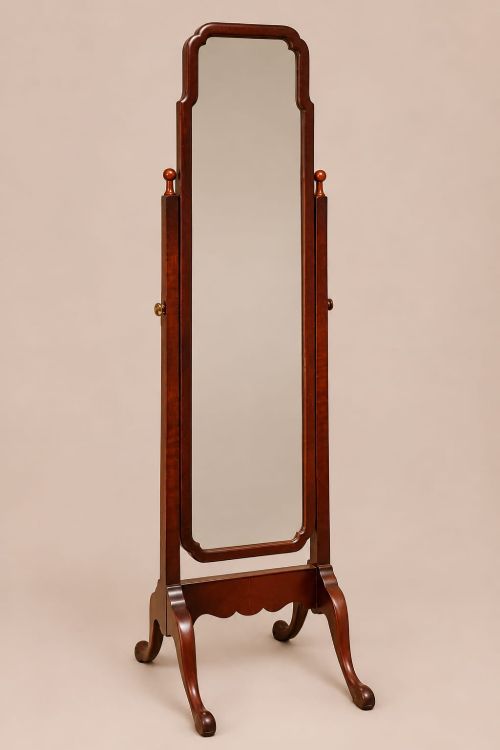
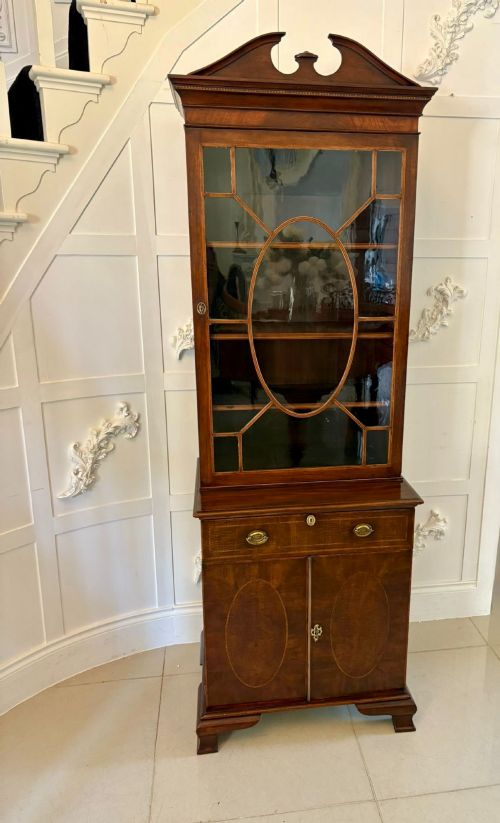
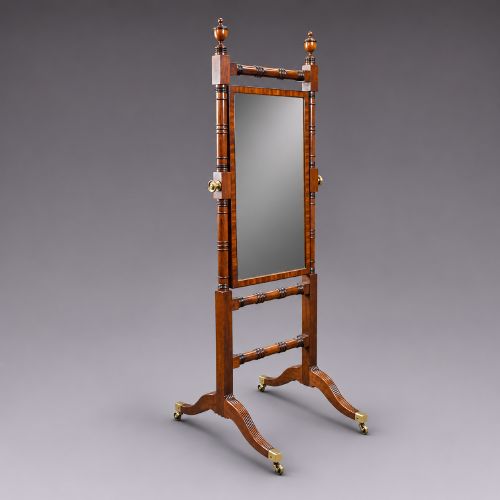
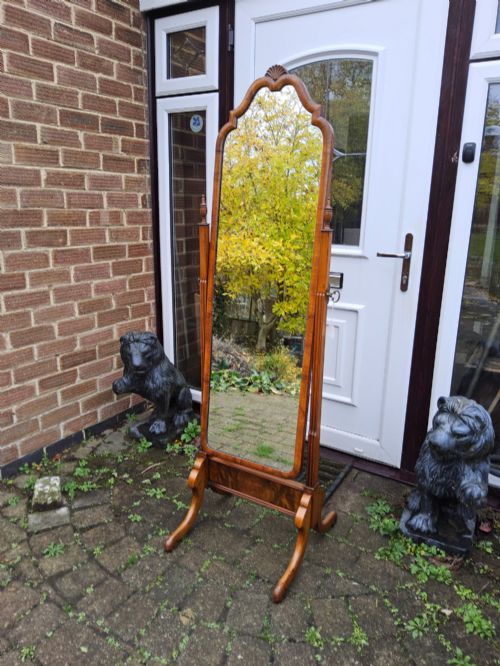
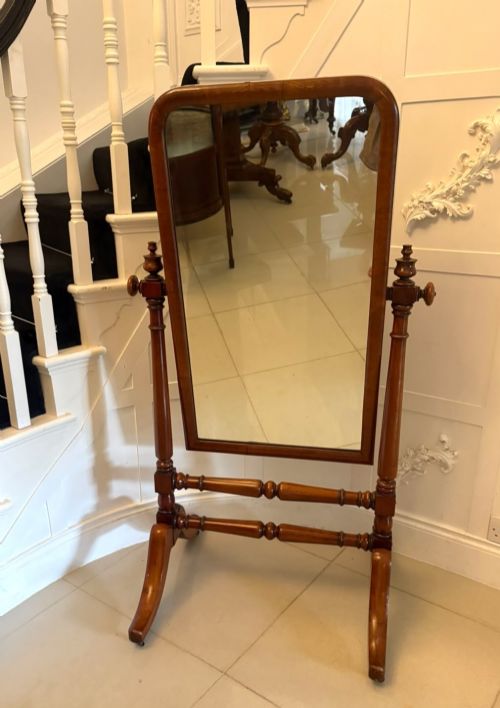
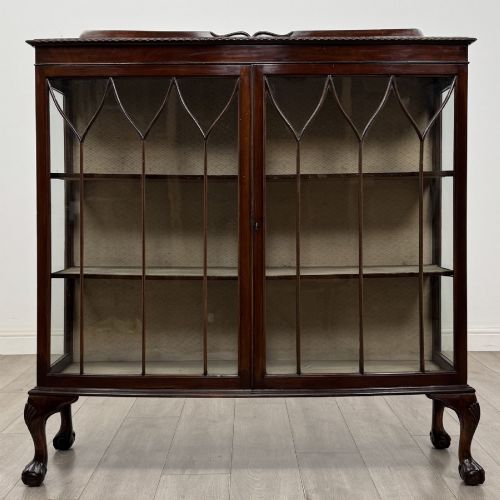
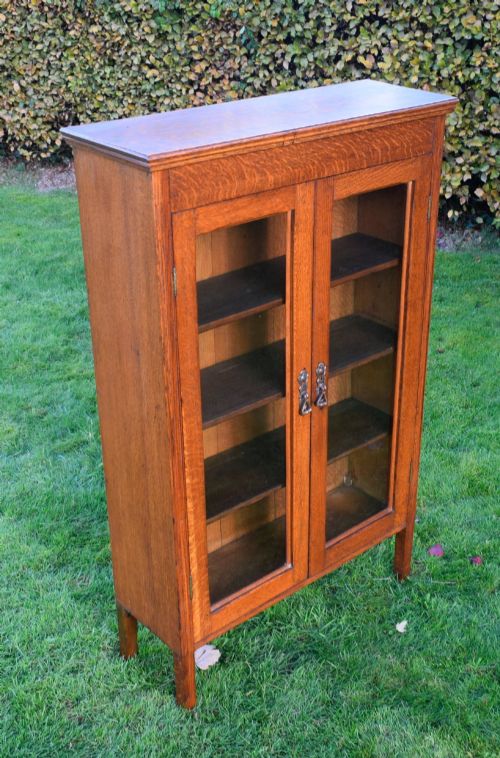
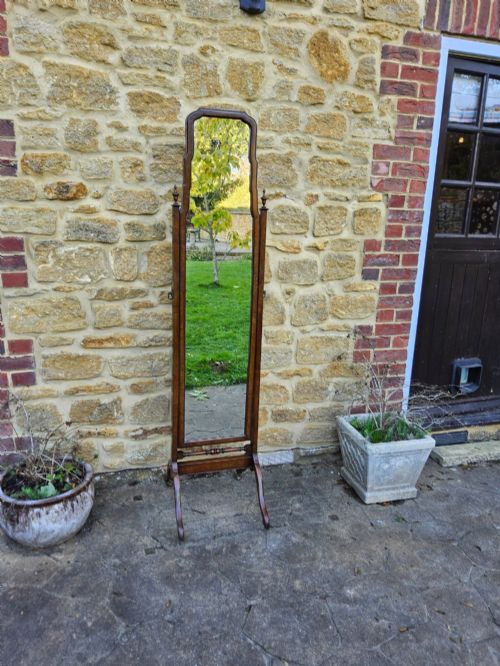
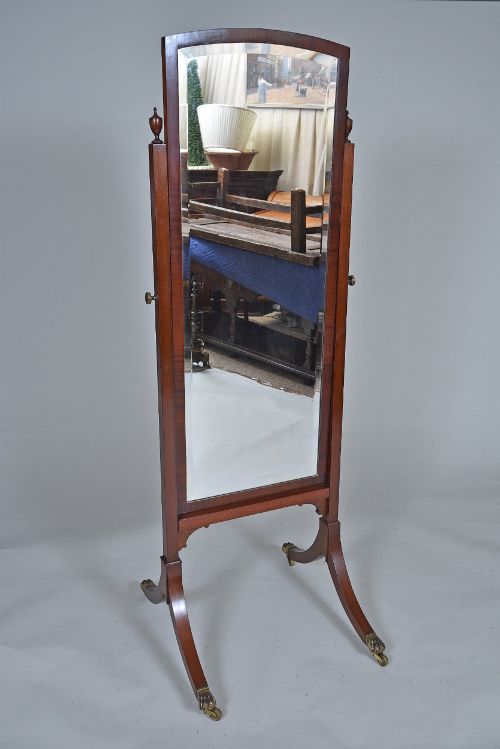
Edwardian standing glass encompasses tall vertical forms designed for interior display and personal reflection, ranging from freestanding cheval mirrors to large glazed vitrines. These upright pieces dominate a room through their height and the reflective qualities of their extensive glass panels.
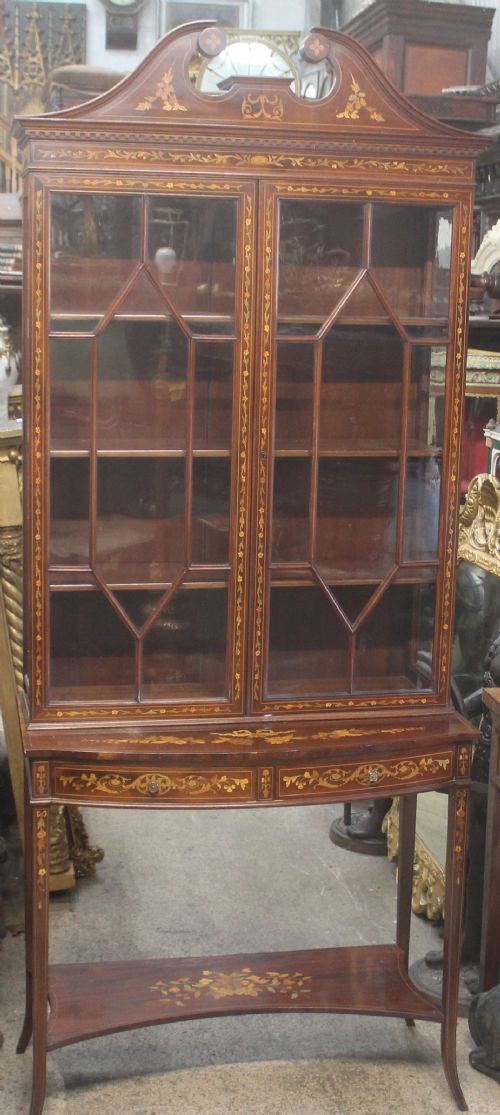
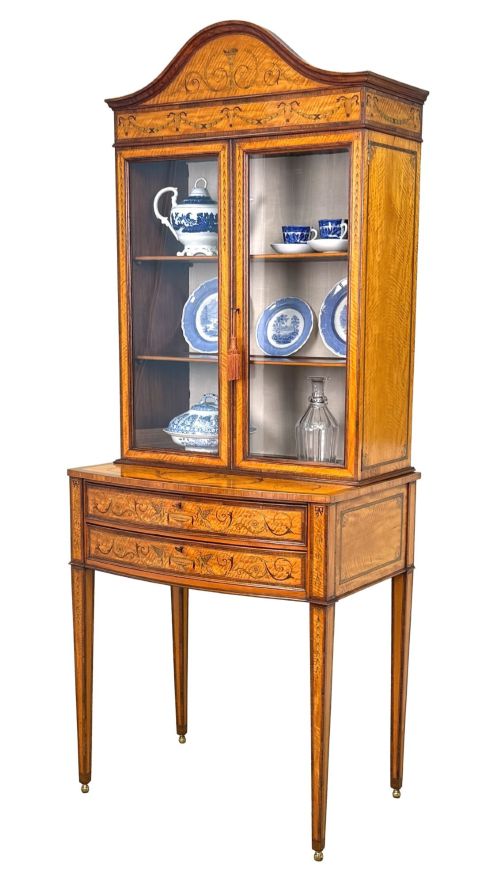
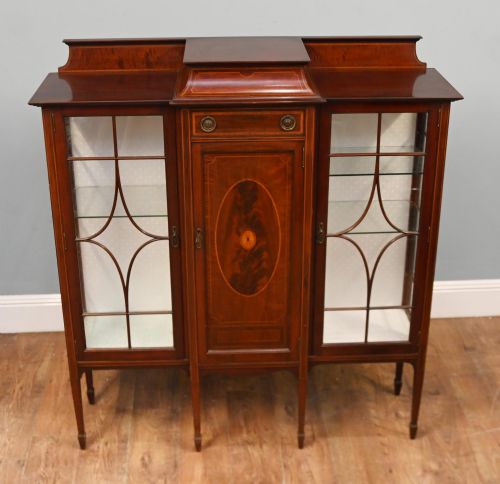
The version most commonly encountered in this selection is the floor-standing display cabinet or china cabinet, frequently constructed from mahogany with glazed doors and delicate inlay. Alongside these vitrines, standing cheval mirrors mounted on sturdy timber frames appear with regular frequency.
Origins stretch from the Edwardian period proper into adjacent Victorian and early twentieth-century decades, incorporating revival aesthetics like Sheraton Revival and Arts & Crafts alongside direct period production.
Construction and materials
Timber frames provide the structural skeleton for these standing pieces, utilising cabinet timbers such as mahogany, oak, walnut, and occasional satinwood or rosewood. Carpenters employed traditional joinery techniques to support heavy glass panels and mirrored plates without compromising the stability of the upright frame.
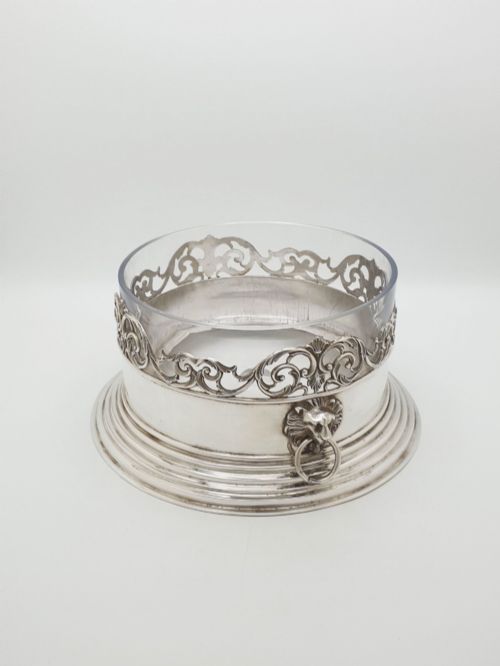
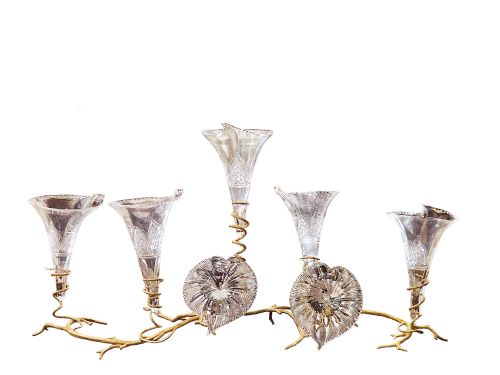
Glass production involves both heavy cut glass for smaller tabletop or stand elements and large flat sheets for display cabinet doors and tilting cheval mirror plates. Brass castors, silver plating, and intricate string inlay complete the construction, combining utility with decorative refinement.
Edwardian Standing Glass Retail Price Guide 2026
Typical asking prices for edwardian standing glass among the pieces listed under this phrase on Sellingantiques today, from the lower quarter to the upper quarter. They describe what is for sale here now, not the wider market.
Judging the quality
Quality rests in the crispness of the timber carving, the depth of the cabinet inlay, and the clarity of the glass itself. Superior examples display tightly fitted glazed doors, heavy brass mounts, and stable timber frames that show minimal warping across tall vertical spans.
The distinction between standard commercial production and finer workshops lies in secondary timbers, the delicacy of painted decoration or satinwood banding, and the original integrity of the mirror plates and glass shelving.
Dugdill Lamp·Harrods Ltd·Heal & Sons·Maple & Co.
The Edwardian Standing Glass Glossary
- Cheval mirror
- A freestanding full-length mirror suspended in a frame that permits it to tilt. These tall floor-standing glasses rely on secure side pivots to hold their angle.
- Vitrine
- A glass-sided cabinet designed for the display of porcelain, curiosities, and fine objects. The term derives from the French word for glass.
- Sheraton Revival
- A late nineteenth and early twentieth-century design movement inspired by the neoclassical furniture of George Sheraton. Pieces utilise light mahogany, satinwood inlay, and tapered legs.
- Tantalus
- A locking beverage stand holding decanters within a frame that exposes the glass bottles while preventing access without a key. They frequently combine oak frames with silver-plated mountings.
- String inlay
- A narrow strip of contrasting wood embedded flush into the surface of a timber panel. Cabinetmakers used this technique to outline doors, cornices, and drawer fronts on display furniture.
Edwardian Standing Glass: Frequently Asked Questions
How do I place an edwardian standing glass mirror?
Position freestanding cheval mirrors near natural light sources to maximise their reflective capacity while ensuring the floor surface is level to prevent strain on the side pivots.
Keep these tall timber frames away from direct heat sources to protect the wood joints and the backing of the mirror glass over time.
How do I care for antique glass and wood frames?
Clean glass panels with mild solutions applied to a cloth rather than sprayed directly, preventing moisture from seeping behind mirror silvering or timber rebates.
Feed the surrounding mahogany or oak periodically with appropriate wax polish to maintain the finish without building up heavy residues.
Are these standing glass cabinets stable on carpets?
Tall display cabinets and mirrors with narrow footprints benefit from placement on firm flooring or the use of discreet rear wall tethers if positioned on thick pile carpets.
Check that brass castors, where fitted, roll freely and distribute the weight evenly across the floor surface.