



Edwardian Sporting Wall Art
Edwardian sporting wall art captures the spirited energy of the hunt, the stables, and the countryside through period paintings and prints.
Edwardian Sporting Wall Art
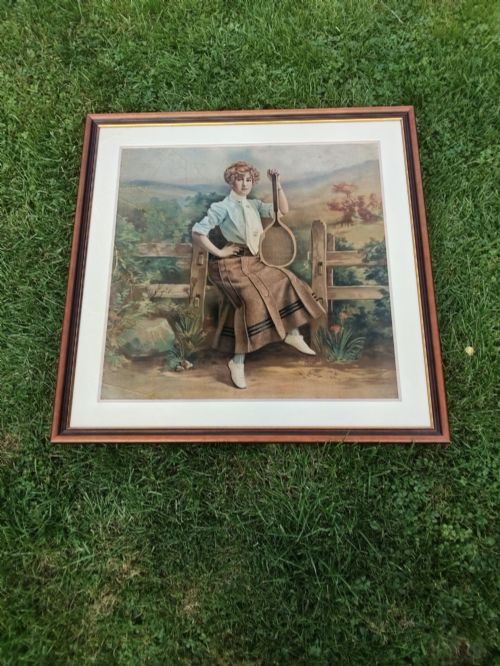
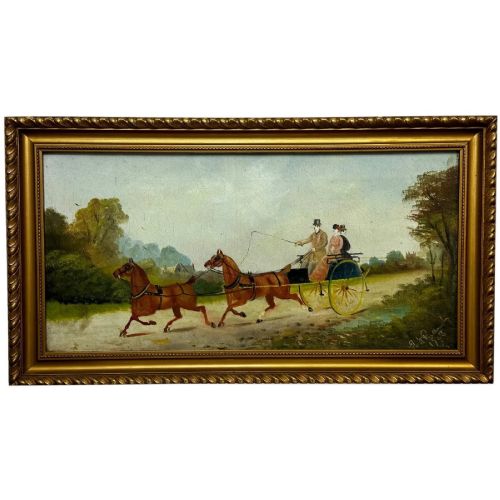
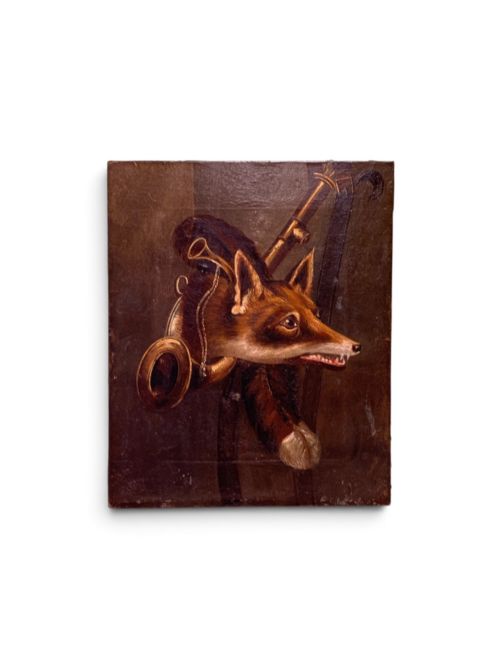
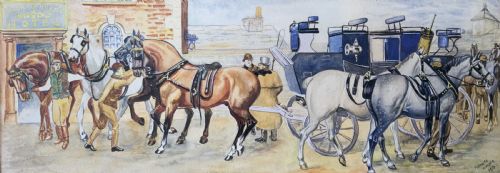
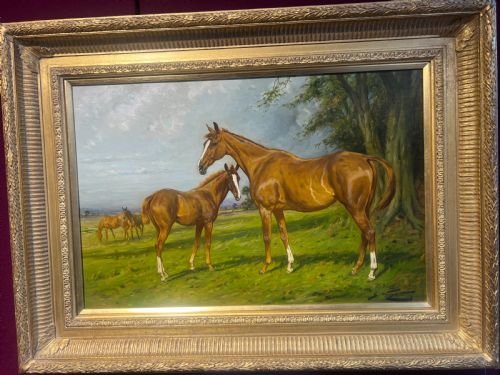
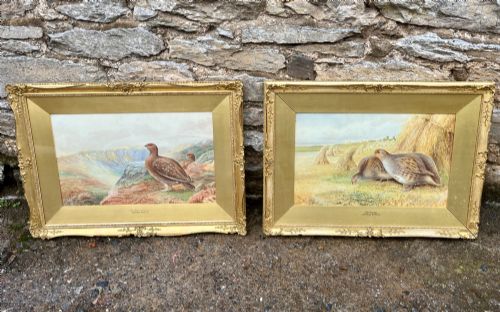
Edwardian sporting wall art spans framed works that celebrate traditional pursuits such as fox hunting, horse racing, coaching scenes, and canine portraits. Buyers seeking this category encounter pieces depicting horses, hounds, game birds, and countryside landscapes set within the early twentieth century and surrounding periods. Oil paintings and watercolours on canvas or paper form the primary visual records of this rural heritage.
How they were made
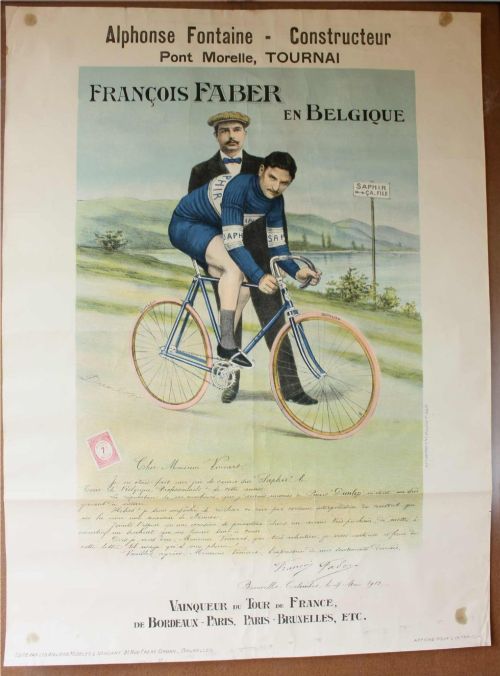
Artists of this genre worked primarily with oil paint on canvas or applied watercolour to paper, employing traditional brushwork to capture the texture of a horse's coat or the flurry of a hunt. Many pieces utilise chalk or ink for preparatory sketches before applying rich layers of colour to depict rural motion and detail. Prints from the period, including chromolithographs and embossed impressions, were produced using mechanical and manual plate methods to replicate original watercolours for wider circulation.
Framing forms an integral part of the physical object, with period pieces housed in oak, walnut, or giltwood frames that often bear the original mountings and glass. The preparation of the canvas or paper surface dictates how well the pigments have survived the decades without cracking or fading. Framing materials range from simple moulded wood to ornate carved gilt structures tailored to the status of the artwork.
Edwardian Sporting Wall Art Retail Price Guide 2026
Typical asking prices for edwardian sporting wall art among the pieces listed under this phrase on Sellingantiques today, from the lower quarter to the upper quarter. They describe what is for sale here now, not the wider market.
Listings feature paper, glass, wood, oil on canvas, and watercolour across the Edwardian, Victorian, and later periods.
What varies in quality
Quality in Edwardian sporting wall art rests on the artist's ability to render anatomical precision and lively movement in animals, particularly horses and dogs. The handling of light across a landscape and the psychological depth in a portrait separate master painters from routine commercial illustrators of the time. Fine brushwork reveals intricate details in tack, foliage, and costume that lesser works tend to render flatly.
The condition of the medium also dictates the tier of the piece, distinguishing well-preserved oils and vibrant watercolours from those suffering from heavy pigment darkening or paper acidification. Original framing matching the exact period of the artwork adds to the integrity and historical completeness of the piece. Superior examples retain their original signatures, clear provenance, and untouched surface patination.
George Wright·Cecil Charles Windsor Aldin·George Rankin·John Sanderson Wells·Valentine Thomas Garland·Alfred Wheeler·Alfred Grenfell Haigh·John Charles Tunnard·Charles Johnson Payne Snaffles·W.A. Clark·John Charles Maggs·Frank Algernon Stewart·Godfrey Douglas Giles·Frank Dadd·Thomas Blinks
The Edwardian Sporting Wall Art Glossary
- Chromolithograph
- A multicoloured print produced through a planographic lithographic process using a series of limestone blocks or metal plates. This technique allowed publishers to closely replicate the tones of original watercolours.
- Equestrian
- Pertaining to horses, horse riding, and horsemanship. In this category, it describes artwork centred on racehorses, hunters, and coaching teams.
- Watercolour
- A painting method in which the paints are made of pigments suspended in a water-based solution. Works on paper in this medium require protective glass framing to prevent moisture damage.
- Giltwood
- Wood that has been carved and coated with a thin layer of gold leaf or metallic powder. It frequently appears on traditional frames designed to elevate the status of the artwork within a room.
Edwardian Sporting Wall Art: Frequently Asked Questions
What subjects define sporting art?
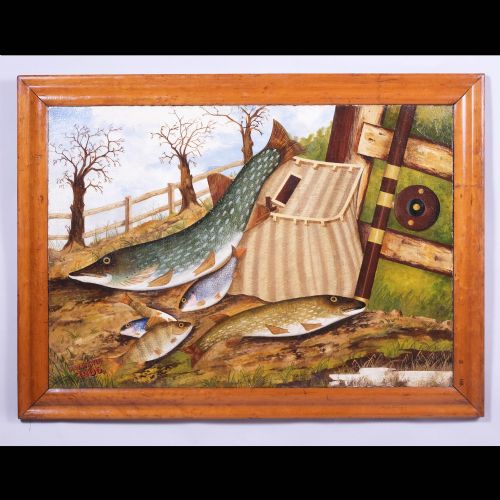
Sporting art focuses primarily on rural pursuits, horses, hounds, game shooting, fishing, and coaching scenes. These themes reflect the recreational interests of the British countryside during the nineteenth and early twentieth centuries.
Artists concentrated on capturing the precise anatomy of animals alongside the dynamic atmosphere of the hunt or the racecourse.
How do I care for antique watercolours?
Watercolours on paper require protection from direct sunlight to prevent the fugitive pigments from fading permanently over time. Keeping them in stable humidity conditions prevents paper warping and foxing spots from developing under the glass.
Professional framing with acid-free mounts ensures the paper remains safely distanced from the glazing.
Are these works original paintings?
This category includes a mix of unique hand-painted oil canvases, original watercolours, and period printed works. Individual listings specify whether an artwork is a direct painting or a vintage print.
Print editions from this era often carry the artist's signature or studio stamps, making them collectible in their own right.
Where were these pieces displayed?
Historically, sporting paintings and prints hung in country house libraries, estate smoking rooms, and equestrian clubhouses. They served as celebrations of personal rural pursuits, prized animals, and memorable hunting seasons.
Today, they suit similar traditional interior settings as well as contrasting modern spaces seeking character and narrative depth.