
Edwardian Small Chest Drawers
Edwardian small chest drawers offer compact storage solutions crafted in mahogany, walnut, and oak for period interiors.
Edwardian Small Chest Drawers
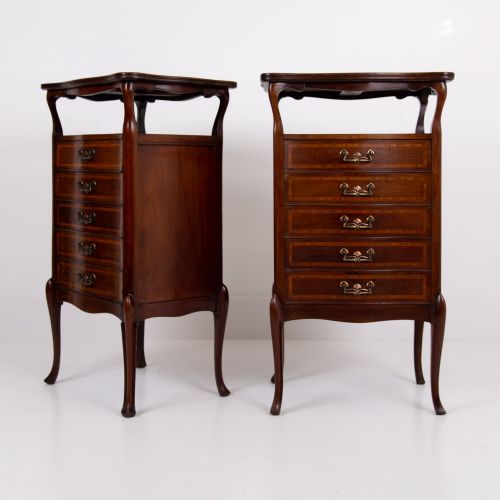
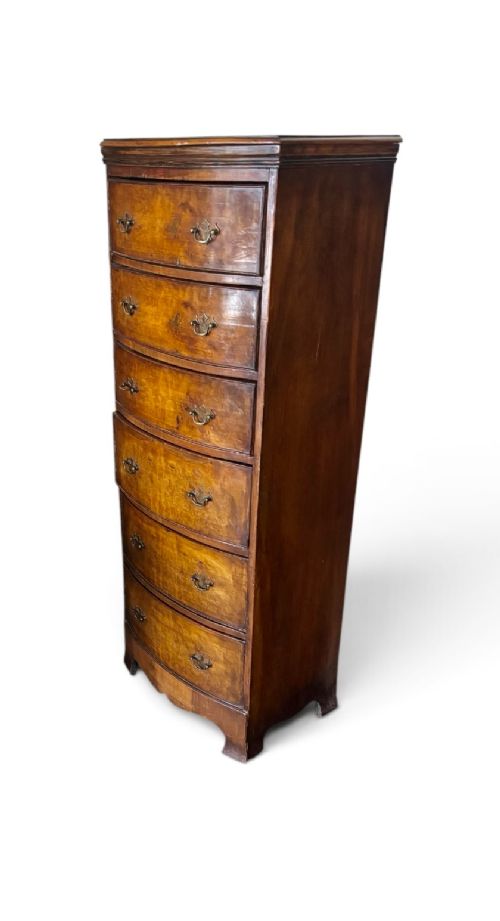
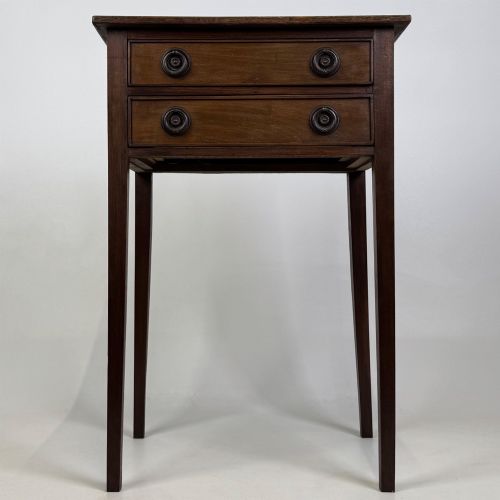
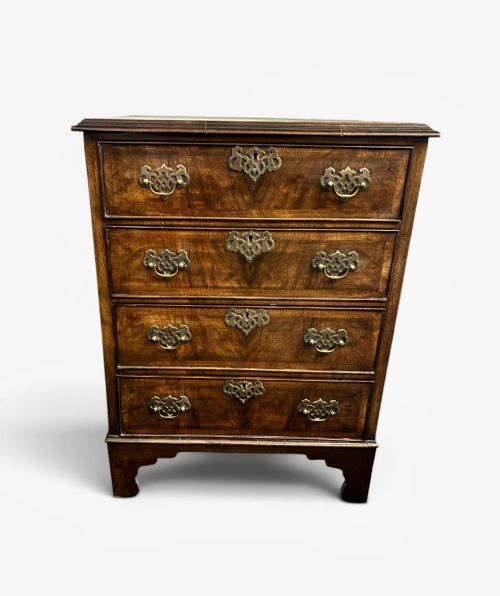
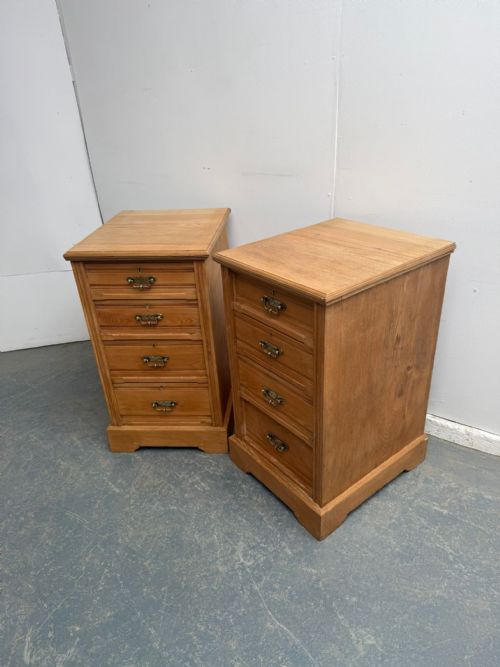
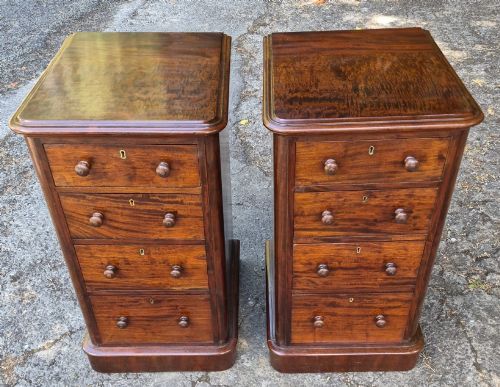
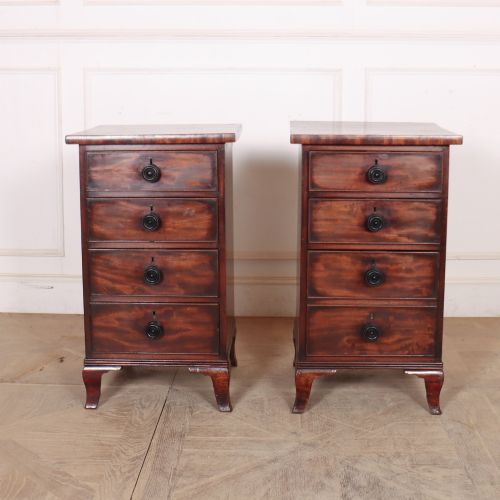
Edwardian small chest drawers comprise compact storage units designed for smaller spaces, frequently encountered as bedside chests, music cabinets, and narrow tallboys. The inventory spans pieces from the Edwardian era alongside Victorian and later interpretations built in standard chest formats.
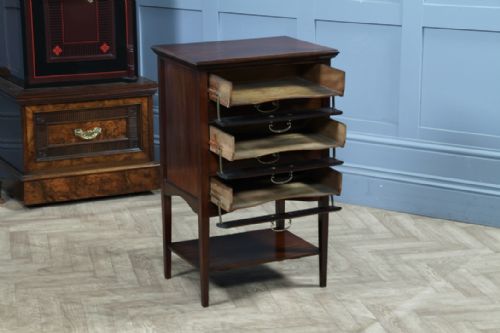
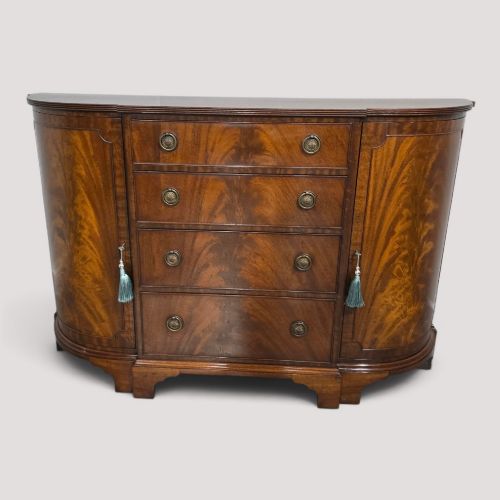
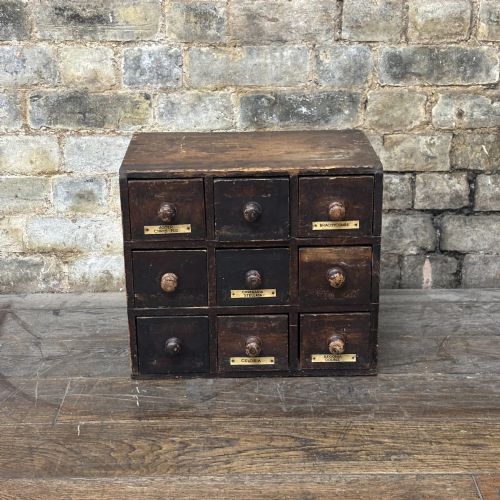
Makers utilised various regional timbers and configurations, ranging from simple pine chiffoniers to serpentine-fronted burr walnut tables and multi-drawer filing cabinets. Buyers find both straightforward domestic drawer units and specialised collectors cabinets fitted with drop-front drawers or locking mechanisms.
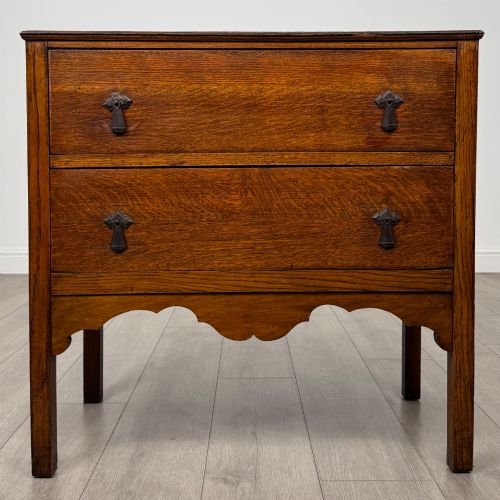
Stylistic influences extend beyond the core Edwardian period to incorporate Georgian revival motifs, Arts and Crafts simplicity, and Queen Anne revivals. These variations provide distinct edge profiles, handle designs, and proportion choices within the same scale footprint.
Materials and Construction
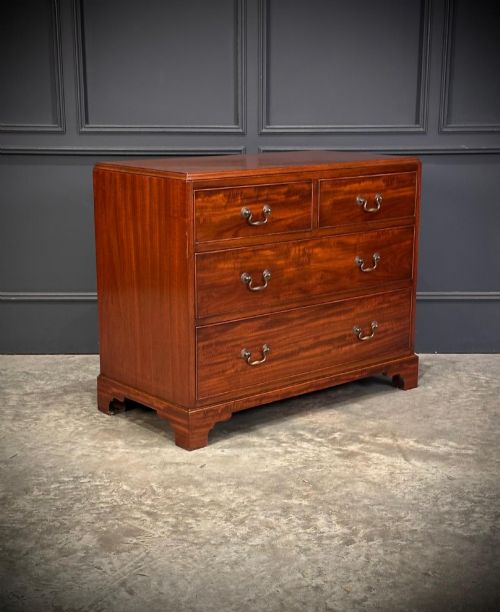
Carpenters built these compact units primarily using solid mahogany, walnut, oak, and satinwood, often applying figured veneers to curved surfaces like bow fronts and serpentine edges. Secondary timbers such as pine appeared on internal drawer linings and back panels.
Joinery methods relied on traditional dovetailed drawer construction and mortise and tenon frames, paired with brass drop handles, ring pulls, or period cabinet keys. Surfaces received wax or polish finishes that highlighted the natural grain patterns of burr walnut and ash.
Listings feature mahogany, walnut, and oak alongside specialised variations like florists seed chests and medical carrying cases.
Quality Variations
Evaluation rests on the selection of timber figures, where highly figured burr walnut and matched mahogany veneers signal superior workshop output compared to plain domestic pine or basic stained timbers. Crispness in mouldings and the precision of inlaid stringing further distinguish finer examples.
Structural integrity depends on the smoothness of drawer operation, the retention of original brass hardware, and the stability of joints across diminutive frames. Pieces retaining working locks, keys, and untouched patination achieve a higher standing among collectors.
The Edwardian Small Chest Drawers Glossary
- Bow front
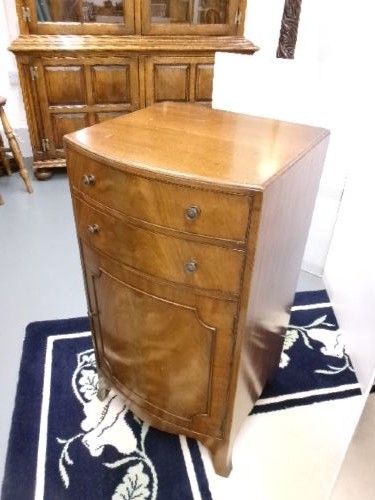
- A convex curved cabinet front that projects outward in a smooth arc. This shape frequently appears on mahogany and walnut bedside chests.
- Tallboy
- A tall, slender chest of drawers constructed by stacking one cabinet section atop another. These maximise vertical storage in restricted floor spaces.
- Tallboy
- A tall, slender chest of drawers constructed by stacking one cabinet section atop another. These maximise vertical storage in restricted floor spaces.
- Drop front
- A hinged panel or drawer front that tilts downward to reveal interior compartments or slots. It is commonly seen on music sheet cabinets and writing boxes.
- Brushing slide
- A pull-out shelf positioned above the top drawer of a bachelor chest. It provided a temporary writing or dressing surface.
- Stringing
- Thin inlay lines of contrasting wood used to decorate drawer fronts and tabletops. It defines the geometric borders typical of refined case furniture.
Edwardian Small Chest Drawers: Frequently Asked Questions
Where were small chests used?
These compact chests served primarily in bedrooms as bedside tables or auxiliary storage for personal linens and accessories. They also found placement in studies and parlours to hold sheet music or stationery.
Their restricted footprint allowed them to fit into tight alcoves and narrow passages where standard large furniture proved impractical.
How do I identify Edwardian pieces?
Edwardian pieces typically exhibit lighter timber tones, refined proportions, and restrained inlay work influenced by earlier Georgian revivals. Brass hardware on these pieces tends to be lighter and more delicate than heavy Victorian equivalents.
Construction details like machine-sawn timber elements or specific trade labels can also point toward the early twentieth-century production window.
Are bedside chests always sold paired?
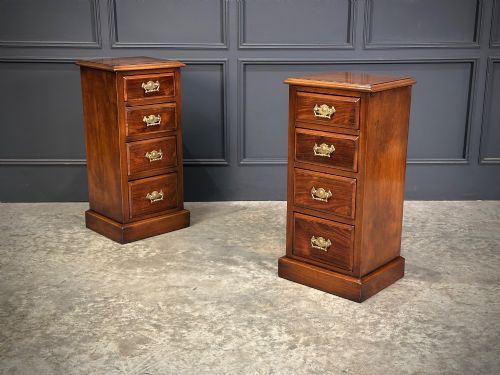
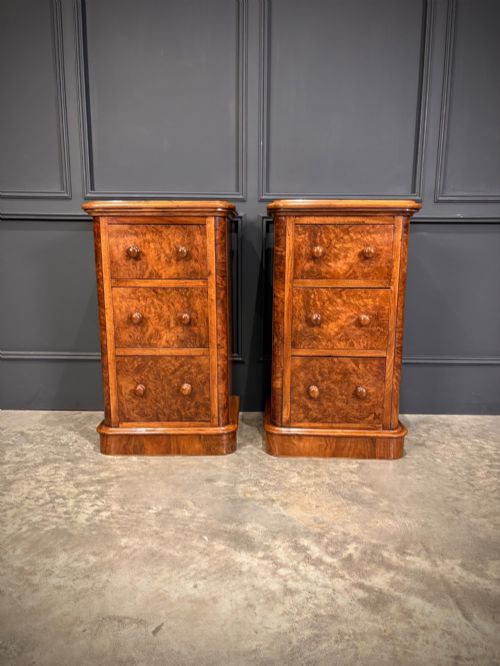
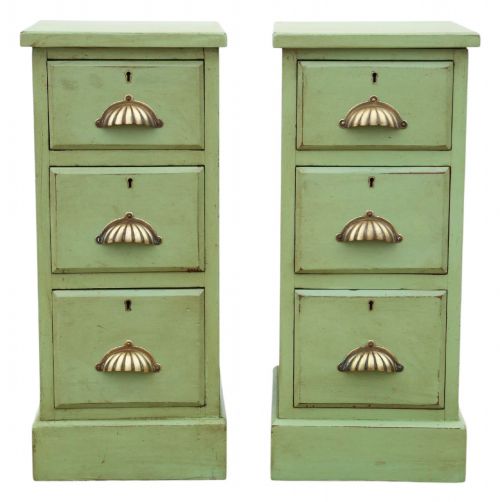
Surviving bedside chests appear both as matching pairs and as individual units depending on their original domestic context. Single tables often originated as small side pieces, occasional tables, or medical carrying chests rather than matching bed sets.
Buyers seeking symmetrical bedside arrangement look specifically for designated pairs sharing identical timber grain and hardware.
What timber finishes are common?
Mahogany, walnut, and oak dominate the finishes, often treated with traditional wax to preserve the natural grain of the wood. Burr walnut and satinwood receive glossier French polish to accentuate their decorative figuring.
Painted finishes also appear on specific utility pieces, alongside waxed ash and pine found in Arts and Crafts examples.