



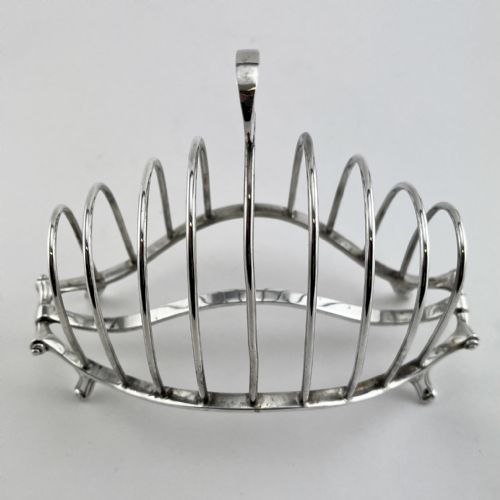


Edwardian Silver Toast
Edwardian silver toast pieces are functional breakfast table items designed to hold crisp slices, and collectors prize them for their distinct period craftsmanship.
Edwardian Silver Toast
When you search for edwardian silver toast, you encounter a selection of tableware primarily comprising toast racks and serving pieces from various periods. The items on this page range from Victorian and Edwardian examples to later twentieth-century designs, reflecting shifting breakfast table fashions.
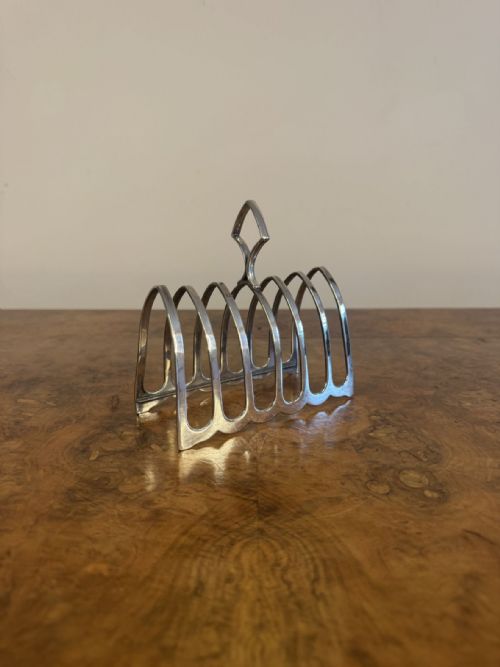
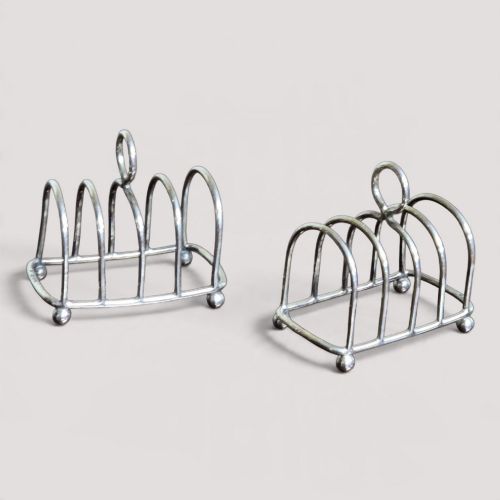
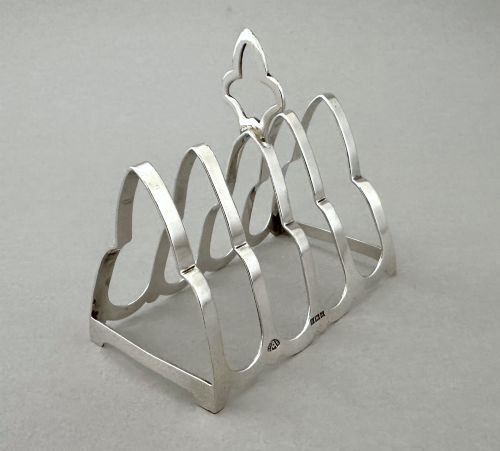
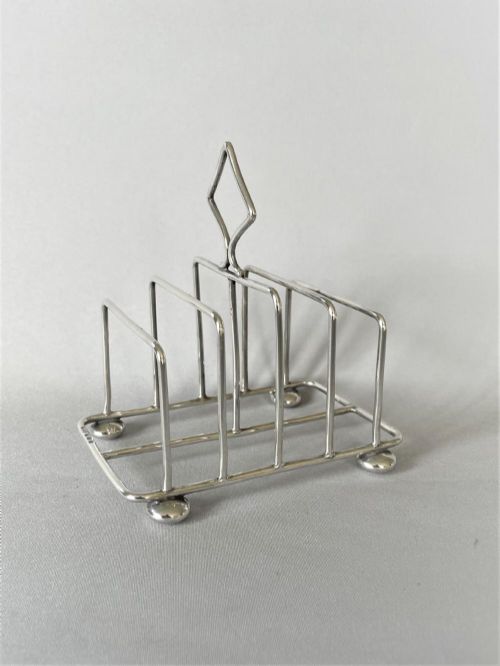
Toast racks represent the most common form within this category, varying from four-slice and six-slice configurations to smaller individual pieces. Alongside these stands related serving cutlery, including cased bread forks that share the same functional dining pedigree.
The origins span multiple decades and stylistic movements, encompassing early twentieth-century work alongside pieces influenced by Victorian aesthetics and later Art Deco or modernist ideals. Most examples you meet here emerge from British silversmithing traditions, often bearing hallmarks from regional assay offices.
Materials and construction
Makers utilised both solid sterling silver and various plated compositions, including electroplated nickel silver and standard silver plate over base metal. Solid sterling pieces carry official assay office hallmarks indicating the standard of the metal, while plated alternatives offer a bright reflective finish without the heavier weight of solid silver.
Individual bars, loops, and arched divisions are soldered to a stable base tray, often raised on small feet to protect the dining surface. Detail work occasionally incorporates alternative materials, such as mother-of-pearl handles on serving forks, secured with pins or ferrules.
Edwardian Silver Toast Retail Price Guide 2026
Typical asking prices for edwardian silver toast among the pieces listed under this phrase on Sellingantiques today, from the lower quarter to the upper quarter. They describe what is for sale here now, not the wider market.
Listings feature items spanning the Victorian, Edwardian, and mid-twentieth-century periods, constructed from sterling silver, silver plate, and mother-of-pearl.
Assessing craftsmanship and finish
The division between standard and superior pieces rests on the weight of the metal and the rigidity of the soldered joints. A well-constructed toast rack maintains firm alignment across every divider, whereas lesser examples exhibit flex or weakened joins where the bars meet the base.
Design sophistication also dictates the standing of a piece, separating utilitarian workshop output from distinct artistic commissions. Items bearing identifiable maker marks or specific stylistic influences demonstrate greater attention to proportion, finish, and overall visual balance.
Mappin and Webb·William Devenport·Roberts and Belk·Hukin and Heath
The Edwardian Silver Toast Glossary
- Toast rack
- A small table article featuring a series of upright metal loops designed to hold slices of toast upright and prevent them from becoming soggy. They became a breakfast table staple during the nineteenth and twentieth centuries.
- Sterling silver
- A precious alloy containing a high proportion of pure silver combined with other metals to ensure durability. Items made to this standard frequently display official assay office hallmarks.
- Silver plate
- A base metal substrate coated with a thin layer of silver through chemical or electrochemical processes. This technique provided an affordable alternative to solid silver for household tableware.
- Hallmark
- A series of official marks stamped onto precious metal items to indicate the purity of the metal, the maker, and the year of assay. These stamps assist in tracing the origin of antique silverware.
- Wishbone toast rack
- A specific architectural variant of the toast rack where the dividing arches take the anatomical shape of a wishbone. This design introduces a lighter, decorative silhouette to the breakfast table.
Edwardian Silver Toast: Frequently Asked Questions
What were silver toast racks used for?
These racks held freshly made toast upright at the breakfast table to allow air circulation and prevent the slices from losing their crisp texture.
They formed part of formal morning place settings in affluent households throughout the Victorian and Edwardian eras.
How do I clean silver toast racks?
Cleaning requires a soft cloth and a specialised silver polish formulated to remove tarnish without abrading the metal surface.
Harsh chemical dips should be avoided, particularly on plated items, to preserve the remaining silver layer.
How can I tell the period?
Dating relies primarily on official hallmarks stamped into the metal, which record the assay office and the active year of production.
Stylistic cues, such as the curved lines of Art Nouveau or the geometric forms of Art Deco, also indicate the era of manufacture.
Are these pieces safe for daily use?
Solid silver and plated racks remain entirely suitable for serving food once cleaned thoroughly with warm soapy water.
Care must be taken with antique items to avoid bending the delicate wire divisions during washing.