

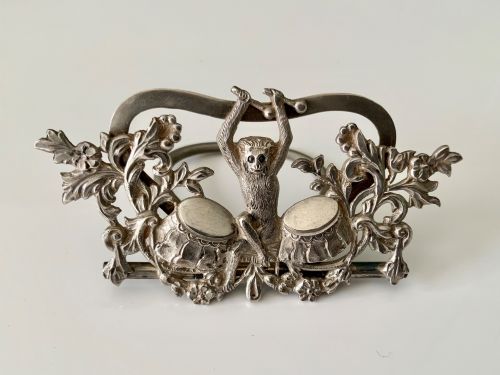


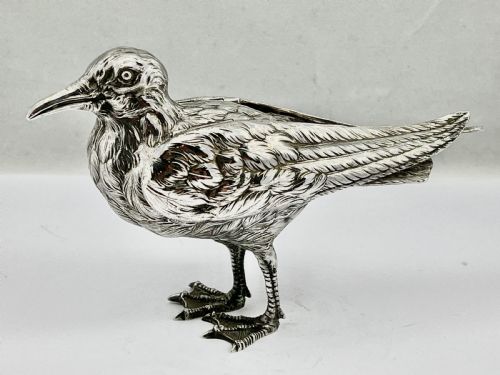


Edwardian Silver Table Ornament
These edwardian silver table ornaments bring charm and character to a dining table or desk through intricate craftsmanship and playful forms.
Edwardian Silver Table Ornament
An edwardian silver table ornament encompasses a diverse range of decorative and functional pieces designed to enliven surfaces, spanning menu holders, sugar boxes, decorative bowls and dishes, novelty pepper pots, photo frames, tea caddies, and decorative boxes. When searching this phrase, buyers encounter items intended to catch the eye and spark conversation during formal dining or daily domestic life.
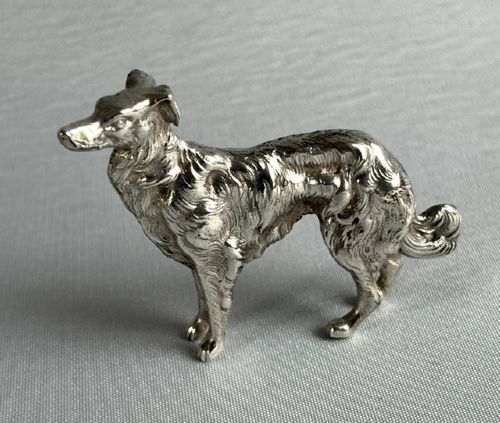
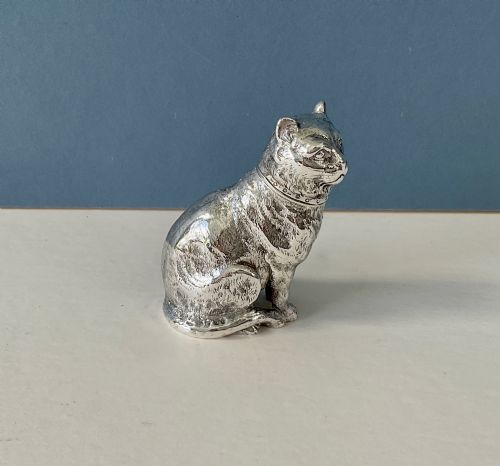
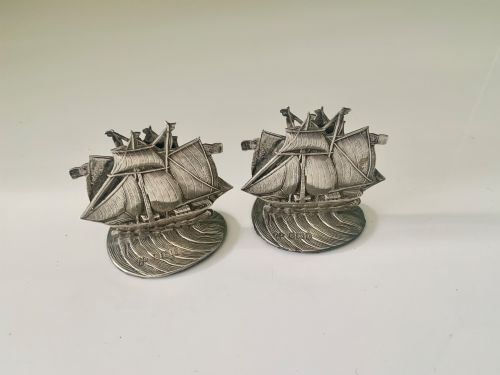
The objects on this page predominantly reflect the Edwardian period, alongside Victorian influences, Georgian Revival styles, German Historicism, and English Country House aesthetics. Formats range from animal models such as cats, monkeys, owls, foxes, partridges, grouse, goats, and wading birds to miniature furniture frames, quaichs, and galleon menu holders.
Makers utilised sterling silver, solid silver, and silver plate, frequently pairing the metal with glass, wood, and velvet. These pieces originated across England, Scotland, Germany, and France, capturing the ornate tastes of the early twentieth century alongside nods to earlier historical epochs.
How they were made
Silversmiths shaped sterling and solid silver through casting, hammering, and detailed hand-chasing to achieve realistic textures in animal models and architectural precision in frames and boxes. Many novelty items incorporate articulated mechanical elements, such as the moving parts found on desk bells and novelty figures.
Workshops frequently combined silver with organic and tactile elements, mounting frames with blue velvet backs or housing glass and wood components within metal casings. Hallmarks stamped directly into the metal record the assay town, year, and maker.
Plated wares received a thin coating of silver over a base metal foundation, offering the visual weight and polish of solid silver through different manufacturing economies.
Edwardian Silver Table Ornament Retail Price Guide 2026
Typical asking prices for edwardian silver table ornament among the pieces listed under this phrase on Sellingantiques today, from the lower quarter to the upper quarter. They describe what is for sale here now, not the wider market.
Listings feature sterling silver, silver plate, glass, wood, and velvet across Edwardian, Victorian, and Georgian Revival styles.
What varies in quality
The distinction between superior pieces and standard work lies in the sharpness of the casting and the depth of the hand-chasing, particularly on animal models where feather, fur, and anatomical detail must appear convincing. Finer items exhibit precise articulation in mechanical components and clean, legible hallmarks.
The integration of secondary materials such as velvet backings, glass inserts, and wooden cores dictates the overall integrity and finish of the piece. Superior craftsmanship ensures that hinges, joints, and mounts operate smoothly and remain flush over time.
JOHN WILLIAM KIRWAN·Boaz Moses·Sampson Mordan
The Edwardian Silver Table Ornament Glossary
- Quaich
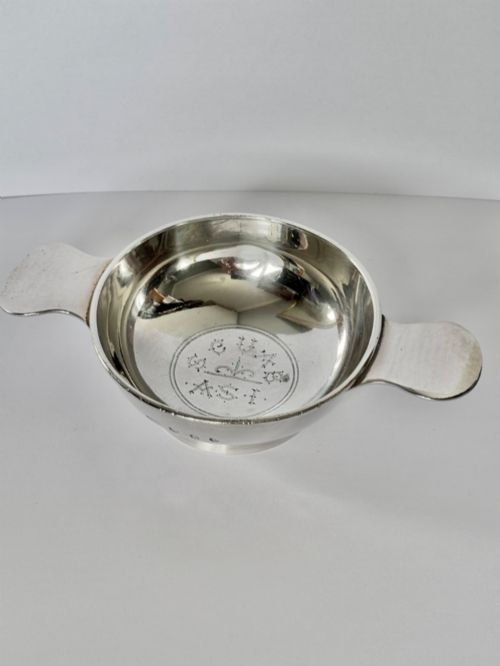
- A traditional shallow two-handled drinking vessel originating in Scotland. These pieces often feature sterling silver construction and regional inscriptions.
- Menu holder
- A small upright display stand designed to hold dining menus on a table. Formats vary from architectural subjects to figural animals.
- Sugar box
- A decorative lidded container used for holding sugar on the dining table. German examples frequently utilise figural animal forms such as owls or goats.
- Novelty pepper
- A condiment pot cast in an imaginative or amusing shape, such as a bird or domestic animal. These items combine utility with playful display.
- Sterling silver
- A standard alloy consisting of silver and other metals to ensure durability. Most pieces on this page bear this classification.
Edwardian Silver Table Ornament: Frequently Asked Questions
What is an edwardian silver table ornament?
An edwardian silver table ornament is a decorative or functional object fashioned from silver during the early twentieth century to adorn dining tables, desks, and sideboards.
These pieces include figural animals, menu holders, picture frames, and small boxes designed to catch the eye and provide utility in domestic settings.
How were silver novelty peppers used?
Silver novelty peppers served as functional condiment containers placed on dining tables to hold ground pepper.
Their whimsical designs, shaped as birds and animals, added a conversational element to formal meals.
How do I identify an Edwardian piece?
Edwardian pieces date from the reign of King Edward VII between nineteen hundred and nineteen ten, typically displaying the lighter, refined aesthetics that succeeded Victorian heaviness.
Assay office hallmarks and date letters stamped into the silver provide the exact year of manufacture.
Can these items be used daily?
Many items, such as photo frames, menu holders, and small boxes, adapt easily to contemporary interior display and use.
Delicate mechanical pieces or antique models benefit from gentle handling and appropriate placement away from direct heat.