

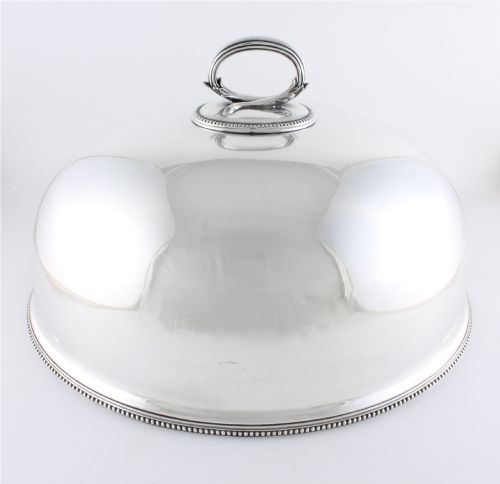
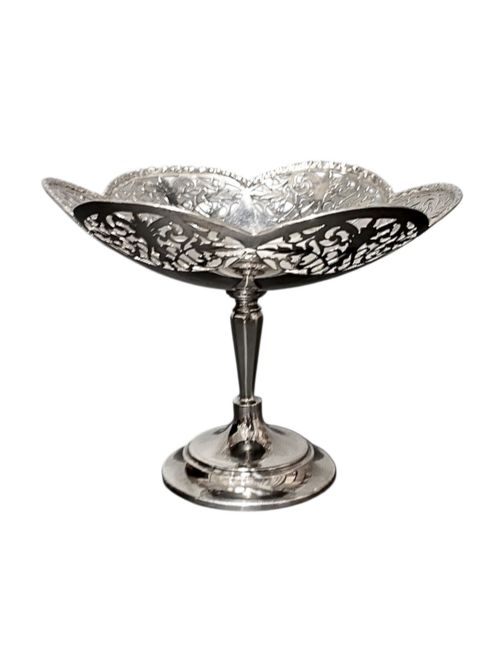
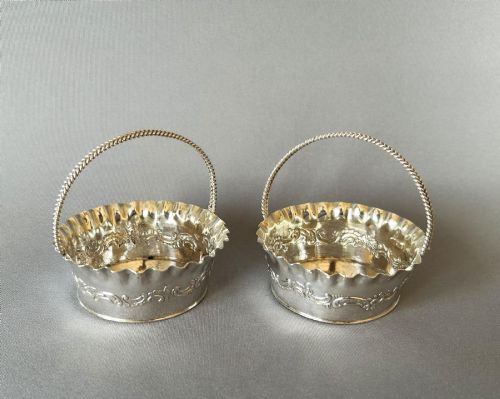
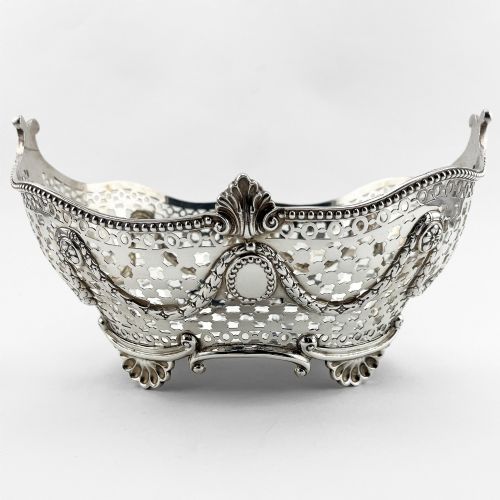


Edwardian Silver Table Dish
An edwardian silver table dish brings functional elegance to any surface, ranging from compact trinket boxes to substantial handled baskets.
Edwardian Silver Table Dish
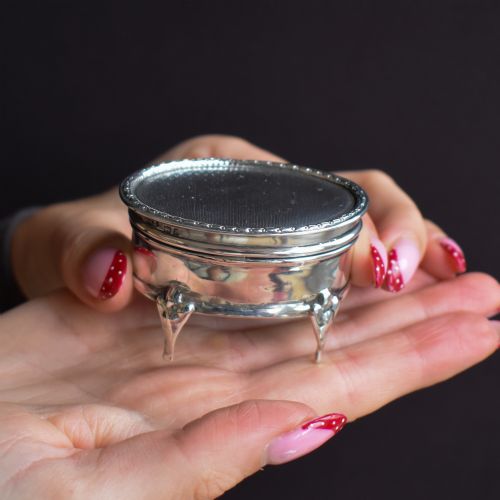
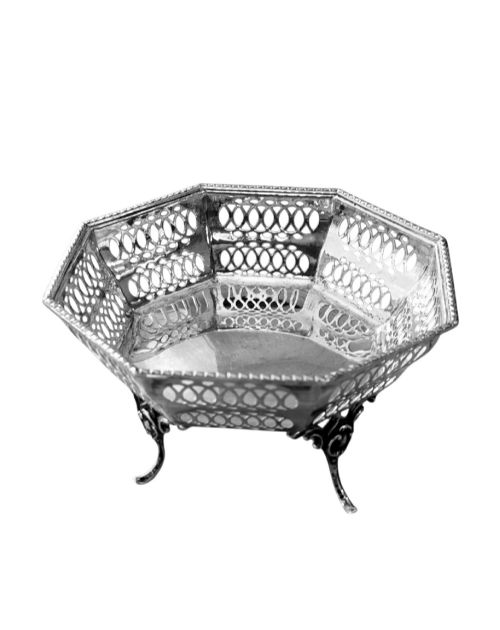
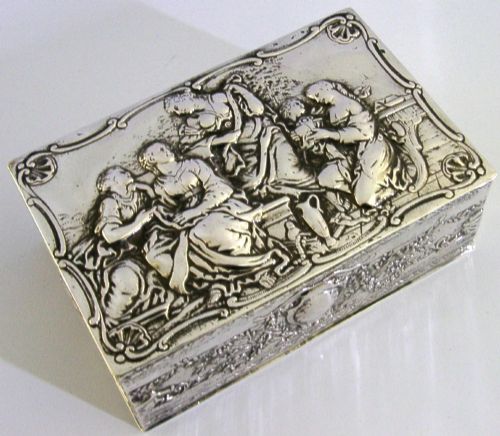
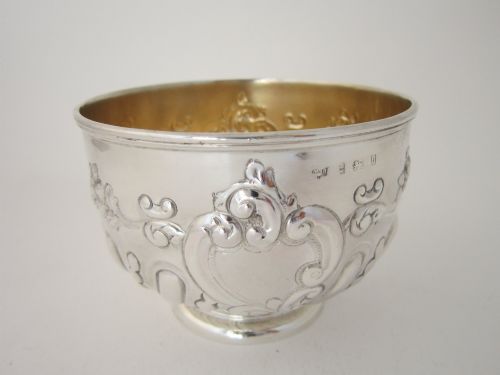
An edwardian silver table dish encompasses a diverse selection of small vessels, lidded boxes, and decorative baskets intended for display and everyday utility. The primary forms seen here span trinket boxes, sugar and fruit baskets, bonbon dishes, and centrepiece bowls created around the turn of the twentieth century.
While the overarching aesthetic draws heavily from the Edwardian period, the selection also embraces earlier Victorian roots alongside later George V and Art Deco expressions. Makers utilised these various formats for everything from dressing table storage to dining table service.
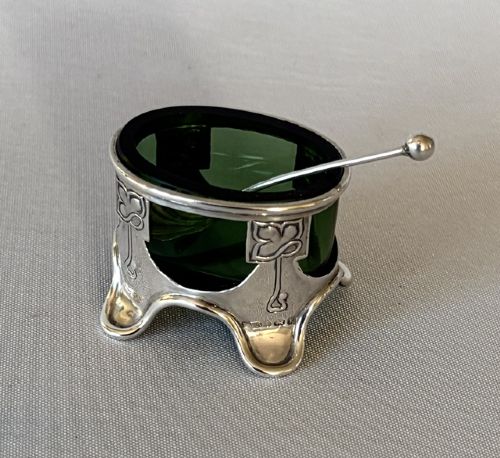
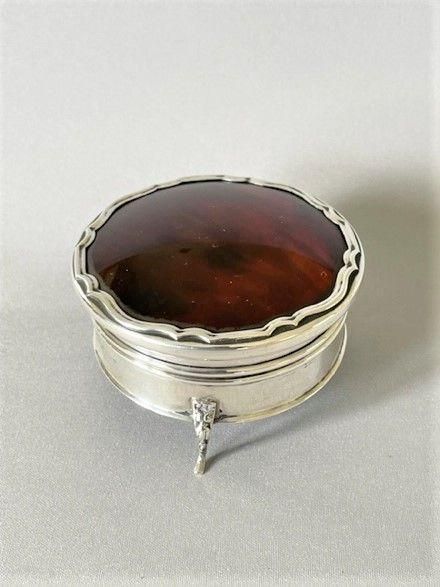
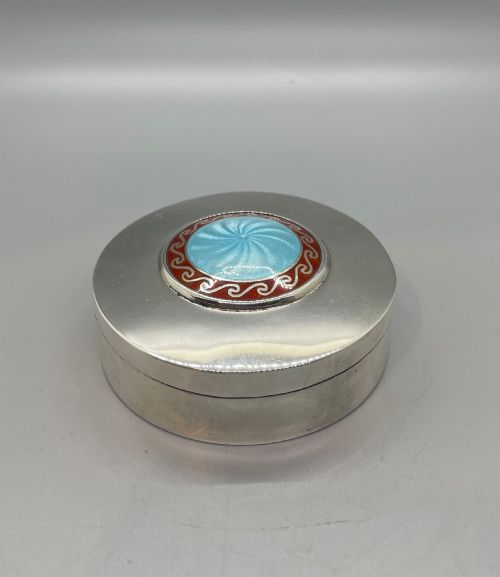
Collectors frequently encounter combinations of sterling silver or silver plate paired with coloured glass liners such as cranberry, ruby, amber, and satin glass. Others incorporate organic elements like tortoiseshell or delicate guilloche enamel panels.
How they were made
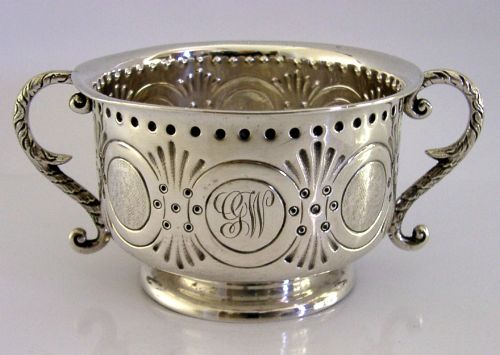
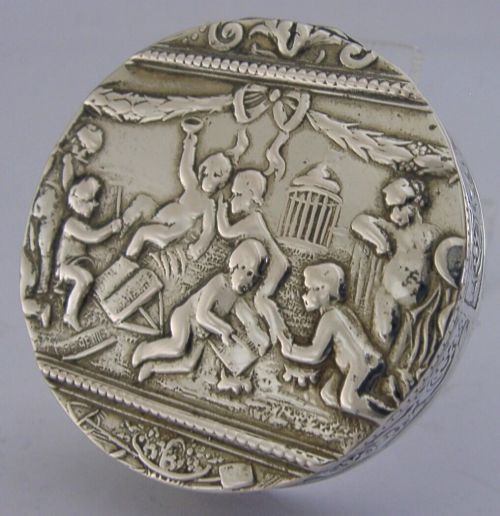
Silversmiths constructed these table pieces using solid sterling silver or applied silver plating over base metals like nickel silver, often shaping them through piercing, casting, and repoussé hammering. Floral and figurative motifs were frequently embossed into the metal rims to create high relief.
Many containers incorporate fitted glass inserts, including cut crystal and vaseline glass, secured by swing handles or hinged lids. Details such as enamel plaques and inlaid tortoiseshell demonstrate the varied craftsmanship applied to boxes and dishes of this era.
Edwardian Silver Table Dish Retail Price Guide 2026
Typical asking prices for edwardian silver table dish among the pieces listed under this phrase on Sellingantiques today, from the lower quarter to the upper quarter. They describe what is for sale here now, not the wider market.
Swans, cherubs, and winged angels frequently peer out from the metalwork of these tables, keeping watch over stray sweets and pins.
What varies in quality
Quality in these silver and glass table pieces rests upon the crispness of the chased or repoussé detail and the weight of the metal used in construction. Substantial gauge silver and heavier plating separate standard production items from more substantial centrepieces and fitted boxes.
The integration of materials also defines distinction, such as the clarity of cut glass liners, the precision of enamel work, and the structural integrity of hinged lids and swing handles. Pieces bearing clear hallmarks and recognised makers carry additional historical weight.
Synyer & Beddoes·Asprey·Guild of Handicrafts·William Neale·A. Bromet & Co·George W. Scott & Sons Ltd·Tiffany & Co.·Mappin & Webb·Charles Boyton·William Comyns·Elkington
The Edwardian Silver Table Dish Glossary
- Repoussé
- A metalworking technique where the smith hammers the metal from the reverse side to form a raised design on the front. This method creates the flowing floral and figural borders seen on many Edwardian dishes.
- Guilloche
- An intricate mechanical engraving technique that etches precise geometric patterns beneath a translucent layer of enamel. It frequently decorates the lids of small dressing table boxes.
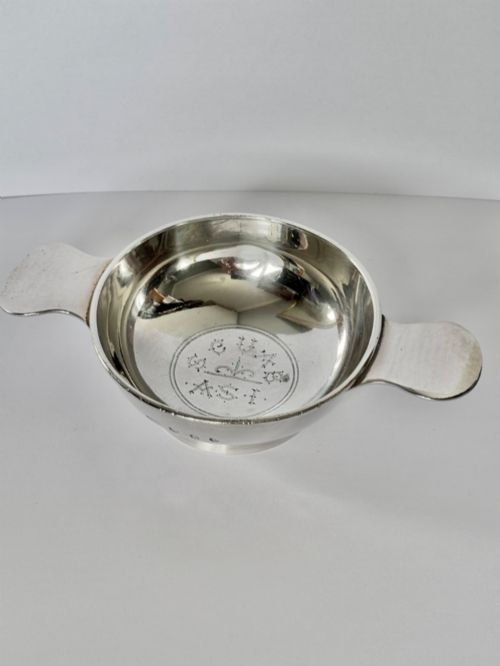
- Porringer
- A small, shallow bowl with one or two horizontal flat handles, traditionally used for porage or broth. Later iterations serve decorative or cabinet display purposes.
- Bonbon dish
- A small, open vessel specifically designed for holding sweets, nuts, or small confectioneries upon a dining or drawing room table. They often feature pierced metalwork or coloured glass inserts.
- Electroplated Nickel Silver
- A base metal alloy composed of copper, nickel, and zinc that has been coated with a thin layer of pure silver through electrolysis. This process provided an accessible alternative to solid sterling silver.
Edwardian Silver Table Dish: Frequently Asked Questions
What are edwardian silver table dishes used for?
These versatile vessels served multiple domestic functions, from holding sweets and fruit on dining tables to storing jewellery on dressing tables. Many were specifically designed as decorative centrepieces or lidded receptacles for small personal items.
Today, they continue to serve similar display and storage purposes in contemporary homes, adding period character to sideboards, dressing chests, and coffee tables.
How do I clean silver table dishes?
Maintenance requires gentle cleaning with a specialised silver cloth to remove natural tarnish without abrading delicate repoussé details or enamel surfaces. Harsh dips should be avoided, particularly on pieces with fitted glass liners or organic elements like tortoiseshell.
For items with glass inserts, removing the liner makes it easier to polish the surrounding metal safely. Regular, light dusting preserves the polished finish of both the silver and the integrated glass.
How can I tell if a dish is solid silver or plated?
Examining the piece for official hallmarks provides the clearest indication of solid sterling silver, denoting standard testing marks and maker stamps. Silver plated items typically feature specific trade marks or abbreviations such as EPNS, indicating electroplated nickel silver.
Weight can also offer a clue, as solid silver objects generally feel heavier than their plated counterparts, though construction thickness varies widely across different forms.