




Edwardian Silver Plated Waiter
An edwardian silver plated waiter is a sturdy metal serving tray designed for drinks or small items, combining practical hospitality with period elegance.
Edwardian Silver Plated Waiter
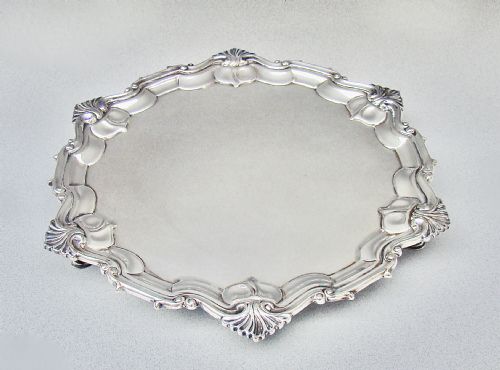
When you search for an edwardian silver plated waiter, you encounter a selection of serving trays, salvers, and platters originating mainly from the Edwardian period alongside Victorian and later nineteenth-century examples. These pieces serve functions ranging from cocktail and drinks service to formal tea presentation.
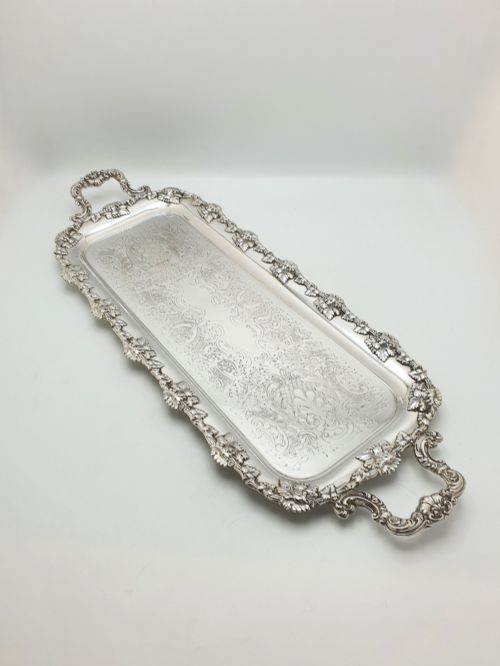
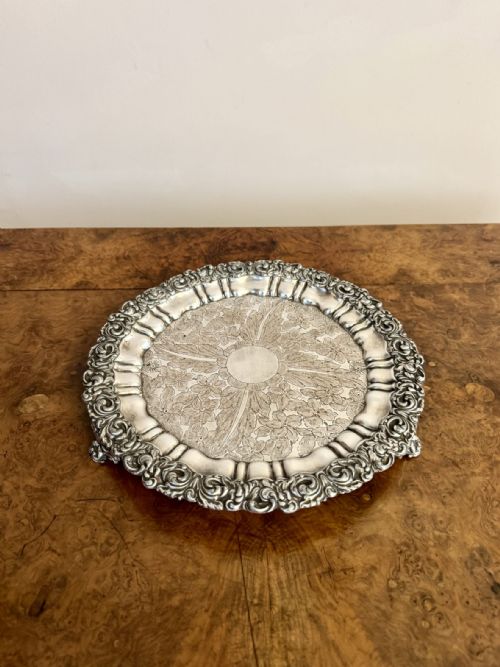
The most common forms on this page include circular salvers, gallery trays with raised pierced edges, and handled serving trays featuring engraved details or grapevine borders. Makers utilise base metal cores covered in silver plate or electroplated nickel silver to achieve a bright reflective surface.
Origins span standard domestic items to presentation pieces carrying family crests. Buyers find items suited for modern entertaining as well as traditional table displays.
Manufacturing and Materials
The items in these listings rely on a base metal foundation, typically nickel silver, which receives a coating of silver through electroplating techniques. This method provides the appearance and weight of solid silver at a more accessible standard.
Surface decoration involves hand engraving, applied cast borders such as grapevine motifs, and openwork gallery rims soldered to the tray base. Handles are securely attached to larger serving and cocktail trays to support heavier loads.
One enormous salvers arrives complete with a Lister family crest, ready for formal butler service.
Assessing Quality and Craftsmanship
Quality separates through the crispness of the engraved decoration and the durability of the applied silver plate over the underlying nickel silver base. Superior pieces exhibit well-defined chased details and securely mounted borders without visible solder joints.
Weight and structural rigidity also distinguish better examples, particularly on large salvers and gallery trays where a thicker base metal prevents flexing during use.
William Hutton & Sons·Walker & Hall
The Edwardian Silver Plated Waiter Glossary
- Salver
- A flat serving tray, usually circular and supported on small feet, traditionally used for presenting letters, calling cards, or drinks. These items often feature engraved decoration across the central surface.
- Gallery Tray
- A tray featuring a raised pierced or pierced-and-solid gallery rim around the edge to prevent items from sliding off during service. The edge is frequently constructed from openwork metal strips.
- Electroplated Nickel Silver
- A base alloy of copper, nickel, and zinc coated with a thin layer of pure silver through an electrolytic process. This material forms the primary substrate for the majority of these pieces.
- Grapevine Border
- A decorative cast metal rim shaped as trailing grapevines and leaves, applied to the edge of serving trays. This stylistic element adds texture and weight to the perimeter.
Edwardian Silver Plated Waiter: Frequently Asked Questions
What is an edwardian silver plated waiter used for?
An edwardian silver plated waiter serves as a functional tray for presenting drinks, cocktails, or tea sets in a domestic setting. They also function as decorative display pieces on sideboards and tables.
The raised edges and solid construction allow hosts to carry glassware and porcelain securely between rooms.
How do I clean an edwardian silver plated waiter?
Cleaning requires a soft cloth and a specialised silver polish formulated for plated items to avoid wearing through the thin silver layer. Gentle circular motions lift tarnish without scrubbing the underlying nickel silver.
Water and mild soap remove everyday dust before polishing, and thorough drying prevents spotting.
How can I tell the period of a tray?
Dating relies on stylistic clues such as the form of the gallery rim, the style of hand engraving, and any maker stamps or marks stamped into the base metal. Edwardian pieces often display lighter, refined ornamentation compared to heavier Victorian designs.
Comparing border motifs and handle shapes against known production eras helps narrow down the manufacturing decade.
Are these trays made of solid silver?
No, these items consist of a base metal or nickel silver core coated with a layer of silver through electroplating. This technique provided durable service ware during the nineteenth and early twentieth centuries.
The silver plate gives the identical visual appeal of solid silver while maintaining a different structural weight.