
Edwardian Silver Plated Lighting
Edwardian silver plated lighting brings functional illumination and period character through table lamps, wall lights, and chandeliers.
Edwardian Silver Plated Lighting
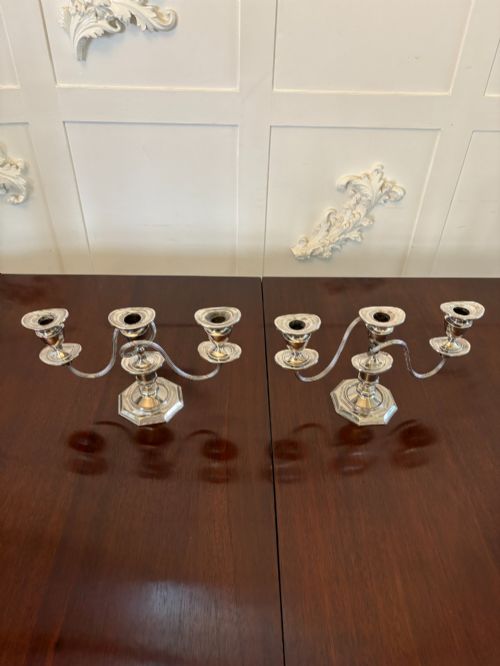
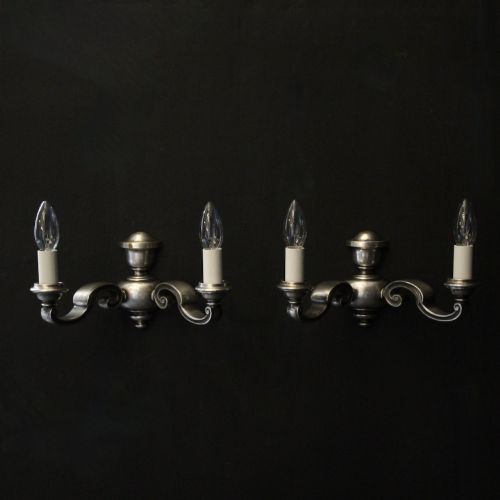
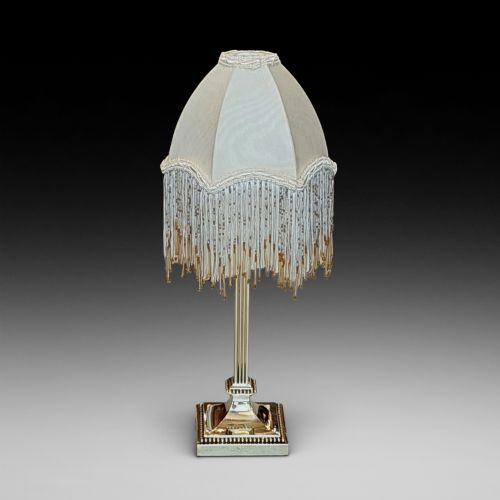
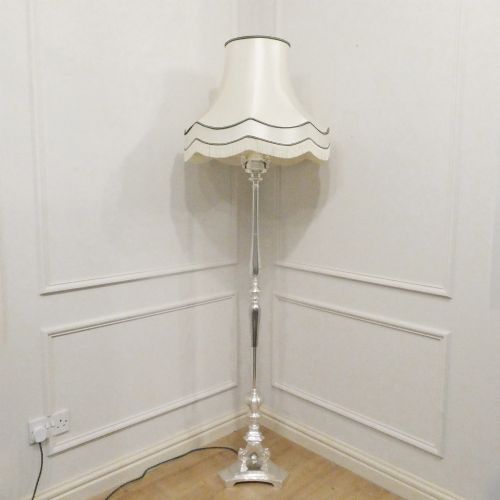
Edwardian silver plated lighting encompasses table lamps, wall lights, chandeliers, floor lamps, and candelabras originating from the late nineteenth and early twentieth centuries. These pieces reflect period revivals including Neoclassical, Georgian, and Victorian styles alongside Art Nouveau designs.
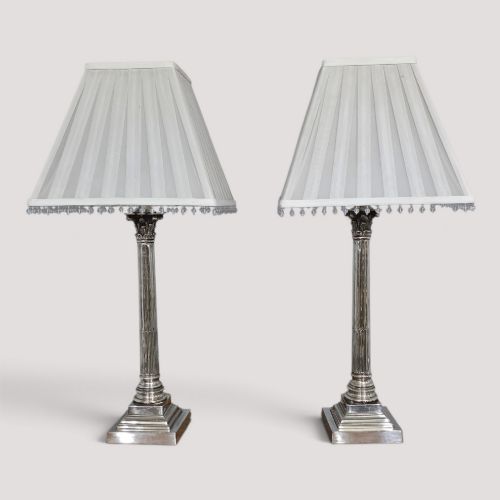
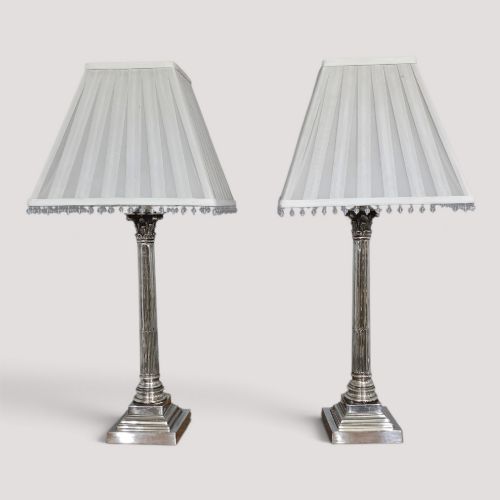
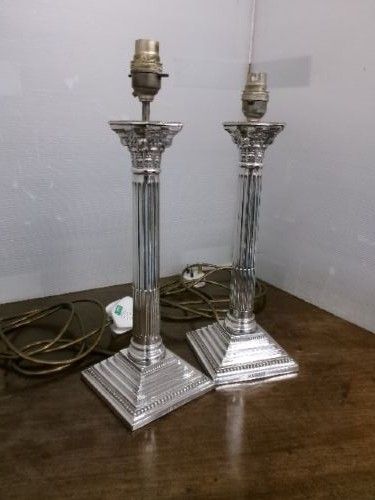
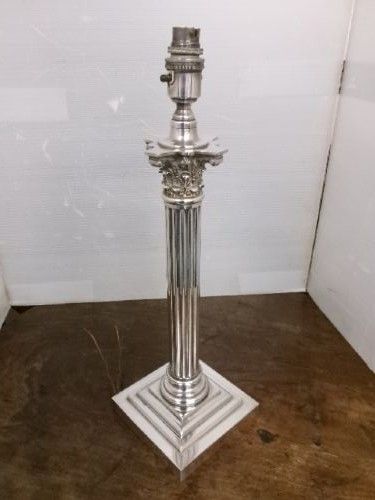
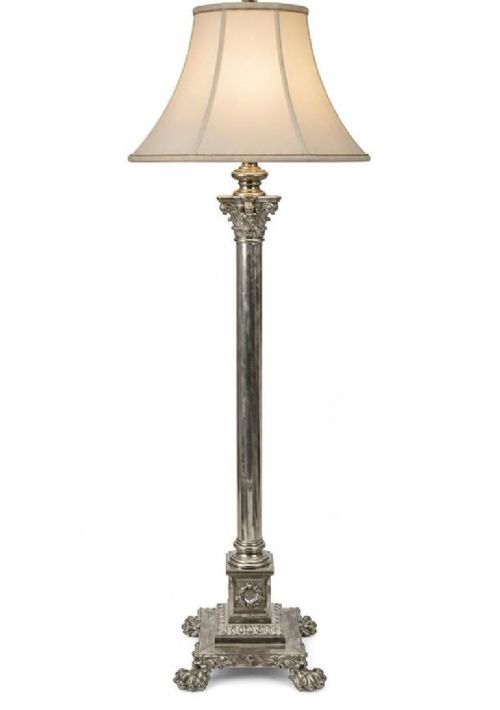
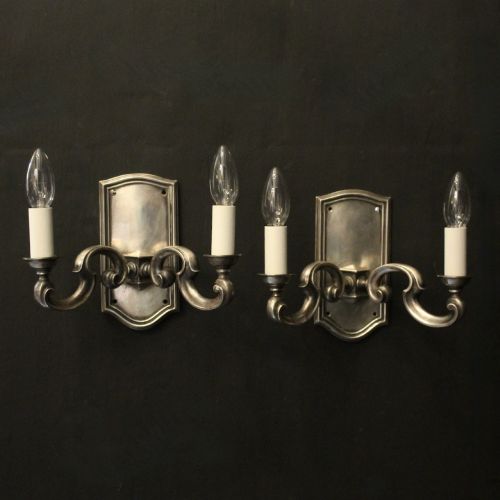
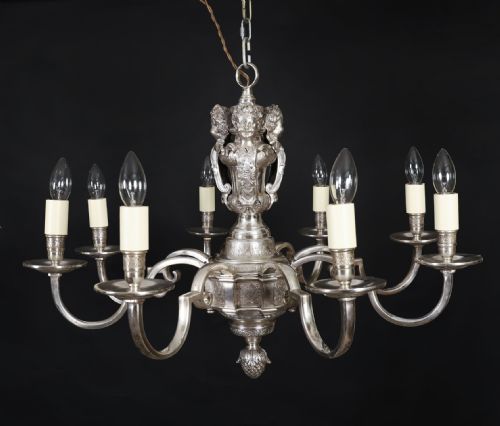
Table lamps featuring Corinthian columns alongside multi-arm chandeliers and wall sconces represent the most common forms encountered within this selection. Items span the Victorian era, the Edwardian period, and into the nineteen-twenties.
Makers utilised brass, metal, glass, and fabric alongside silver plate, electroplated nickel silver, and nickel to construct functional fittings for domestic and nautical use.
Materials and Construction
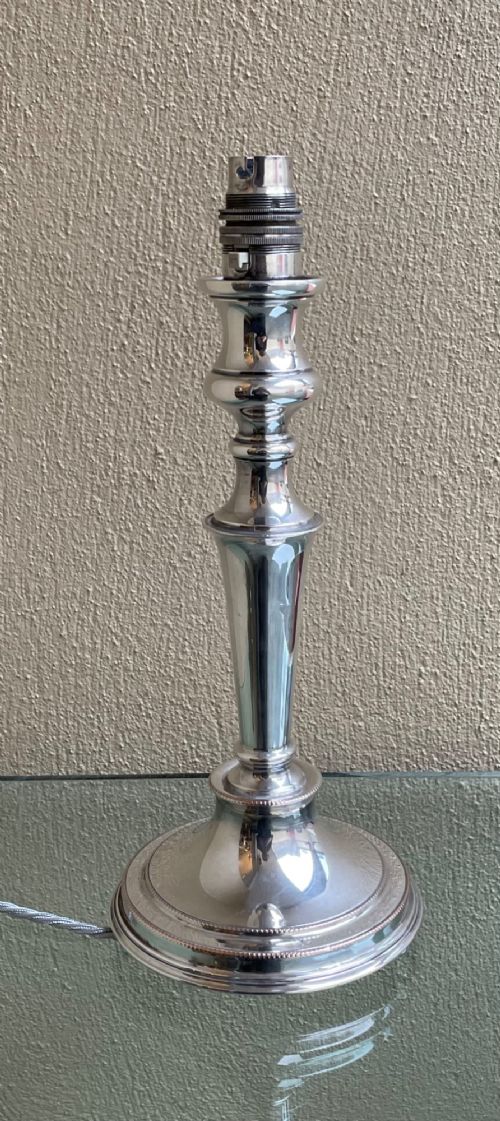
Construction relies upon base metals such as brass or copper coated in silver plate or electroplated nickel silver to achieve a bright reflective surface. Smiths and manufacturers formed columns, urns, and bases through casting, spinning, and soldering.
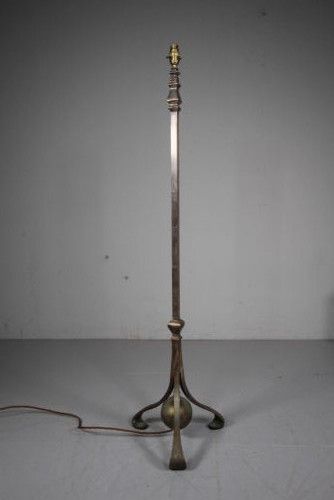
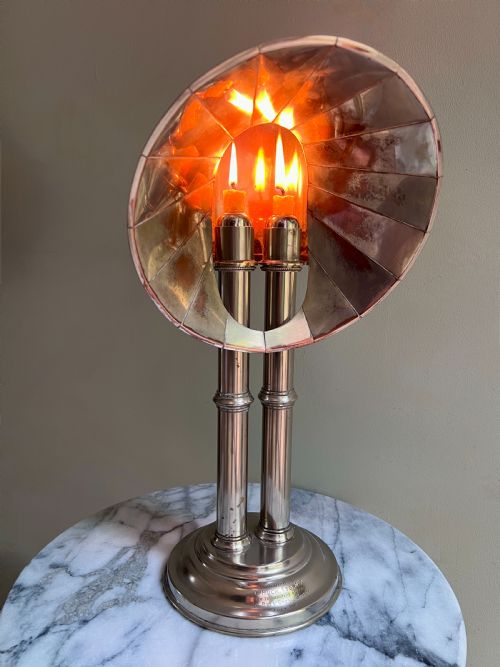
Wiring, fabric shades, and glass components were integrated into electrical or candle-burning forms, including adjustable floor standards and ship's gimbal lamps designed to remain level at sea.
Ship's gimbal lamps kept merchants reading steadily through heavy gales by swinging bravely inside brass rings while the tea service slid across the floor.
Assessing Quality
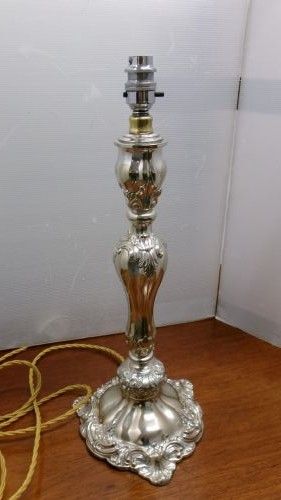
Quality reveals itself in the crispness of cast details on Corinthian capitals, reeded columns, and weighted bases that provide structural stability to tall floor and table lamps. Superior examples retain even coverage of silver plate over the underlying metal without thinning from excessive cleaning.
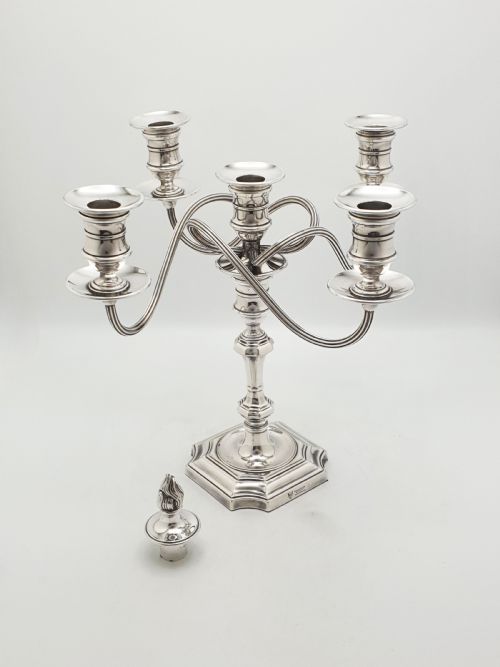
Proportion and execution distinguish standard production items from ambitious multi-arm chandeliers, five-light candelabras, and specialised travelling reading lamps produced by established workshops.
Mappin & Webb·Veritas Lamp Works·WMF
The Edwardian Silver Plated Lighting Glossary
- Silver Plate
- A thin layer of silver bonded to a base metal core such as brass or copper. This technique allowed manufacturers to produce domestic items with the appearance of solid silver at a lower cost.
- EPNS
- Electroplated Nickel Silver. A durable base alloy of copper, nickel, and zinc coated with silver through an electrolytic process.
- Corinthian Column
- An architectural support column featuring an ornate capital decorated with acanthus leaves. This classical motif frequently forms the stem of antique table lamps.
- Gimbal Lamp
- A lighting fixture suspended within a pivoting ring system. This mechanism keeps the lamp upright regardless of the motion of a ship or vehicle.
- Candelabra
- A branched lighting fixture designed to hold multiple candles. Edwardian examples often feature removable branches to allow conversion into single candlesticks.
Edwardian Silver Plated Lighting: Frequently Asked Questions
How do I wire an antique lamp safely?
Most antique lamps require rewiring with modern cable and a certified lampholder to meet current electrical safety standards. Professional electricians can replace old internal wiring while preserving the original metal body and switches.
Fittings should be tested and certified before regular domestic use to ensure safe operation with modern power supplies.
How should I clean silver plated light fittings?
Cleaning requires a soft microfiber cloth and a mild silver polish formulated to protect plated surfaces from abrasion. Harsh chemical dips or abrasive cloths will strip the thin silver layer from the base metal.
Gentle regular dusting prevents tarnish accumulation and reduces the need for frequent polishing.
Were these lights originally electric or candle-lit?
Lighting from this era spans both early electric conversion pieces and traditional candle or oil lamps. Many surviving table lamps and chandeliers were originally fitted for electricity or gas, while others held candles or paraffin.
Candle lamps and gimbal lights preserved fuel or wax burning mechanisms for specific transport or domestic tasks.