
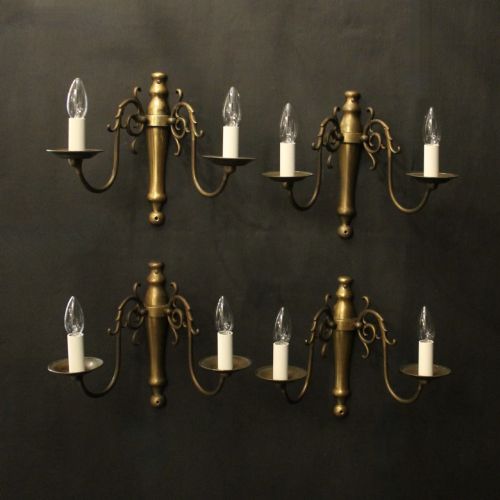
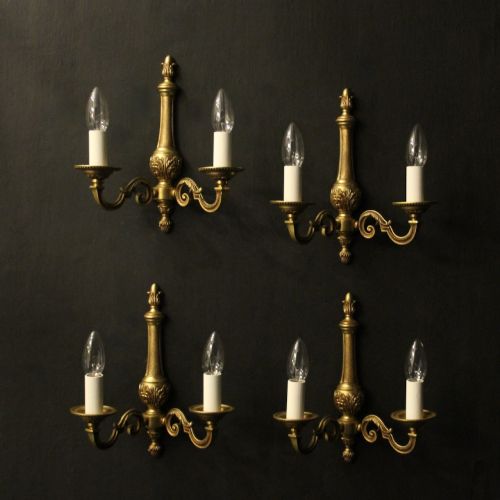

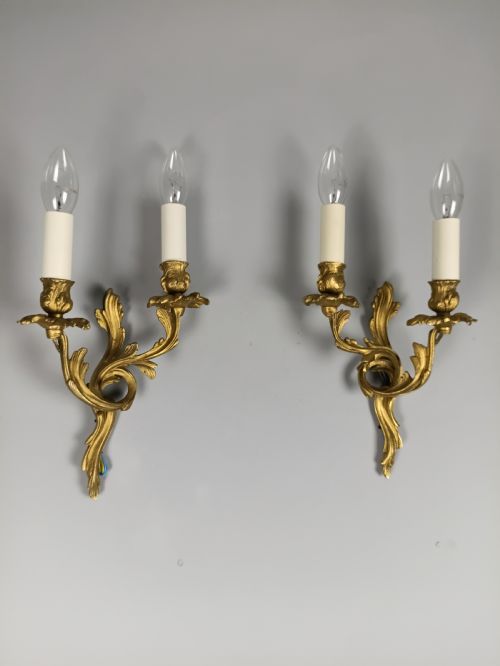




Double Candle Lamp
These double candle lamp pieces are twin-arm or two-light fixtures in brass, gilt metal and toleware, designed to bring traditional illumination to walls and desks.
Double Candle Lamp
When you search for double candle lamp items, you encounter a selection spanning the Victorian, Edwardian, nineteen-hundreds, nineteen-tens, nineteen-twenties and nineteen-thirty periods. These objects take the form of wall lights, wall sconces, desk lamps, chandeliers, candle lamps and candelabra.
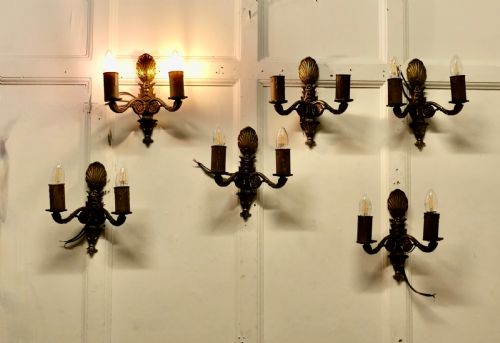
You are most likely to meet wall lights and wall sconces featuring twin arms or paired holders. Origins range across English and French workshops, utilising brass, silver plate, copper and toleware.
Styles on this page cover French Rococo, French Empire, Edwardian, Traditional English, French Classical, Dutch Baroque, Grand Regency and Neoclassical designs. The inventory includes pairs, sets of four, and larger sets of six.
How they were made
Makers shaped these fixtures primarily from brass, gilded brass and gilt metal, often combining them with green toleware bodies or copper elements. Silver-plated finishes and cut glass components also appear across the selection.
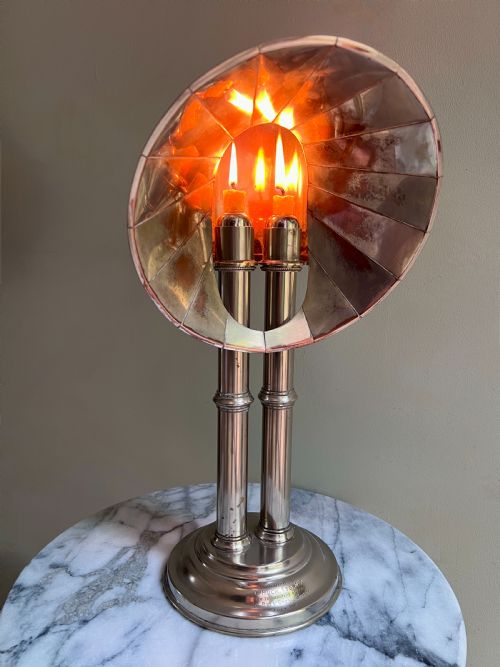
Construction methods involve cast metal arms and backplates, frequently styled after French Rococo, Empire or Neoclassical traditions. Specialised items incorporate inscribed reflectors and glass shades designed to house twin candles or bulbs.
Listings feature items from the Victorian, Edwardian, nineteen-hundreds, nineteen-tens, nineteen-twenties and nineteen-thirty periods in brass, toleware and silver plate.
What varies in quality
The standard of the casting and the depth of the gilding set individual pieces apart. Finer examples display crisp detail in the metalwork and balanced proportions across the twin arms.
Material choice and finish integrity dictate the character of each fixture, from heavy cast brass to painted toleware and silver plate. The presence of matched sets and documented makers' styles distinguishes more ambitious items from standard production.
F. & C. Osler·Clarkes
The Double Candle Lamp Glossary
- Toleware
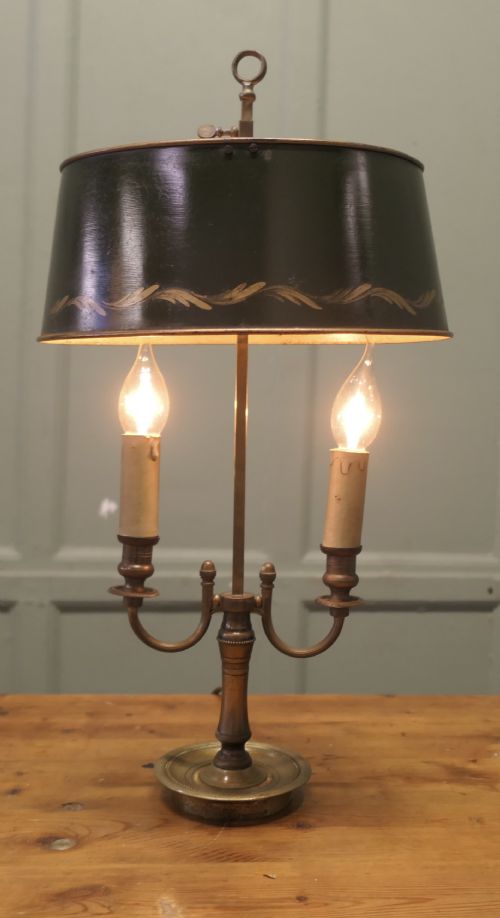
- Painted or lacquered metalware, commonly found in green on French bouillotte lamps. This material offers a distinctive matte colour finish.
- Cricklite
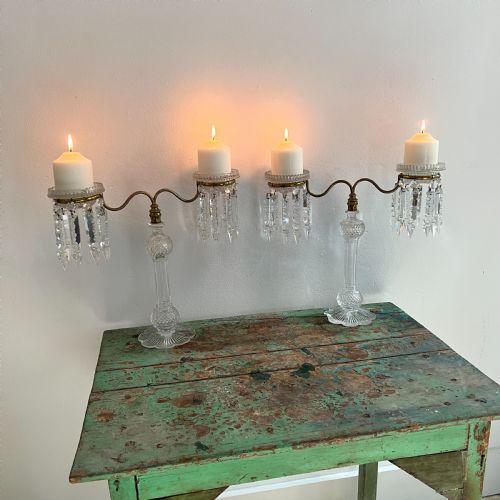
- A brand of patented cut glass candle lamp, utilising Clarke's design for safe table or wall illumination. These pieces feature cut glass components paired with brass.
- Bouillotte
- A style of desk or wall lamp featuring a central shade and twin candle arms. It originates from French card table lighting.
- Gilded brass
- Brass treated with a gold-coloured surface layer or leaf. This technique provides the rich appearance seen in French Empire and Rococo pieces.
- Wall sconce
- A lighting fixture fixed to a wall surface with branches for multiple candles. These items project illumination outward in pairs or sets.
Double Candle Lamp: Frequently Asked Questions
What is a double candle lamp?
A double candle lamp is a lighting fixture designed to hold two candles or bulbs simultaneously. They appear as wall lights, desk lamps and candelabra.
These pieces use twin arms to distribute light across a room or surface, executed in materials like brass, toleware and silver plate.
Where do these fixtures originate?
The pieces originate from English and French workshops working in various historical styles. Common aesthetic influences include French Rococo, Empire, and Traditional English designs.
Makers adopted these classical motifs across the Victorian, Edwardian and early twentieth-century periods.
How do I install a wall light?
Wall lights and sconces mount directly onto vertical surfaces to provide accent or room illumination. Many require professional wiring if converted for electrical use.
Consider the projection of the twin arms and the height of the backplate relative to your wall space.
What materials are used?
The primary material is brass, appearing plain, gilded or cast into decorative forms. Other notable materials include copper, silver plate, cut glass and painted toleware.
Combinations of brass and green toleware are particularly common on bouillotte desk and wall lamps.
How do I date these pieces?
Dating relies on stylistic clues, materials and specific construction markers such as inscriptions or dates. The selection spans the Victorian and Edwardian eras through to nineteen-thirty.
Comparing the decorative style, such as Neoclassical or Dutch Baroque, helps narrow the period of manufacture.