


Edwardian Silver Place Cards
Edwardian silver place cards and menu holders bring miniature sculpture to the dining table, offering charm and utility in sterling silver.
Edwardian Silver Place Cards
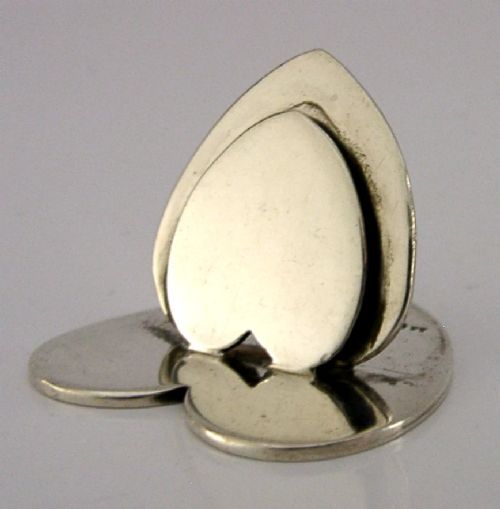
When you search for edwardian silver place cards, you encounter intricate tabletop accessories designed to hold name cards or dinner menus during formal meals. These pieces combine utilitarian function with miniature decorative arts, frequently doubling as menu card holders.
The selections on this page span the Edwardian period into the George V and Art Deco eras, capturing a time of elaborate dining rituals. You meet both individual items and matched sets of four or twelve.
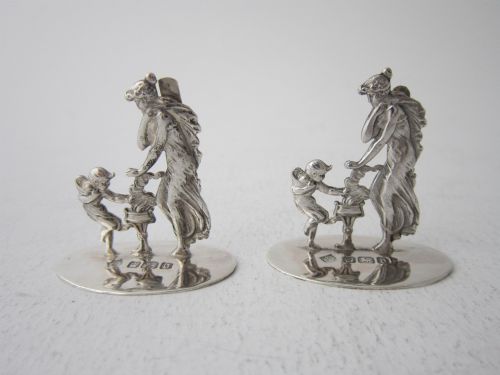
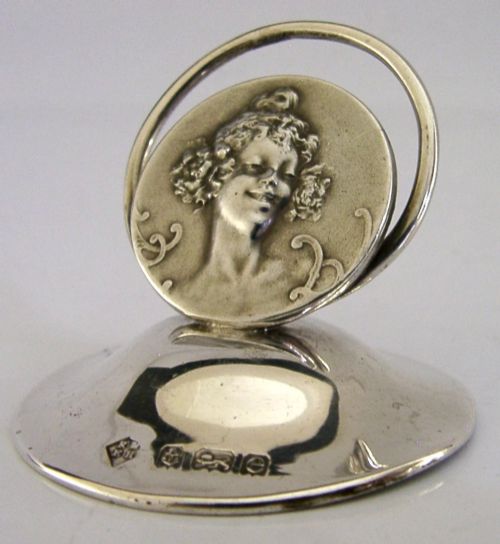
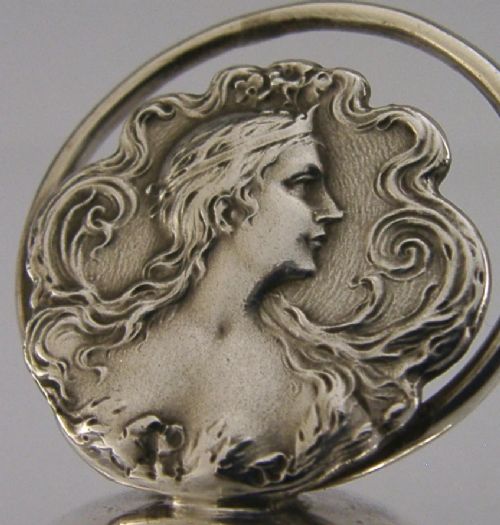
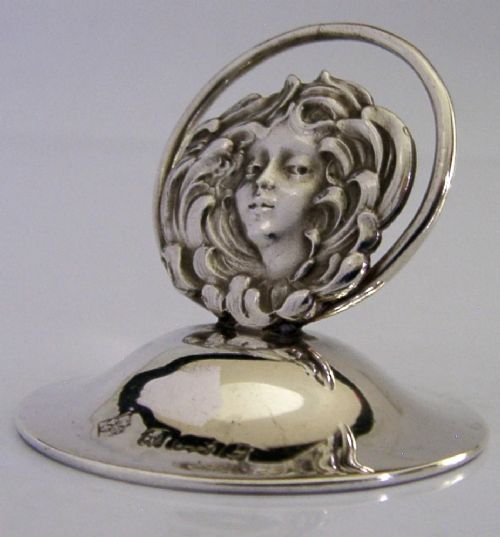
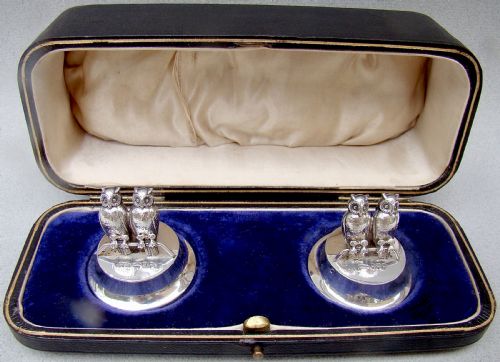
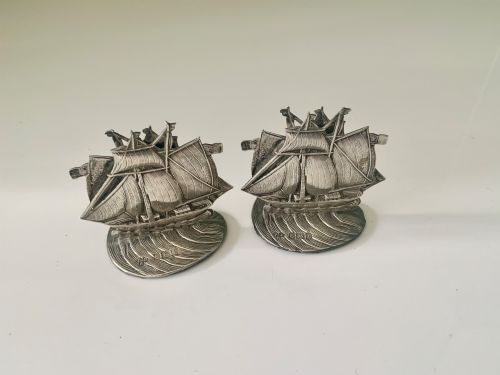
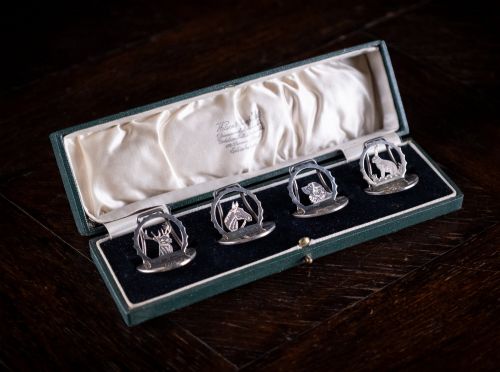
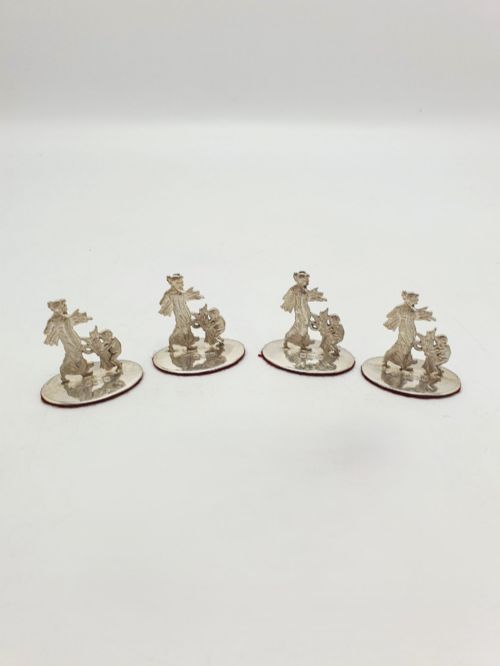
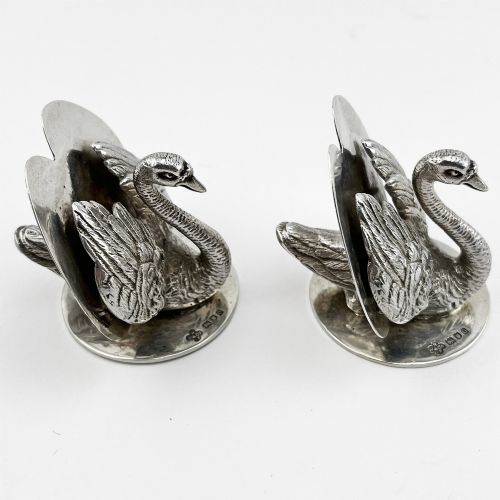
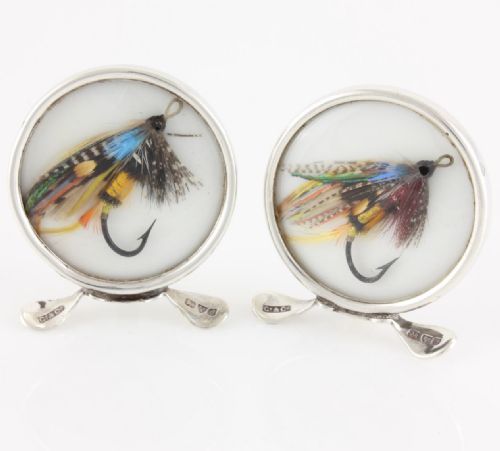
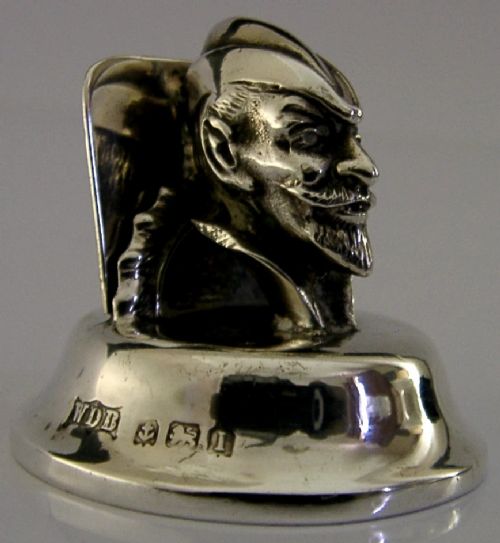
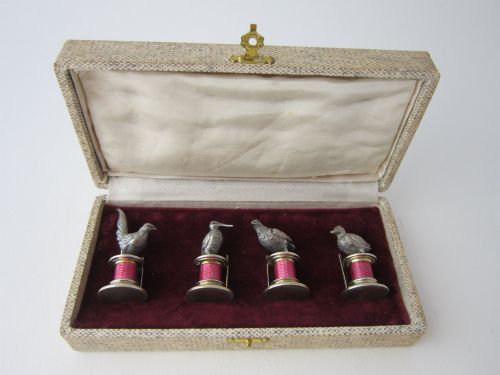
Figural forms dominate the selection, ranging from animals such as owls, swans, and grouse to literary and thematic subjects like Alice in Wonderland, Robin Hood, and Art Nouveau maidens. Makers also utilised enamel work and Scottish Revival designs to add colour and regional character to the table.
Materials and Techniques
Silversmiths employed sterling silver as the primary medium, shaping the metal through casting, stamping, and hand-chasing to achieve precise anatomical and architectural details. Many pieces incorporate weighted bases or hinged mounts to support the weight of cards upright.
Enamel provides colourful accents on select items, fused to the silver surface to depict flags or decorative motifs. Secondary materials such as velvet, silk, leather, glass, and feathers occasionally line fitted presentation boxes rather than the holders themselves.
Edwardian Silver Place Cards Retail Price Guide 2026
Typical asking prices for edwardian silver place cards among the pieces listed under this phrase on Sellingantiques today, from the lower quarter to the upper quarter. They describe what is for sale here now, not the wider market.
The inventory includes figural subjects depicting animals, birds, sentry boxes, and literary characters.
Evaluating Quality
Completeness dictates value for sets, as matched groups of four or twelve carry greater significance than single pieces. The integration of coloured enamel work and association with notable makers further elevate specific pieces above standard production items.
Sampson Mordan·Levi & Salaman·A. Wilcox·Grey & Co·Liberty
The Edwardian Silver Place Cards Glossary
- Sterling silver
- A silver alloy containing 92.5 percent pure silver and 7.5 percent other metals, usually copper, ensuring durability for functional tableware.
- Menu holder
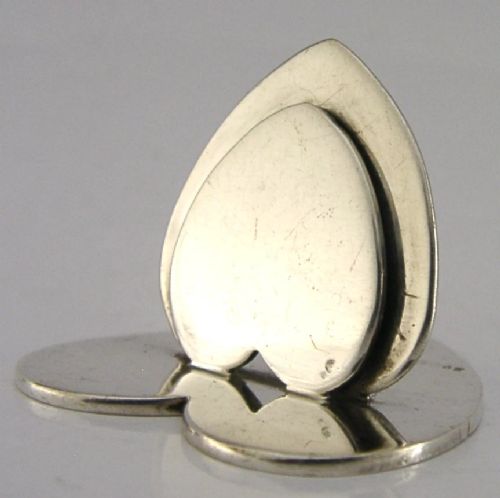
- A tabletop accessory fitted with a clip or slot to display the evening bill of fare.
- Place card holder
- A small stand designed to display the name of a dinner guest adjacent to their setting.
- Art Nouveau
- A decorative style characterised by flowing, organic lines and stylised depictions of maidens and natural forms.
- Hallmark
- Official stamps struck into precious metals indicating the standard of purity, the assay office, and the date of manufacture.
Edwardian Silver Place Cards: Frequently Asked Questions
What are edwardian silver place cards used for?
These pieces served practical functions at formal Edwardian dinner parties by holding handwritten name cards or menu selections on the dining table. They organised seating arrangements while adding decorative flair to the tablescape.
Today, collectors utilise them in similar tabletop displays or showcase them in cabinets as miniature silver sculptures.
How do I clean antique silver place cards?
Cleaning requires a soft microfibre cloth and a mild, non-abrasive silver polish to remove tarnish without harming fine details or enamel work. Harsh scrubbing can wear away the thin chased lines on figural pieces.
Store them in dry conditions, avoiding rubber bands or materials that accelerate tarnishing.
Are these pieces sold as sets or individually?
The inventory includes both individual items and matched sets ranging from pairs to groups of four, three, or twelve. Matched sets were produced for larger dining tables to maintain a cohesive aesthetic.
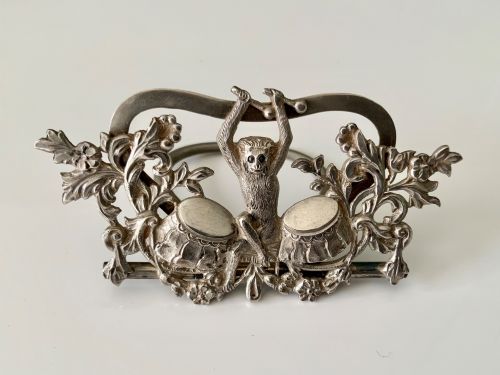
Single pieces often feature unusual subjects, such as monkeys playing drums or specific literary characters.
What styles appear alongside Edwardian designs?
Alongside classic Edwardian forms, you find pieces executed in Art Nouveau, Art Deco, Arts and Crafts, and Scottish or Celtic Revival styles. Some items reflect George V or Victorian manufacturing periods.
Enamel work and flag motifs also appear, reflecting historical events and changing decorative tastes through the early twentieth century.